Autel MaxiHVAC AC909 Streamlines Diagnostic and Refrigerant Service Workflows
According to TechShop, Autel has released the MaxiHVAC AC909, an integrated service platform that combines refrigerant recovery and charging with live vehicle diagnostics, electrical measurements…
Aldous Moorland·updated September 03, 2026
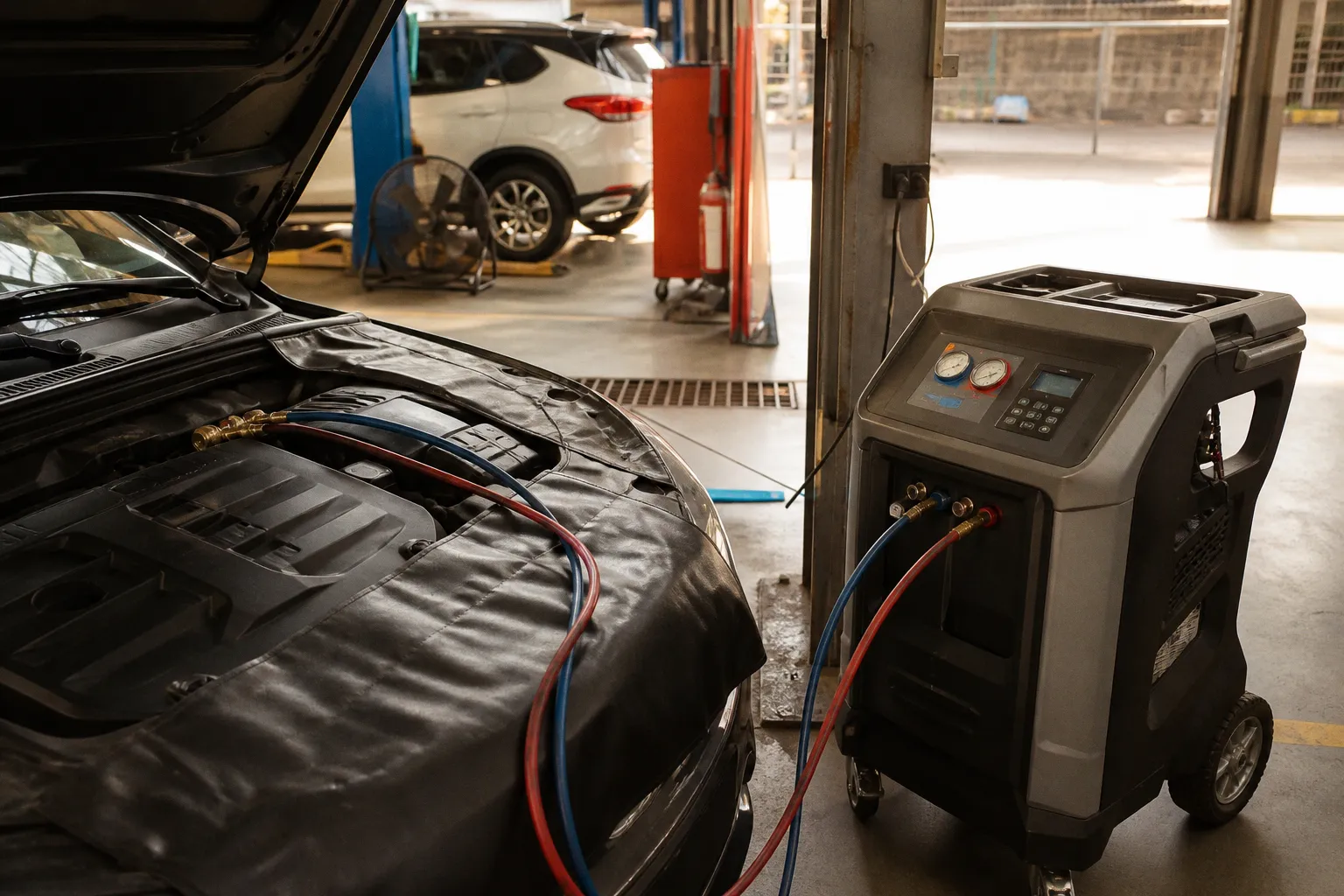
According to TechShop, Autel has released the MaxiHVAC AC909, an integrated service platform that combines refrigerant recovery and charging with live vehicle diagnostics, electrical measurements, live sensor data, and guided fault verification. The unit targets electronically controlled HVAC systems, including those fitted to hybrids, battery-electric vehicles, and dedicated thermal-management circuits. For shops working on late-model imports, this consolidation changes the workflow at the bay.
What the unit consolidates
Three previously separate procedures are folded into one enclosure: refrigerant service, OBD-II bidirectional communication, and guided circuit verification. Per the published spec sheet, the AC909 reads live data from HVAC control modules, logs temperature and pressure transducer outputs, and overlays those values against expected ranges during charging and recovery. Electrical measurements are exposed through the same interface, allowing resistance and voltage checks at the module connector without a separate multimeter in the loop.
For EV and hybrid platforms, the thermal-management loop is treated as a standalone subsystem. The unit verifies high-voltage coolant heater operation, chiller activation signals, and battery cooling request logic through guided test sequences rather than raw PID polling.
What this changes at the bench
Technicians accustomed to running a separate scan tool, recovery machine, and digital multimeter now operate a single workflow. Fault verification is conducted in sequence: the system identifies the HVAC DTC, isolates the responsible sensor or actuator, and prompts the technician to confirm the parameter against the baseline. If the live value deviates, the unit flags the specific circuit before refrigerant is introduced. If the value matches, charging proceeds under monitored conditions.
This sequencing matters for vehicles where HVAC complaints are rooted in electronics rather than charge level — a frequent pattern on import platforms with dual-zone or rear-zone climate control. The guided loop reduces the cycle time between complaint intake and confirmed root cause.
Baseline parameters to verify
Before integrating the AC909 into the workflow, the shop should establish the following reference points on each platform: HVAC module static current draw at key-off, blower motor control circuit voltage under low and high demand, refrigerant pressure transducer output at ambient, and high-voltage coolant loop temperature sensor resistance at 20 °C. These values serve as the verification standard against which the AC909's guided tests will be judged. If the baseline is not recorded, the guided sequences cannot confirm a fault — they can only flag deviation from a generic expected range.
Import vehicles with complex climate logic, particularly those from European and Japanese manufacturers running multi-zone or heat-pump systems, are the immediate candidates for evaluation. Shops handling EV thermal-management complaints should treat the AC909 as a diagnostic adjunct, not a replacement for high-voltage system isolation procedures.