How Software-Defined Architectures Are Transforming Independent Auto Repair
Industry analysis following the show, reported by Mobility Global, identified three converging constraints on independent repair workflows.
Aldous Moorland·updated September 19, 2026
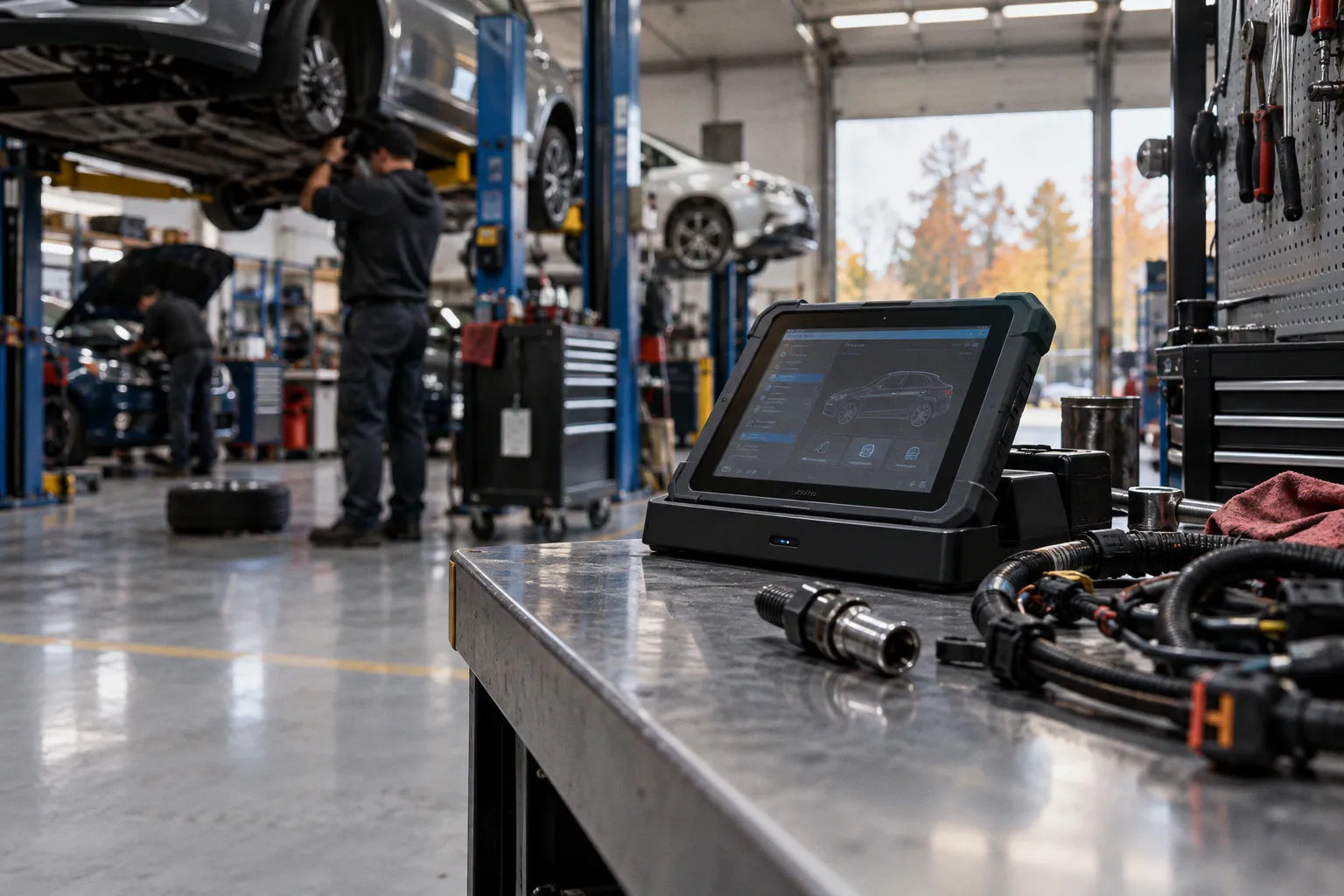
Automechanika Frankfurt registered more than 112,000 attendees from 173 countries. Trade fair coverage from Bodyshop Magazine indicates software diagnostics, high-voltage battery service, and digital workshop equipment dominated the aftermarket agenda. The implication for independent repair is binary: a service bay without secure gateway access and authenticated replacement procedures now operates outside the vehicle's native verification logic.
Pressure points on independent operations
Software-defined vehicle architectures consolidate functions that once resided in discrete ECUs behind centralized domain controllers. OEM component authentication requires paired cryptographic verification before replacement modules are accepted by the vehicle network. ADAS calibrations demand static and dynamic targets, controlled lighting, and millimeter-level vehicle positioning before any glass or suspension work proceeds.
If a module is replaced without authentication, the network rejects the component or defaults to limp mode. If a windshield is fitted without calibration, the front camera returns incorrect lane offset values, and the steering assist references the wrong horizon. Both conditions register as diagnostic trouble codes that no generic scan tool resolves with a clear code description alone.
Telematics, coding, and enforcement
At the same event, CollisionWeek reported, global aftermarket associations including FIGIEFA and the Auto Care Association convened to declare that the independent right-to-repair dispute has migrated from physical parts to vehicle telematics access, component software coding, and statutory enforcement. The shift places data streams, secure gateway access, and OEM-proprietary coding procedures inside the same regulatory perimeter as the physical fastener. Separately, Global Times coverage notes that intelligent connected NEVs are positioned to drive the next phase of automotive industry development, extending the software-first logic across the global market.
Baseline parameters for post-repair verification
Verification requires three baseline reads captured before any component is disturbed. The telematics provisioning state and module authentication counter are recorded via OEM diagnostic software. ADAS live data reference values are captured for camera and radar, including target offset in degrees and object distance in meters. High-voltage isolation resistance is documented in megohms prior to any battery service procedure.
If the post-repair telematics state fails to match the pre-repair record, the module handshake is incomplete and the network will flag the subsystem. If ADAS target deviation exceeds OEM-published tolerance, the calibration environment is suspect and the procedure must be repeated under controlled conditions. If isolation resistance falls below specification during high-voltage service, the procedure halts until the fault is isolated. Each parameter is measured, not estimated.