Leagend Introduces Supercapacitor Starting Technology to European Automotive Workshops
A separate headline on EIN News frames the move as the export of twenty-plus years of battery expertise into the region.
Aldous Moorland·updated September 18, 2026
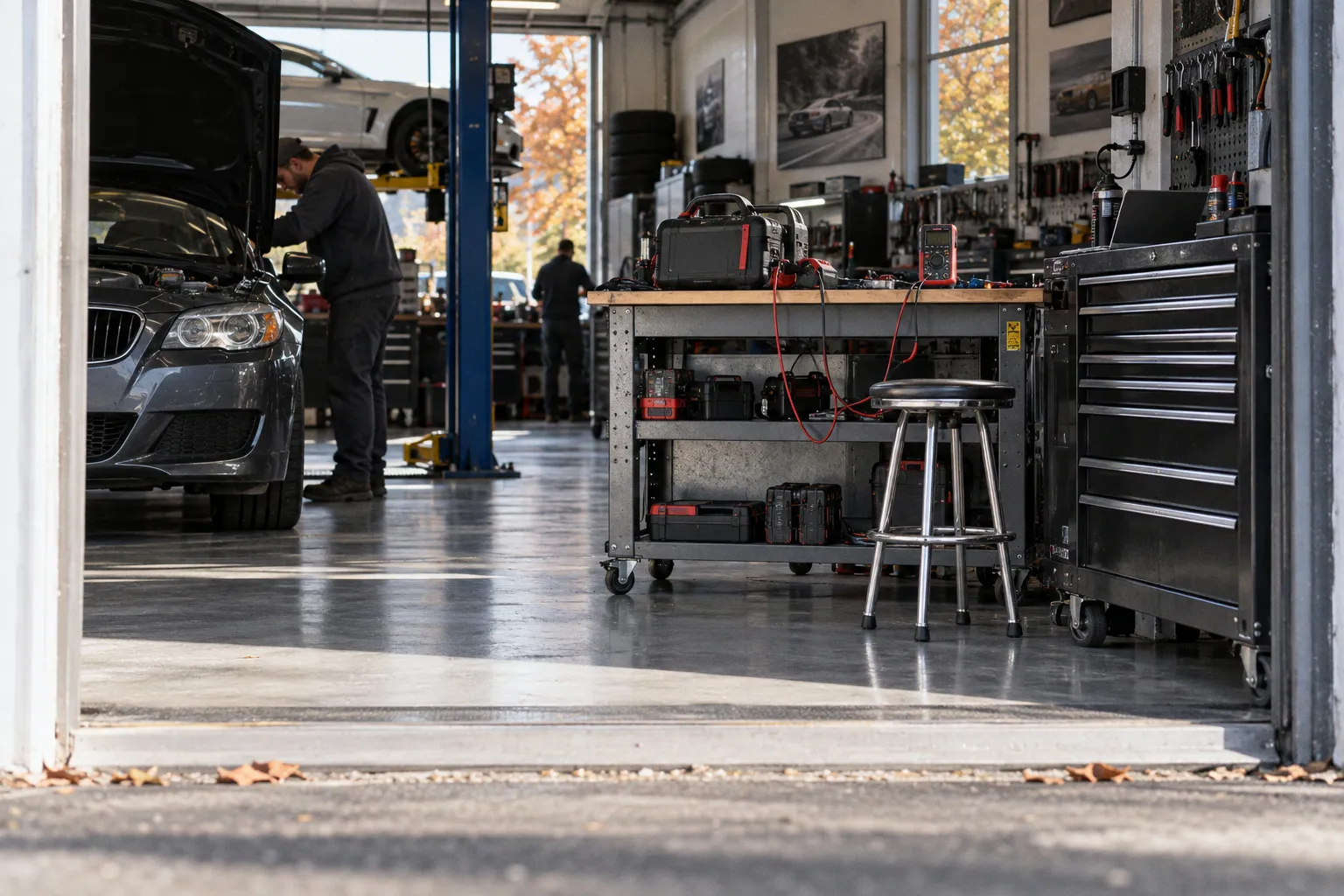
Supercapacitor Starting Arrives in the European Workshop
According to an industry release distributed through EIN Presswire, battery diagnostic and test equipment manufacturer Leagend has launched its SuperCap series in the European aftermarket. The line replaces conventional chemical starting batteries with supercapacitor-based units intended for maintenance and workshop starting assistance, targeting the electrical demands of ageing import fleets. A separate headline on EIN News frames the move as the export of twenty-plus years of battery expertise into the region.
The Electrical Shift Under the Hood
Conventional jump-starting relies on lead-acid chemistry. Voltage sags under load. Internal resistance rises as cells age. Cranking performance degrades in ways that distort the very measurement the technician is trying to make.
A supercapacitor-based starting unit stores energy electrostatically rather than chemically. Charge acceptance is measured in seconds, not hours. Peak current delivery is governed by capacitance and equivalent series resistance, not by plate surface area or electrolyte specific gravity.
For the diagnostician, the implication is direct. The starting event becomes a near-constant electrical load profile regardless of the donor source's state of charge. Any voltage drop observed during cranking reflects the vehicle's cabling, ground paths, and starter draw — not the auxiliary battery's health. Parasitic draw tests, quiescent drain measurements, and CAN-bus wake/sleep sequencing all depend on a stable supply during the test window. A booster pack that sags under repeated crank attempts invalidates the data collected around it.
Relevance to Import Service Bays
European and Asian imports entering their second decade on the road present a recurring pattern. Alternator ripple increases with diode stack wear. Starter current waveforms drift as bushings wear and commutator surfaces pit. Voltage drop across the main supply cable grows as copper strands corrode inside the insulation. None of these measurements are reliable if the starting source itself introduces variance.
The stated objective of the SuperCap series is consistent power delivery and electrical system assessment. For a workshop handling a queue of ageing vehicles, this translates to repeatable cranking events during voltage drop testing, ripple measurement, and waveform analysis. The starting source becomes part of the measurement chain rather than a variable within it.
Verification Parameters Before Adoption
Baseline metrics must be confirmed before the unit is specified or trusted in a diagnostic role:
- Peak current output at rated capacitance and nominal voltage.
- Charge time from depleted state to full operational state.
- Voltage stability across ten to twenty consecutive crank cycles without measurable droop.
- Output behavior at low ambient temperature, where supercapacitor characteristics deviate from lead-acid reference data.
- Isolation and protection circuitry to prevent reverse feedback into vehicle ECUs and CAN-bus modules.
These parameters determine whether the equipment functions as a diagnostic tool or merely as a modern replacement for the traditional booster pack. The distinction matters in a service bay where the objective is accurate measurement of the vehicle's electrical system, not simply getting it running. Specifications should be requested in writing and verified against the workshop's existing cranking load before any fleet-wide rollout.