Fonseca Port Cellars tickets: booking options and prices
The practical question with Fonseca Port Cellars tickets is not simply how much the visit costs. It is what kind of visit you are buying.
Judson Grier·Updated: August 26, 2026·18 min read

The standard Fonseca Experience is a self-guided tour with an audio guide and a commented tasting, while the more specialized options are built around particular styles of Port, older vintages, food pairings, or an evening of dinner and Fado.
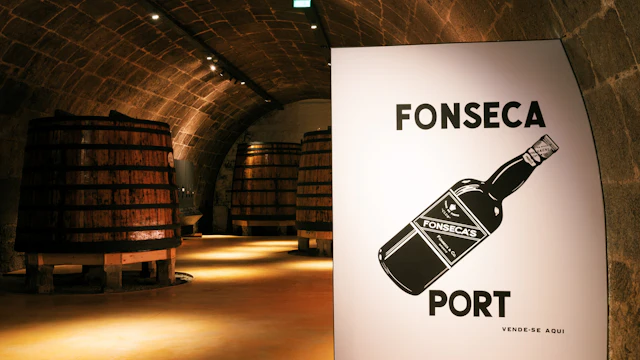 Porto
PortoTickets and prices
Fonseca Port Cellars
Combo tour & tasting with audio guide
from€16
Check availabilityOfficial admission ticket
from€16
Check availabilityThat distinction matters because the cellars in Vila Nova de Gaia are not arranged like a conventional museum with one fixed route and one standard presentation. We are dealing with a working piece of Port history, a tasting room, and several different ways of approaching the wine. Book the basic ticket when you want a clear introduction. Choose a specialist tasting when the wine itself is the reason for the visit. Plan further ahead if you are bringing a large group or want one of the limited evening events.
The Fonseca Experience: what the standard ticket includes
The standard visit is the sensible starting point for most travelers. It combines access to the historic Fonseca Port Wine Cellars with a self-guided audio tour and a commented tasting of three wines: Fonseca Bin Nº 27, Fonseca Siroco, and Terra Prima.
The format gives you control over the pace. You are not tied to a guide moving the entire room from one stop to the next, and you can spend more time where the physical details of the cellar deserve attention: the storage conditions, the handling of the barrels and bottles, and the way Fonseca presents its house style across different Port categories.
The tasting is not an accessory attached to the end of the tour. It is where the visit begins to make sense. Bin Nº 27 is a Ruby Port, Siroco is a Dry White Port, and Terra Prima is associated with organic Port production. They do not simply provide three variations on the same drink. They show how different grape handling, sweetness, aging, and serving context can move the wine in separate directions.
The audio guide and information materials are available in:
- Portuguese
- English
- Spanish
- French
- German
- Korean
That language range is useful, but the self-guided structure is the more important practical detail. If you expect a live guide to lead every standard entry ticket, you will arrive with the wrong picture of the visit. Standard access is self-guided unless you have booked a specific masterclass, guided format, or special event.
The standard Fonseca visit works best when we treat the tasting as part of the explanation, not as a reward after the explanation.
The cellars are at Rua do Choupelo 84 in Vila Nova de Gaia, across the Douro from Porto’s historic center. That location places Fonseca among the Port houses clustered along the Gaia waterfront. You can build the visit into a wider walk through the cellar district, but leave enough time for the tasting itself. Rushing from one booking to another turns a cellar visit into a room-counting exercise, which is a poor way to understand Port.
Fonseca Port cellar tour price: how the options are structured
Ticket prices can change, and third-party booking platforms may display different totals depending on the date, availability, language, booking conditions, or added service fees. The reliable way to read the price structure is to separate the ticket types before comparing numbers.
The main categories are straightforward:
| Visit type | What it is built around | Best for |
|---|---|---|
| Standard Fonseca Experience | Self-guided cellar visit, audio guide, and commented tasting | First-time visitors and travelers who want a complete introduction |
| Child admission | Cellar visit adapted for children, with cookies and Douro Valley grape juice | Families |
| Introduction to Fonseca | A more focused tasting set designed to explain the house style | Visitors who want more wine detail than a basic tasting provides |
| Vintage Port and chocolate pairing | Older Port matched with chocolate | Travelers interested in pairing and dessert-style tasting |
| Fonseca Vintages Classics | A tasting centered on selected vintage years | Experienced Port drinkers and collectors |
| Dinner & Fado event | Evening cellar event with a guided tour, dinner, and Fado performance | Visitors looking for a full cultural evening rather than a short daytime visit |
The standard adult ticket is the baseline against which the other experiences are priced. Children’s admission is handled separately and includes grape juice served in a Port wine glass, along with cookies. That makes the family option more than a reduced adult ticket; it is a different tasting arrangement, and children should not be treated as afterthoughts in a wine cellar itinerary.
Specialized tastings cost more because the product is different. A vintage tasting requires access to particular bottles and a more deliberate presentation. A pairing adds food and a defined sequence. An evening event requires staff, dinner service, entertainment, and a limited room capacity. Comparing all of these directly with standard admission is like comparing a diagnostic scan with an oil change: both belong to the same maintenance schedule, but they do not do the same work.
What to look for when booking
When you search for Porto wine cellar tickets, check the details beneath the headline first. The name of the experience may look similar across booking pages, but the contents can differ.
Look for:
- Whether the visit is self-guided or led by a live guide.
- Which wines are included in the tasting.
- Whether the tasting is a general introduction or a vintage-focused session.
- Whether food pairing is part of the ticket or requires a separate booking.
- Whether the event takes place during daytime opening hours or in the evening.
- The language of the audio guide or presentation.
- The cancellation and rescheduling conditions shown for your selected date.
- Whether the booking is made directly with Fonseca or through a third-party platform.
The last point is not a judgment against third-party booking sites. They can be convenient, especially when you are coordinating several activities in Porto. But the platform’s displayed availability, service conditions, and final total may not match the simplest direct-entry listing. Read the actual inclusions rather than booking from the title alone.
Fonseca Port tasting booking: choosing the right experience
A Port tasting is not automatically improved by choosing the most expensive option. We should match the booking to what we want to learn.
Choose the standard experience if this is your first Port cellar
The standard Fonseca Experience covers the essential ground without demanding specialist knowledge. You get the historic cellar setting, an explanation through the audio tour, and three wines that show different parts of the Fonseca range.
This is the practical choice if:
- You are visiting Porto for the first time.
- You want a clear introduction to Port rather than a technical seminar.
- Your group has mixed levels of wine experience.
- You are traveling with children and want a manageable daytime activity.
- You are visiting more than one Port house and do not want every stop to become a long masterclass.
It also suits travelers who prefer to absorb information quietly. A self-guided tour lets you pause, replay information, and move at a pace that does not depend on the rest of the group.
Choose a focused tasting if the wine is the main purpose
The Introduction to Fonseca option is more appropriate when you want to spend less time treating the cellar as a general attraction and more time understanding the house’s wines. It gives the tasting a stronger center of gravity.
The Vintage Port and chocolate pairing moves in another direction. Here the point is not just to identify aromas or compare sweetness. The chocolate changes the texture and finish of the tasting, and the pairing gives the Port a serving context that many first-time visitors have not considered.
Port can feel heavy when it is served without structure. A pairing helps explain why it appears at the end of a meal, alongside dessert, or as a deliberate after-dinner drink rather than as a casual substitute for table wine. The food does not erase the wine’s character; it gives the palate somewhere to put it.
Choose Fonseca Vintages Classics for a vertical comparison
The Fonseca Vintages Classics experience is the most specialized of the listed daytime options. It features vintage Ports from 1985, 1997, 2003, 2007, and 2017.
A selection across those years is useful because Vintage Port is shaped by both the house style and the character of the declared vintage. We are not merely tasting older and newer bottles in a straight line. We are looking at how the same producer’s wines develop across different release years and stages of maturity.
This format makes more sense when you are already comfortable with the basic categories of Port. If you are still trying to understand the difference between Ruby, White, Tawny, and Vintage Port, start with the standard experience. There is no advantage in placing a complicated tasting on top of a foundation that has not yet seated properly.
Evening events: dinner and Fado at the cellars
Fonseca also offers a special evening format combining a guided cellar tour, dinner, and Fado performance. Unlike the standard self-guided visit, this is a scheduled event with a defined capacity. The listed maximum is 40 participants per night.
That limit changes the booking strategy. You should not treat the event as a casual add-on that can always be arranged after arriving in Gaia. Evening cultural events have fewer operating dates and less room for last-minute changes than ordinary daytime entry.
The Dinner & Fado format is suited to visitors who want the cellar to be part of a wider Portuguese evening. The structure gives the night a sequence: guided interpretation first, dinner afterward, then live music within the same experience. It is less useful if your only goal is to taste Fonseca wines quickly before moving on.
When considering the event, check:
1. The exact date and start time, since it does not follow the ordinary daytime admission rhythm.
2. The language of the guided portion, if that information is listed separately.
3. Whether dinner, the performance, and cellar access are all included in the selected ticket.
4. The maximum group size and remaining availability.
5. The event’s cancellation terms, which may differ from standard admission.
The evening ticket is also a poor fit for a tightly packed itinerary. Dinner and Fado are not components we can compress reliably between two unrelated reservations. Give the event the evening. The cellar will still be there, but the booked performance will not wait because another attraction took longer than expected.
Fonseca Port Cellars opening hours and the best time to go
Fonseca Port Cellars are open daily from 11:00 AM to 6:00 PM. Those are the stated operating hours for the standard daytime visit.
The first practical question is not simply whether the cellars are open on the day you want to visit. It is whether the time slot leaves room for the rest of your day in Vila Nova de Gaia. The Port houses are concentrated in an area where walking between appointments can look easy on a map and become slower on the ground, particularly when you factor in the riverside slope, crowds, photographs, restaurant stops, and the time needed to finish a tasting without standing up immediately afterward.
For a daytime booking:
- Earlier slots are useful if you want to visit another cellar afterward.
- Midday visits can work well, but they may collide with lunch plans.
- Later slots leave less flexibility if transport or another reservation runs late.
- A tasting should not be scheduled immediately before a demanding activity or a long drive.
- If you are relying on public transport or a rideshare, allow time for the return journey across the river.
The self-guided format gives some flexibility inside the cellar, but it does not remove the need to arrive within the booked window if the ticket is time-specific. Read the confirmation carefully. Opening hours tell you when the building operates; they do not always tell you how late a particular ticket can be redeemed.
How long should you allow?
The exact duration depends on the experience and your pace. The standard visit includes both the cellar route and a commented tasting, so it should be treated as a substantial stop rather than a quick photograph beside a barrel.
Allow enough time to:
- Find Rua do Choupelo 84 without arriving breathless.
- Complete the audio-guided portion without skipping every explanation.
- Taste the wines at a measured pace.
- Ask staff about the wines or the booking if something is unclear.
- Browse or make a purchase afterward, if you intend to do so.
If you are visiting several Port cellars, spacing matters more than squeezing in the highest possible number. Port tastings accumulate. By the third or fourth glass, your ability to distinguish texture, sweetness, alcohol, and finish is no longer the same as it was at the first stop. A smaller number of visits, properly separated, generally leaves you with more useful impressions.
Group reservations and advance planning
Fonseca requires advance reservation for purchases of more than 15 tickets. That threshold is the point at which a group should stop thinking like a collection of individual travelers and start booking as one unit.
A group reservation helps with more than entry. It gives the cellar a chance to handle arrival flow, language requirements, tasting arrangements, and the possibility that not everyone in the group wants the same experience.
Before booking for a group, establish:
- The final number of adults and children.
- Whether everyone wants the standard experience.
- Whether a smaller subgroup wants a specialist tasting.
- The preferred audio-guide language.
- Any mobility or timing constraints that affect the group’s arrival.
- Whether the booking needs to be tied to a tour operator, school, company, or private event.
- The payment and cancellation terms for the full reservation.
Do not wait until the day before if your group is close to the limit or if you want an evening event. Availability is not only a matter of how many seats remain on the website. It is also a matter of whether the cellar can process the group in the way you expect.
For smaller groups, separate bookings can appear simpler, but they can also split your arrival times or place people into different tasting sessions. If being together matters, book with that objective in mind rather than assuming the system will automatically align every ticket.
Visitor policies: guides, languages, children, and pets
The standard tour is supported by audio guides and written information rather than a live guide leading every visitor through the cellar. This is useful for independent travelers, but it also means we need to take responsibility for the pace and the attention we bring to the visit.
An audio tour rewards a little patience. Listen for the connection between the cellar environment and the wine rather than treating each stop as an isolated fact. The point is not to collect dates and brand names. It is to understand why Fonseca’s tasting selection includes very different expressions of Port and how those wines fit within the wider history of the house.
Fonseca was established in 1815, and that date is part of the cellar’s historical frame. It should not, however, be mistaken for a promise that every visible structure or object in the visitor route dates from that year. Wine houses accumulate, adapt, and renovate over time. The useful question is how the company’s history is presented and how that history connects to the wines in the glass.
Visiting with children
Children between the ages of 4 and 12 have a dedicated ticket option. It includes cookies and Douro Valley grape juice served in a Port wine glass.
That arrangement makes the visit more workable for families, but a wine cellar still has its own physical constraints. Floors can be uneven, spaces can be dim, and the tasting-room environment may require children to stay close to the adults. Plan the visit around the child’s tolerance for a slower, quieter activity. The grape juice option keeps children included without pretending that the adult tasting is their experience.
If your family is also visiting other cellars, one carefully chosen tour is often enough. Repeating the same explanation several times can wear down younger visitors before the interesting part begins.
Pets and guide dogs
Only guide dogs are allowed inside the Fonseca cellars. Other pets are prohibited.
This is a detail worth resolving before you leave your accommodation. Do not assume that a small dog, carrier, or calm temperament will change the policy. If you are traveling with a pet, arrange care outside the cellar and confirm the timing before booking other activities around the visit.
Buying tickets: direct booking or a third-party platform?
There are two practical routes: booking through Fonseca’s own visitor operation or using a third-party activity platform.
Direct booking can make it easier to understand the cellar’s own experience names, ticket conditions, and available tasting formats. A third-party platform may be convenient when you are assembling a Porto itinerary in one place, comparing dates, or using a familiar payment system.
Neither route eliminates the need to read the details. The same broad phrase, such as a Fonseca Port cellar tour and tasting, can conceal meaningful differences in duration, included wines, cancellation terms, language, and whether the booking is for standard entry or a special event.
A sound booking process looks like this:
1. Decide whether you want a standard introduction, a focused tasting, a pairing, or an evening event.
2. Check the date and daytime or evening schedule.
3. Confirm the language and whether the visit is self-guided.
4. Read the tasting inclusions rather than relying on the product title.
5. Separate adult, child, and group requirements.
6. Review the final price shown at checkout, including any platform fees or conditions.
7. Save the confirmation and arrival instructions offline.
The exact amount displayed for a ticket can change, and international booking pages may show different currency conversions or reseller markups. That is why a durable visitor guide should explain the structure of the options rather than pretend that a published number will remain fixed.
What to expect once the tasting begins
Port rewards slower attention. We should not swallow the tasting as if it were a drink purchased at a crowded bar, especially when the booking includes three different styles.
Look first at the color and viscosity. Then take in the aroma before tasting. On the palate, notice where the sweetness sits, how the alcohol carries through the middle, and whether the finish dries, warms, or leaves a darker fruit impression. The contrasts between Bin Nº 27, Siroco, and Terra Prima are more useful than trying to assign an elaborate label to every note.
The glass matters, but the sequence matters more. A dry White Port and a sweeter Ruby Port do not ask the same questions of the palate. If you move too quickly, the first wine sets the reference point for everything that follows, and the differences flatten into a general impression of sweetness and alcohol.
With a vintage-focused tasting, the same discipline becomes even more important. Older does not mean automatically better. Vintage Port develops texture and aromatic complexity, but condition, storage, vintage character, and personal preference still decide what works in the glass. The selected Fonseca years—1985, 1997, 2003, 2007, and 2017—give the experience a defined range, not a universal ranking of those vintages.
Is Fonseca Port Cellars worth booking?
For most visitors to Porto, yes—but the value depends on choosing the correct format.
The standard Fonseca Experience is the strongest all-purpose option. It gives first-time visitors a historical setting, a self-guided explanation, and a tasting broad enough to show that Port is not one uniform style. Families have a dedicated child option. More experienced wine travelers can move into focused tastings, chocolate pairing, or the Fonseca Vintages Classics experience. The Dinner & Fado event makes sense when you want a planned evening of Portuguese food, music, and wine rather than a short cellar stop.
The practical details are uncomplicated:
- Fonseca Port Cellars are at Rua do Choupelo 84 in Vila Nova de Gaia.
- Standard daytime opening hours are 11:00 AM to 6:00 PM, Monday through Sunday.
- Standard entry is self-guided with audio support.
- Adult, child, specialist tasting, and evening event tickets are separate formats.
- Groups purchasing more than 15 tickets need advance reservation.
- Only guide dogs are permitted inside.
- Ticket prices and availability should be checked for the selected date because they can change.
Book tickets Fonseca Port Cellars with the experience in mind, not just the lowest displayed number. The cellar will give you as much as you are prepared to notice: the difference between styles, the weight of the history, the structure of the tasting, and the way a Port wine house still depends on careful handling rather than a single impressive label. Expect a quiet, measured visit, leave room for the glass to settle, and the appointment will do its work.
Practical info
Currency: EUR
Driving: on the right
Emergency number: 112