Lanolin spray vs rubberized undercoating for rust prevention
There’s a particular sound that lives in the back of every mechanic’s head: the dull, papery crack when you tap a putty knife against rubberized undercoating that has been baked onto a car through years of winter driving. The blade doesn’t scrape rust.
Judson Grier·Updated: August 12, 2026·19 min read
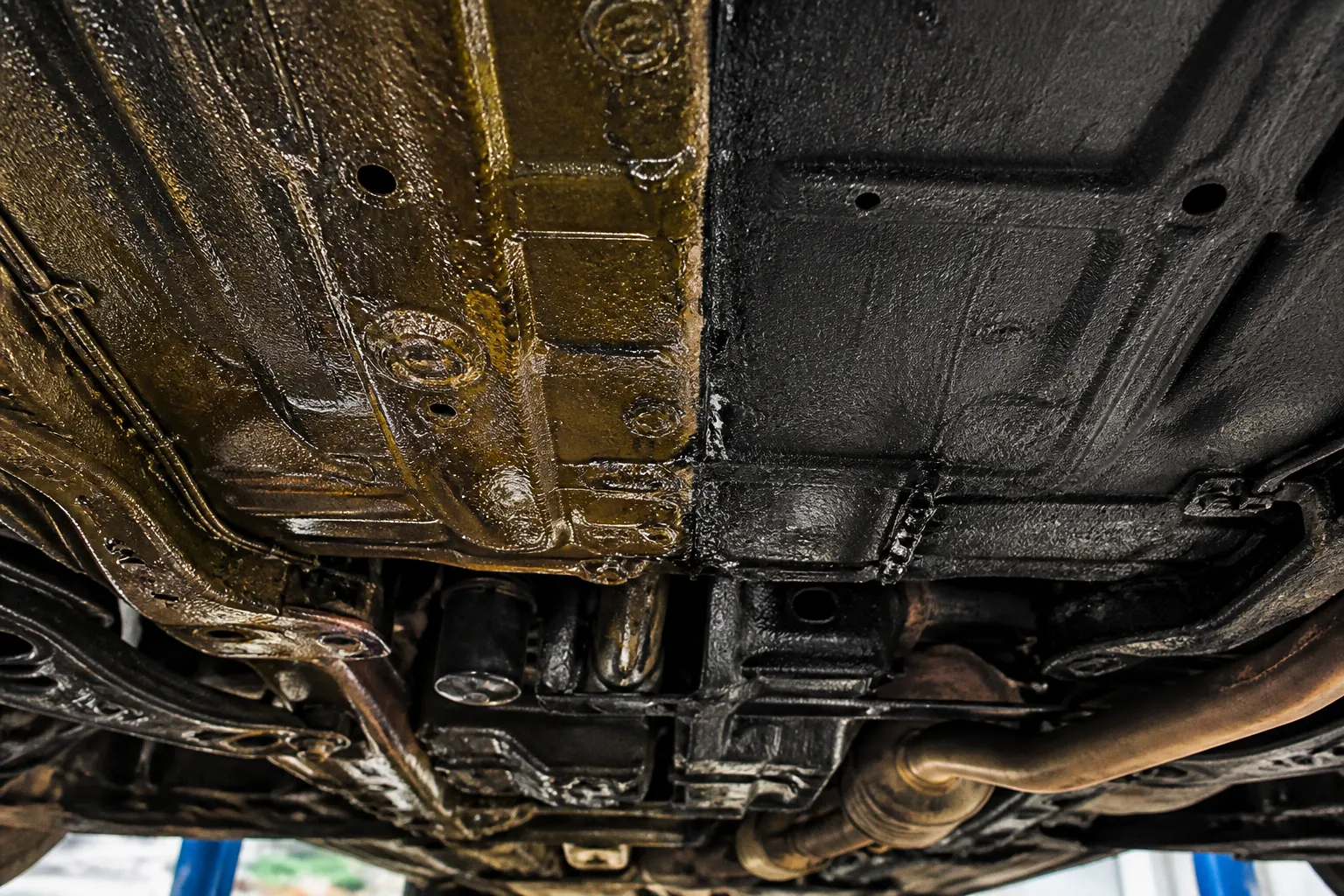
It scrapes a shell. And underneath that shell, the steel is doing what steel does when salt and oxygen get a free ride: slowly turning into iron oxide.
Compare car rental deals in United Kingdom
See available offersPartner link — DiscoverCars comparisonWe see it every spring on daily drivers from the Midwest and Northeast, on trucks that spent their winters on salted interstates, and on imports whose owners genuinely believed they were protecting them. The question isn’t whether the undercarriage needs attention. It’s whether the product you trusted is still doing its job—or whether it has sealed its own failure in place.
Lanolin-based rust prevention sprays and rubberized undercoatings both claim to fight corrosion. They do it in fundamentally different ways. One stays soft, creeps, and needs to be renewed. The other cures into a more durable shell, but demands much better surface preparation and more disciplined inspection than most owners realize.
That distinction matters more than the label on the can, especially when you’re dealing with an older import, an existing layer of surface rust, or a car that sees real winter salt instead of occasional rain.
The Mechanics of Moisture Displacement: How Lanolin Works
Lanolin is sheep’s wool grease, refined and formulated for use as a protective coating. The basic behavior is straightforward: it remains soft, tacky, and mobile rather than curing into a rigid film. It doesn’t harden into a shell, and it doesn’t pretend to turn the underside of a used car into a new one.
That softness is the mechanism.
Rust needs an electrolyte—usually water contaminated with road salt—and access to oxygen. A lanolin coating interferes with that process by displacing moisture and occupying the places where water would otherwise sit. Spray it onto a chassis rail and it lands wet, creeps into a scratch you didn’t see, follows the seam between spot welds, and works its way into the edges of layered steel. On a frame rail or inside a rocker cavity, that ability to migrate is more useful than a perfectly smooth surface film.
It also remains active after application. If a stone chips the coating during a winter drive, the material around the damaged area can flow back into the gap. It doesn’t repair damaged steel, and it doesn’t make a deep chip disappear, but it can reduce the exposed area and continue displacing moisture around the break. That is why lanolin products are often described as self-healing. The phrase is a little generous, but the underlying behavior is real: the coating moves into damage rather than simply fracturing around it.
Fluid Film and Woolwax are familiar examples in this category. They are not identical products—carrier solvents, viscosity, spray pattern, odor, and staying power vary—but they rely on the same broad idea. The coating remains present and mobile instead of becoming a permanent hard barrier.
What “moisture displacement” does—and does not—mean
Lanolin does not dissolve heavy scale, rebuild thin metal, or stop corrosion that has already eaten through a panel. If a floor pan is perforated, the repair is welding or replacement. If a frame has deep layered corrosion, spraying it does not restore its structural strength. A rust prevention spray is maintenance, not structural repair.
Its advantage is earlier in the process. On sound steel, light surface oxidation, seams, fasteners, and cavities, it can reduce the amount of water and salt reaching the metal. On a used vehicle, it can also reach areas that are difficult to prepare to bare metal without disassembling half the car.
That makes lanolin particularly useful on imported vehicles with boxed sections, overlapping seams, and underbody shapes that collect wet grit. The coating can be applied to the parts of the car that are visible, but its greater value is often in the less visible areas: inside frame rails, around subframe mounts, along pinch welds, and behind splash shields where salt remains long after the exterior looks dry.
Lanolin doesn’t cure, and that’s the point. A coating that stays soft can creep into scratches, push moisture away, and remain active when the metal moves.
There are limits to its compatibility, just as there are with any chemical product. A quality lanolin formulation is generally used around painted metal, rubber seals, plastics, and wiring, but “generally safe” is not the same as “spray it everywhere.” Different products contain different solvents and additives. Test an inconspicuous area, follow the manufacturer’s instructions, and keep the spray away from brake friction surfaces, belts, and components that must remain dry.
The same caution applies to petroleum-based rust-proofing products. Some are perfectly suitable for automotive use; others may soften, stain, or affect particular elastomers, adhesives, and plastics over time. The problem is not that every petroleum product destroys every bushing. The problem is assuming compatibility without checking the formulation or the material.
The Hidden Risks of Hard Rubberized Shells
Rubberized undercoating takes the opposite approach. It is applied as a liquid or semi-liquid coating, then dries or cures into a thicker synthetic rubber film. That shell can be genuinely useful. It dampens road noise, reduces stone impact on exposed areas, and gives clean, properly prepared steel a substantial physical barrier against road debris.
On a new vehicle or freshly restored surface, in a controlled application, it can work well. The difficulty begins when the product is used as a shortcut over an already contaminated or corroded undercarriage.
A hard shell has no way to correct what was underneath it at the time of application. If there was salt residue, trapped moisture, loose scale, grease, or active corrosion beneath the coating, the coating simply covers the evidence. It may bond well enough to make the underside look finished while leaving the underlying problem untouched.
Freeze-thaw cycles and repeated flexing add another layer of risk. The body and suspension mounting points move. Steel expands and contracts. Road debris chips the exposed edges. A coating that was once continuous can develop cracks, lift around fasteners, or separate at seams. Once water enters through a damaged area, the cured film may make it difficult for that moisture to evaporate. The result is the familiar rubberized undercoating rust trap: corrosion continuing behind a surface that still looks intact from a quick inspection.
The material itself is not automatically the villain. A properly applied rubberized coating over clean, dry, corrosion-free steel is a different proposition from a thick layer sprayed over flaky rust in a quick-lube bay. The application history matters as much as the chemistry.
Why visual inspection becomes harder
The most serious drawback of an opaque undercoating is that it hides the condition of the steel. With a thin, mobile coating, you can usually see the surface beneath it, especially after washing or wiping an area. With a thick rubberized layer, the coating becomes the surface you inspect. You are looking for cracks and lifting rather than directly assessing the metal.
That changes the maintenance problem. A crack at the edge of a coating may be harmless surface damage, or it may be the entrance to a wet cavity. A raised bubble may be road debris, delamination, or corrosion pushing outward from below. You cannot reliably tell without cutting away the coating and inspecting the steel.
This is the trap we encounter when trucks come onto the rack after a winter season. The underside looks protected. The owner paid for undercoating at a dealer or quick-lube chain. We probe the shell and it crumbles like dry clay. Underneath is orange oxide, loose scale, and sometimes a seam that has been wet for a long time. The hard shell did not necessarily fail because the product was defective. It failed because the surface preparation was inadequate, the environment was severe, or the coating was treated as permanent when it required inspection.
The right comparison is not “rubberized coating is bad, lanolin is good.” It is “what happens when each product is applied to a used vehicle with imperfect surfaces?” In that situation, the forgiving product is usually the one that lets you monitor the metal rather than hiding it.
Surface Preparation and Compatibility with Existing Corrosion
This is where the two product families diverge completely, and where the choice matters most for an older import.
Rubberized undercoating needs a clean, dry, sound surface to bond properly. Ideally, the steel is free of loose rust, salt, oil, and moisture. Existing corrosion has to be removed or stabilized according to the product instructions. In a serious restoration, that can mean mechanical cleaning, abrasive blasting, corrosion treatment, primer, seam sealing, and controlled application of the undercoating. The prep work is not a ceremonial step. It is the foundation of the system.
Spraying rubberized material over surface rust is a gamble. Spraying it over loose scale is worse. The coating may adhere to the rust rather than the steel, and the rust layer can continue to expand or shed beneath it. If water enters through a chip or an unsealed edge, the coating may slow drying instead of helping it. The thicker and more opaque the layer, the harder it becomes to find the failure early.
A lanolin spray is more forgiving because it does not require the same level of bonding. It can be applied over clean metal and light surface oxidation, provided the area is washed, dried, and free of loose scale. It will not reverse corrosion, but it can work its way into the texture of the oxidized surface and reduce further exposure to water and salt.
“Forgiving” still does not mean “no preparation.” A dirty vehicle is a bad candidate for any coating. Caked mud can hold moisture against the floor pan. Salt residue can remain active under a fresh film. Grease can prevent the product from reaching the metal. Before applying a lanolin product, wash the undercarriage, remove loose rust and flaking coating, open blocked drain points, and allow the vehicle to dry thoroughly.
For a used car, the useful preparation is often selective rather than cosmetic. You do not need to make every square inch look factory-new before applying a lanolin film. You do need to identify the areas where corrosion is active, where scale is separating from the metal, and where the steel has already lost thickness.
Existing coatings need to be treated as evidence
A vehicle may have several generations of protection underneath it: factory paint, dealer-applied rubberized undercoating, an older wax or oil film, and patches applied by previous owners. Do not assume that a new product will be compatible with all of them.
A lanolin spray can usually be applied over sound existing coatings, but loose, cracked, or peeling material should be removed first. Otherwise, the new film simply preserves a section that may already be separating from the steel.
Rubberized material applied over an unknown old coating is more complicated. Adhesion can be inconsistent, and any failure in the older layer becomes part of the new system. If you cannot determine what is underneath, creating another opaque shell may make future inspection more difficult.
A practical inspection should cover:
- Floor pans and pinch welds, especially where jacking points have been damaged.
- Subframe mounting areas, where layered metal and trapped road grit create corrosion pockets.
- Brake and fuel line brackets, which often rust before the surrounding floor pan.
- Rocker panel seams and the lower edges of doors.
- Frame rails, crossmembers, and boxed sections with access holes.
- Wheel arches behind plastic liners and splash shields.
- Drain holes and factory seams where water is meant to leave.
If a screwdriver or pick passes through the metal, stop comparing coatings. That is a repair decision.
Maintenance Cycles and Long-Term Preservation Strategies
Nothing is permanent. Anyone who tells you otherwise is selling something.
Lanolin-based undercoatings require periodic reapplication. In many climates, an annual inspection and refresh is a sensible baseline; the actual interval depends on road salt, mileage, storage, washing habits, and how exposed the treated area is. A vehicle driven through salted slush and frequently washed with high-pressure equipment will lose material faster than a garage-kept car that sees occasional winter use.
The soft film is both the advantage and the maintenance obligation. It can migrate back into small scratches, but it can also be displaced by water, dirt, and repeated abrasion. Wheel wells, front crossmembers, and the underside of the rocker panels usually take more punishment than protected frame cavities. Those zones may need attention more often than sheltered areas.
We treat lanolin the way we treat engine oil: not as a once-and-done installation, but as part of a service routine. Before reapplying, inspect the surface. Look for new scale, damaged seams, blocked drains, and wet pockets. Wash away salt and mud, let the metal dry, then add material where the film has thinned. Do not simply bury every problem under another layer.
That approach also makes long-term preservation more honest. A lanolin treatment can help keep corrosion from progressing, but its result depends on repeated inspection and timely repair. The product is not the entire strategy. The strategy is the product, the preparation, the inspection, and the willingness to remove a shield when the steel underneath needs attention.
Rubberized undercoating is often marketed as a one-time treatment. In practice, it also needs inspection, particularly around wheel wells, seams, drain points, jacking locations, and areas exposed to stones. Look for:
1. Cracks and lifted edges. A split in the coating is an entry point for water, not merely a cosmetic defect.
2. Soft bubbles or raised sections. These can indicate delamination or corrosion expanding beneath the shell.
3. Missing patches. Exposed steel at a chipped edge should be cleaned and assessed before the area is recoated.
4. Blocked drainage. Coating should never be allowed to close factory drain holes or create a pocket where water can remain.
5. Changes in the metal around fasteners. Rust at a subframe bolt or brake-line bracket may extend farther than the visible spot suggests.
When damage is found, the correct repair is to remove the affected section, clean and dry the steel, inspect for loss of thickness, and then rebuild the protection system. Spraying fresh rubberized material over the damaged area is the fastest way to preserve the appearance of failure while extending the failure itself.
| Parameter | Lanolin-based spray | Rubberized undercoating |
|---|---|---|
| Film behavior | Remains soft, tacky, and mobile | Dries or cures into a thicker rubber-like shell |
| Main protective action | Displaces moisture and coats seams and pores | Forms a physical barrier against impact and contamination |
| Tolerance of light surface rust | Generally good after cleaning and removal of loose scale | Poor unless the surface is properly prepared and stabilized |
| Visibility of the metal | Usually remains relatively easy to inspect | Can conceal corrosion beneath the coating |
| Response to chips and scratches | May migrate back into small areas of damage | Requires inspection and repair of the breached section |
| Road-noise reduction | Limited | Usually significant |
| Maintenance pattern | Inspect and refresh periodically | Inspect for cracks, lifting, and hidden corrosion |
| Main risk | Film can wash or wear away | Moisture can remain trapped behind a damaged shell |
| Best use | Existing vehicles and cavity protection | Clean, sound surfaces where impact protection is wanted |
The “fluid film vs rubberized undercoating” argument usually comes down to this difference in maintenance philosophy. A lanolin product asks you to return. A rubberized coating encourages the assumption that the job is finished. The first is more visible and more demanding in the short term; the second can look cleaner while requiring more caution when it eventually fails.
Strategic Application Zones and Component Safety
How you apply rust prevention matters as much as what you apply. Both product families share a list of components that should never be coated, and we see the consequences of getting this wrong on a regular basis.
Moving parts—driveshafts, tie-rod ends, ball joints, control-arm bushings, sway-bar links, and CV joints—need to pivot, rotate, and flex freely. Do not spray directly onto ball-joint seals, dust boots, grease fittings, or the sliding surfaces of suspension components. A lanolin film is less likely to create a rigid mechanical obstruction than a cured rubberized coating, but “less likely” is not a reason to coat the joint itself.
The same rule applies to brake hardware. Keep both products away from brake rotors, pads, caliper friction surfaces, drum linings, and parking-brake mechanisms that need to move without contamination. Brake lines and their mounting brackets can be protected, but spray carefully and wipe away excess from fittings or areas where it could migrate toward the braking surfaces.
Avoid steering and suspension adjustment threads if the product can attract grit or interfere with future service. A thin protective film on an exposed fastener is one thing. Packing a soft coating into a threaded adjuster or locking mechanism can make later repairs messier and can conceal cracking or movement.
Drainage holes are not defects. They are part of the vehicle’s corrosion-control design. Every door, rocker panel, frame rail, and floor section may have openings at low points to let condensation and wash water escape. If you seal them with undercoating, the trapped moisture has nowhere to go. Rust then forms inside the cavity, where it is difficult to see and even harder to dry.
Hot exhaust components also need a wide berth. Catalytic converters, exhaust pipes, mufflers, oxygen sensors, heat shields, and nearby high-temperature areas can burn off lanolin or cause rubberized products to smoke, soften, or degrade. If you are unsure whether a component becomes hot in operation, treat it as off-limits and consult the vehicle service information.
Where the protection belongs
The target is exposed or vulnerable steel, not every surface beneath the car.
Useful zones include:
- Floor pans, particularly seams, drain surrounds, and areas near the rocker panels.
- Frame rails and crossmembers, including accessible internal cavities.
- Suspension mounting points, after checking for existing structural corrosion.
- Wheel wells and the back side of arches, where salt and gravel arrive together.
- Pinch welds and jacking points, provided the coating will not interfere with lift contact.
- Seams behind rocker-panel trim and splash shields.
- Brake and fuel line brackets, without coating the lines’ fittings or contaminating nearby brake components.
- Fasteners and exposed brackets that are vulnerable to salt but do not require friction surfaces to remain dry.
For a lanolin application, remove the wheels if possible and use the access holes provided by the manufacturer or by the vehicle itself. Apply a controlled film inside frame rails and cavities rather than flooding them. A cavity wand helps distribute the product along the inside of a rocker or rail, but it does not make a blocked drain safe. Confirm that water can still leave before closing anything up.
Work in sections. Spray, inspect, wipe overspray from components that should remain clean, and move on. Excess product on the underside is not automatically better protection; it can collect grit and make later inspection unpleasant. The goal is coverage where moisture sits, not a dripping vehicle.
For rubberized undercoating, the same zones may be appropriate, but the preparation is heavier. The steel must be clean and dry, loose corrosion must be removed, and the application must stop cleanly around plugs, fasteners, drain holes, brake hardware, and service points. Masking is not overkill here. It is how you prevent a protective product from becoming a repair problem.
The Verdict From the Workbench
For a clean, rust-free vehicle that lives in a mild climate and is being protected before corrosion begins, a quality rubberized undercoating can be a reasonable choice. Its impact protection and sound dampening are real. The system makes the most sense when the surface has been properly prepared, the application is even, and the owner understands that the coating still needs to be inspected.
For an older import, a car that sees salted winters, or a chassis that already has surface oxidation working into its seams, lanolin is usually the more honest tool. Not because it is a magic bullet, and not because every lanolin formulation is identical, but because it works with the realities of a used car. It can reach seams and cavities. It does not require every trace of light oxidation to be removed before it becomes useful. It remains visible, mobile, and renewable.
The trade-off is straightforward. Lanolin asks for an annual conversation with the underside of the vehicle. You wash it, inspect it, find the places where the film has thinned, and refresh them. Rubberized undercoating can offer a tougher-looking surface, but the cost of that surface is greater dependence on preparation and a more careful search for hidden failure.
The best rust prevention spray for cars is not the one with the most confident claim on the label. It is the one that matches the vehicle’s condition, climate, and maintenance habits. A soft coating that is renewed and inspected is more useful than a hard coating applied over damp scale. A properly prepared rubberized system is more useful than a casual spray over an unknown underbody. Product choice cannot compensate for blocked drains, untreated perforation, or salt left under the coating.
The trap of the rubberized shell is that it can make you feel protected while hiding the problem. The virtue of lanolin is that it stays soft, stays working, and asks you to come back under the car to see what is actually happening. We prefer the product that requires us to keep showing up.
Check the metal. Clean the salt. Keep the drain holes open. Protect the seams, rails, and mounting points without coating the parts that need to move, breathe, or stay dry. Reapply when the film has thinned, and remove any shield that is hiding active corrosion before adding another one. That is how an import stays worth preserving—not through a promise of permanent protection, but through a maintenance routine that catches the steel before the steel becomes the repair.