Hyundai Battery Management System Software Update for Kona and Ioniq Electric Models
Per Hyundai service documentation tracked by OEMDTC, a battery management system software reflash campaign now covers certain 2019–2023 Kona Electric and 2020–2021 Ioniq Electric units.
Aldous Moorland·updated August 22, 2026
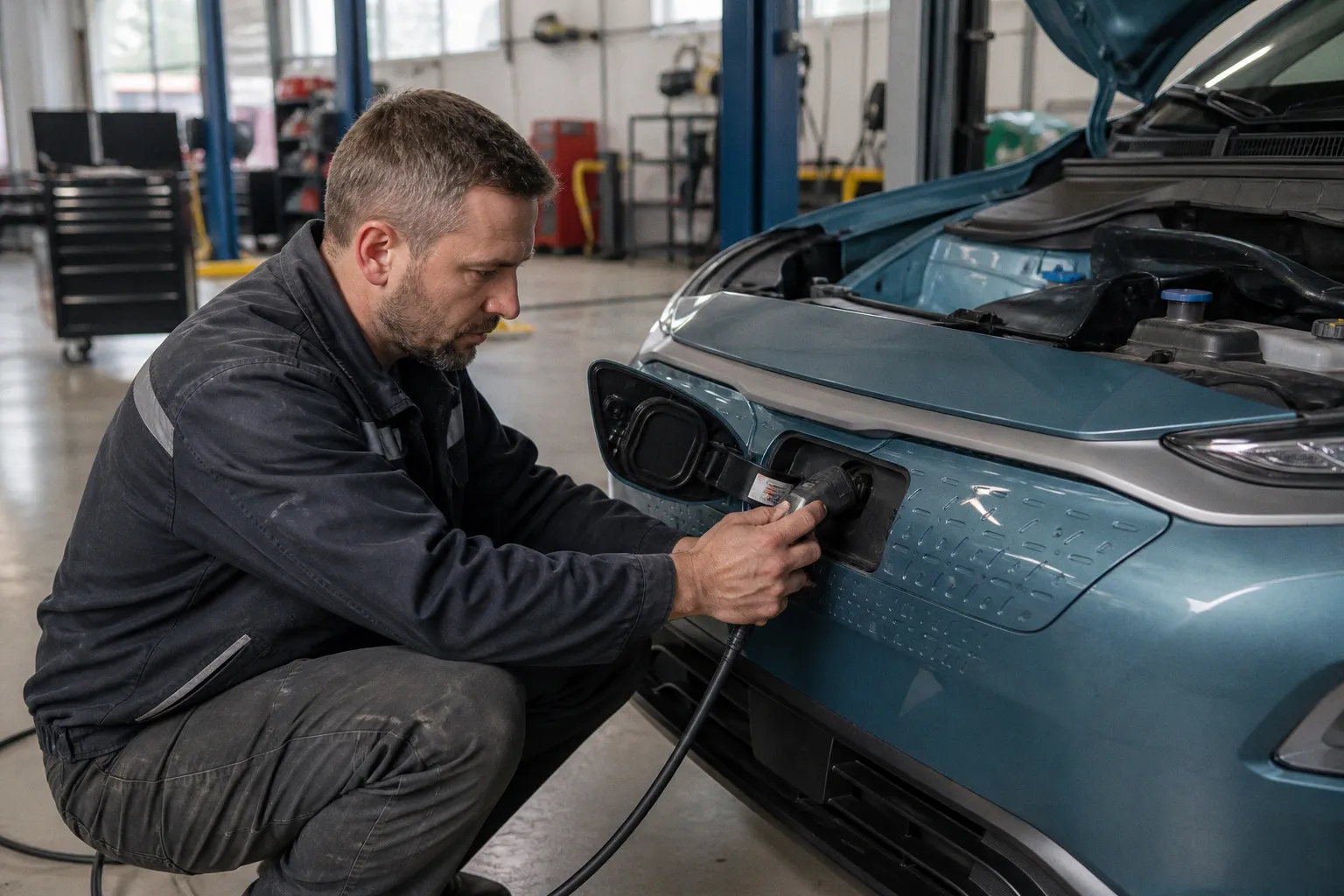
The update targets diagnostic precision within the high-voltage battery pack, not drivability or range parameters. Technicians handling these import nameplates should verify campaign status at intake before any BMS-related code retrieval.
Campaign Scope and Trigger Conditions
Two production windows apply. Kona Electric: model years 2019 through 2023. Ioniq Electric: model years 2020 through 2021. The procedure is designated for shop execution when the vehicle enters service. It is not an over-the-air deployment. If a Kona BEV or Ioniq BEV arrives with BMS-related diagnostic trouble codes — whether a customer complaint triggered the visit or a routine multipoint inspection surfaced the anomaly — then campaign eligibility must be confirmed through the OEM scan tool before module-level diagnosis proceeds. Skipping this step risks misdiagnosis. A pre-campaign calibration can mask cell voltage drift and thermal sensor inconsistencies that the updated software now flags with greater specificity.
What the Reflash Changes at the Module Level
The bulletin language specifies improved battery-system diagnostic capability. Cell voltage interpretation, state-of-charge calculation logic, and thermal sensor input handling fall within the stated scope. If a technician logged BMS baseline data prior to vehicle entry — cell voltage histograms, pack temperature curves, state-of-health readings — those records should be retained. Post-reflash comparison yields a clean before-and-after parameter set useful for future fault isolation on similar units. The update does not alter charging behavior, thermal management thresholds, or drivetrain mapping. It refines how the BMS reads its own data.
Verification Parameters After the Flash
Post-reflash confirmation requires OEM-level scan equipment connected through the data link connector. The BMS calibration identifier must match the latest release per Hyundai's service information system. If the identifier predates the campaign release, the flash did not register and the procedure repeats. A cleared DTC list, followed by a full pack voltage sweep across all cell groups, completes the verification gate. A controlled charging session may follow to confirm the BMS reinitializes without re-flagging prior faults. Any pre-update code that returns post-reflash indicates a genuine hardware condition the new software correctly identifies — not a calibration fault.