The Science Behind Low-Viscosity Motor Oil and Why Modern Engines Require It
According to SlashGear, more than 70% of new vehicles sold in 2024 left the factory specced for 0W-20 or thinner oil, and even lower-viscosity formulations are reportedly on the horizon.
Judson Grier·updated August 16, 2026
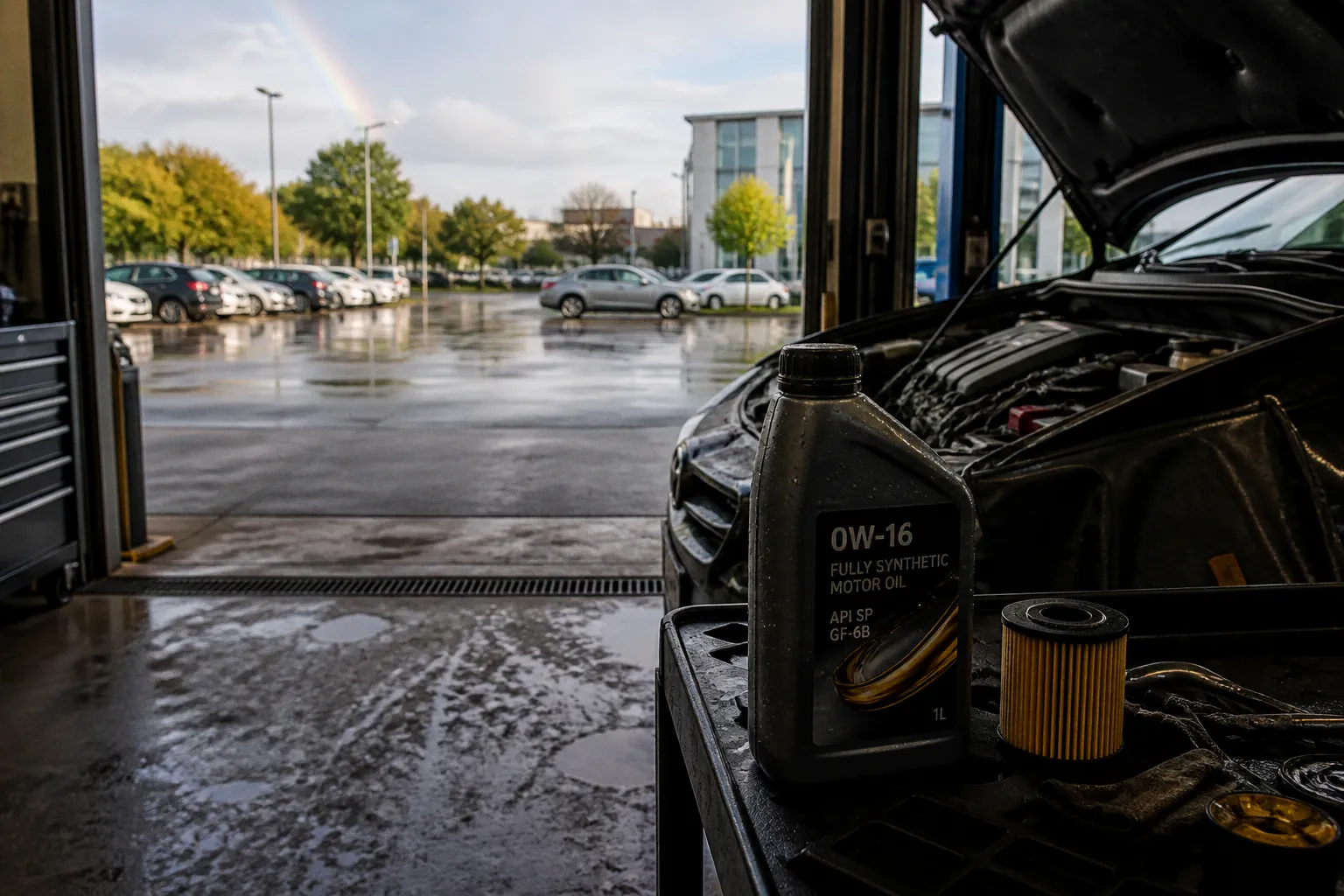
If that number makes you uneasy, you're not alone — we've all heard the old saw that thicker is better. But the parts in our hands today aren't the parts we grew up wrenching on, and that changes the conversation at the bench.
What's Actually Different Inside the Block
Modern engine components are machined to clearances measured in microns — gaps you used to talk about in thousandths of an inch. Pair that with hardened bearing surfaces and advanced low-friction coatings, and the metal-to-metal contact that thick oil once absorbed simply isn't the threat it used to be. The fluid isn't bearing the same load; the materials are doing more of the work themselves. Thinner oil, in this context, is the right fit, not a corner cut.
That shift isn't abstract. SlashGear points to a 2% to 4% fuel economy gain running 0W-20 over something like 5W-30, plus faster oil delivery on cold starts. That's real money at the pump and real seconds shaved off the moment the key turns.
Why Thicker Can Actually Hurt
Here's where it gets counterintuitive. Drop a heavier oil into an engine built for low-viscosity flow and you're not adding protection — you're adding drag. Viscous friction climbs, the pump works harder to push fluid through narrow gallery passages, and operating temperatures edge up. Worse, that slower flow at startup is the exact moment bearings are most vulnerable to wear. Variable valve timing systems can also get confused when the oil they're trying to meter doesn't behave the way the engineers expected.
The old rule held when clearances were loose and metallurgy was simpler. It doesn't translate cleanly anymore.
What We Do at the Bench
The first move is the obvious one: follow the viscosity on the cap or in the owner's manual. If the spec says 0W-16, we run 0W-16. If you're nursing an older import with wider bearing clearances, thicker may still be the honest call — the engine was designed around it, and no modern oil formulation will rewrite that geometry.
Worth remembering how the rating itself reads: that first number (the 0W part) describes cold-flow behavior — how readily the oil moves when it's still sluggish from sitting overnight. The second number (the 20, 16, 30) is viscosity at operating temperature. Smaller numbers across the board mean thinner oil. It's not a quality grade; it's a flow description.
For the import cars we see most often, the move toward 0W-16 and 0W-20 is settled practice. The long-term wear story won't be fully written for another decade, but the engineering rationale is sound: tight parts, smart coatings, and an oil that gets out of the way. That's the trade we're working with now.