Toyota’s New Acoustic Diagnostic Test for Tundra V6 Engine Recalls
According to autoevolution, Toyota has introduced a diagnostic procedure that uses a plastic mallet and an accelerometer to check recalled V35A twin-turbo V6 engines for main-bearing defects.
Judson Grier·updated August 21, 2026
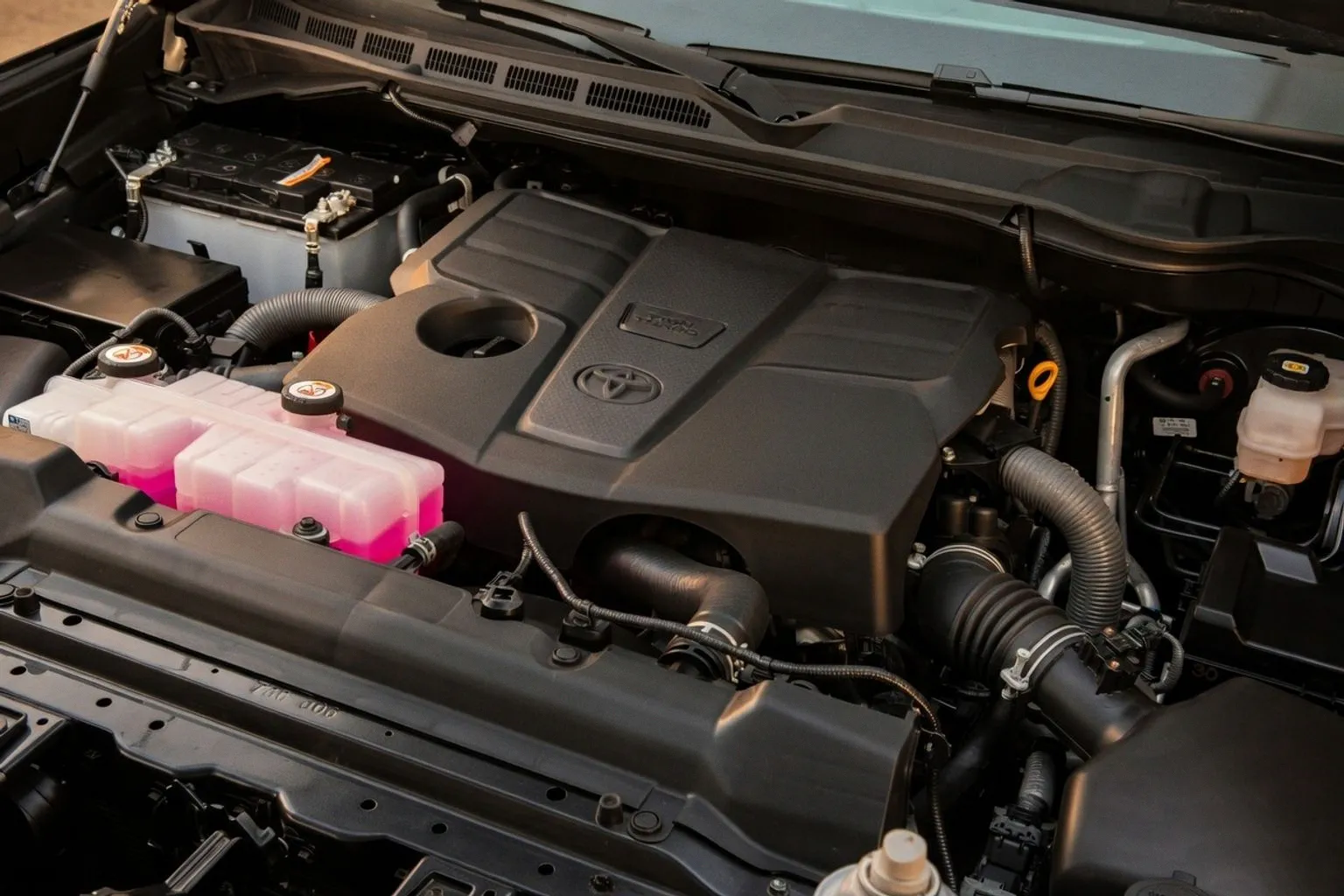
The unusual test is intended to help technicians decide whether an engine needs replacement. For Tundra owners facing a recall inspection, the important point is that the hammer is only part of a controlled measurement system—not a roadside shortcut.
The mallet is only the trigger
The procedure is an acoustic test. Technicians strike the engine’s crankshaft pulley with a plastic mallet while an accelerometer measures the resulting vibration. Diagnostic software then analyzes that response and helps determine whether the engine should be replaced.
That distinction matters. The mallet does not reveal a damaged bearing by itself, and a technician is not judging the sound with a stethoscope or by ear. The useful information comes from the measured vibration pattern and the software’s interpretation of it.
In practical terms, Toyota is trying to turn a difficult internal-engine inspection into a repeatable screening process. The main bearing is not directly visible during this test, so the system looks at how the crankshaft responds when it is struck. A damaged component can change that response, giving the diagnostic system a basis for its decision.
Why this matters to Tundra owners
The procedure applies to recalled V35A twin-turbo V6 engines, including the engine used in the Toyota Tundra. The central question for an owner is not whether the test looks unconventional; it is whether the result determines the next repair step clearly enough.
If your truck is being inspected under the recall, ask the service department what the test result means for your vehicle and whether Toyota’s process calls for engine replacement or continued operation. Request that the recall inspection and its outcome appear on the repair order. That paperwork matters when the repair decision is being made from a diagnostic measurement rather than from an obvious external failure.
Do not try to reproduce the procedure at home. The test requires an accelerometer and diagnostic software, and the hammer strike is meaningful only as part of that system. Hitting the pulley without the required measurement equipment would not duplicate Toyota’s inspection and could create a new mechanical problem without answering the original one.
What to watch after the inspection
The practical concern is the gap between a recall visit and a final repair decision. A test may tell the technician that the engine does—or does not—meet the replacement criteria, but the owner still needs a clear record of what was measured and what happens next.
Keep the recall documentation, the dealer’s repair order, and any stated decision about replacement. If the vehicle is not immediately approved for an engine change, ask what status Toyota has assigned to the inspection and what action the service department expects next. The goal is not to argue with the tool or the technician; it is to make sure the result is attached to your vehicle’s record and not left as a vague verbal assurance.
Toyota’s approach is unusual because it uses a physical impact to expose a vibration signature, but the underlying job remains familiar to anyone who has chased an intermittent mechanical fault: create a controlled input, measure the response, and decide whether the worn part can continue to carry the load. For owners, the long-term issue is whether that measurement leads to a durable repair before bearing wear becomes a complete engine failure.