Automechanika Frankfurt 2026: The Shift Toward Software-Defined Vehicle Repair
According to Messe Frankfurt, the Automechanika Frankfurt 2026 aftermarket trade exhibition has commenced with approximately 4,400 exhibitors.
Aldous Moorland·updated September 08, 2026
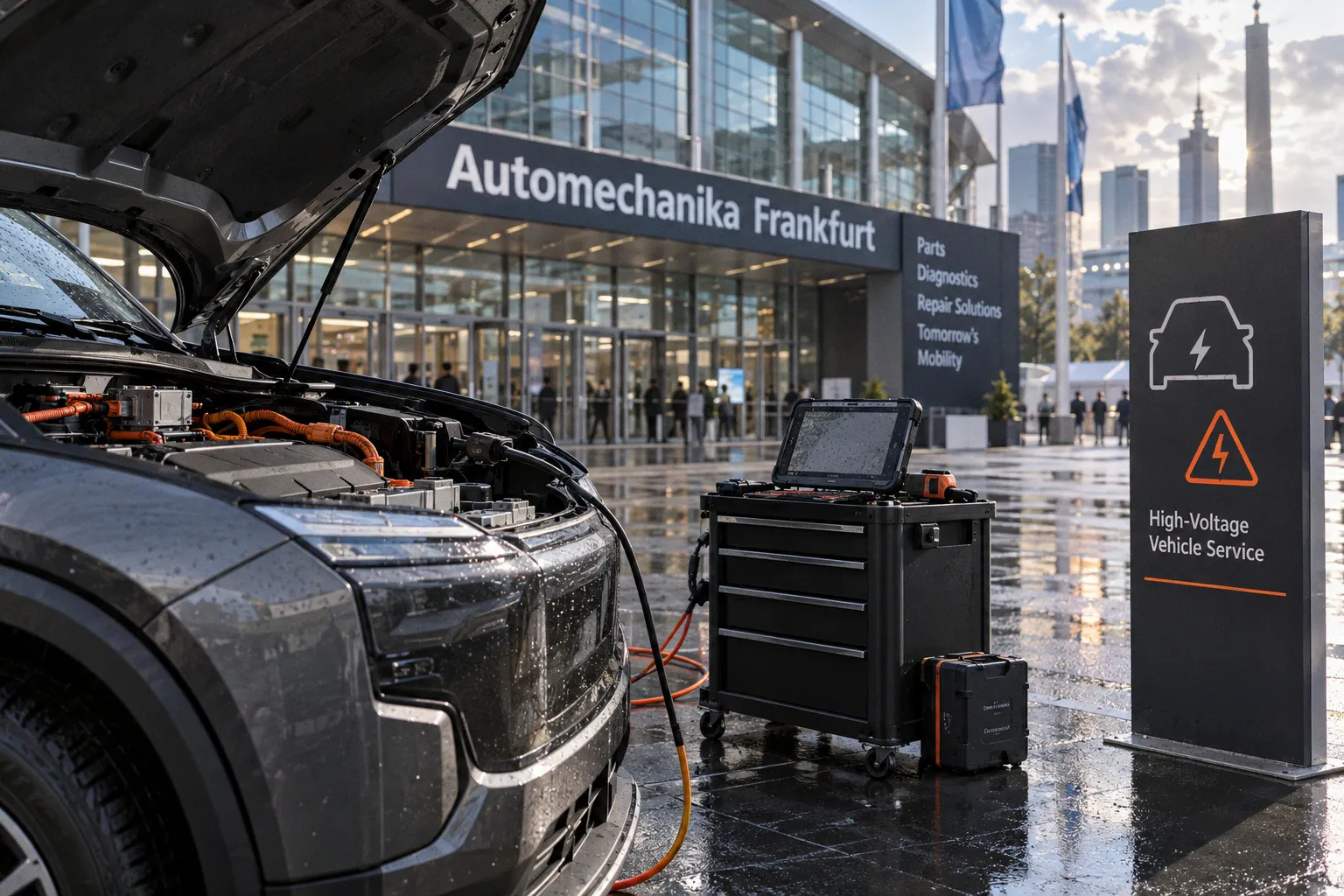
The event's focus on next-generation workshop solutions signals a concrete shift: maintenance workflows for software-defined vehicle architectures are no longer theoretical. For import technicians, this means diagnostic and programming toolsets are undergoing mandatory revision.
Software-Defined Architectures Demand New Tooling
The exhibition's stated focus areas include high-voltage diagnostics and remote programming tools. This is the direct response to the core symptom of the software-defined vehicle: fault code interpretation is increasingly decoupled from component-level failure. A voltage anomaly on an EV battery management system may originate from a firmware calibration error, not a failed sensor. Baseline diagnostic protocols must now incorporate network integrity checks and gateway software version validation before physical component testing.
PHINIA Expands Coverage for Emerging Complexity
In a parallel move, PHINIA unveiled a major aftermarket expansion across its Delphi, Delco Remy, and Hartridge brands. The expansion is engineered to address growing vehicle complexity, specifically adding diagnostics and replacement support for emerging Chinese vehicle platforms, commercial fleet components, and vehicle electronics modules. This indicates the market is reacting to two simultaneous pressures: the influx of new electronic architectures from a previously underserved region of manufacturers and the increasing density of modules per vehicle across all segments. Tooling and part number databases require corresponding updates.
Practical Implication: Verify Your Toolchain
The data from the event floor confirms a trend. The independent workshop's competitive edge now relies on two verifiable parameters: the baud rate compatibility of its primary diagnostic interface with new OEM security gateways, and the coverage depth of its subscription-based technical information system. A scan tool unable to initiate a secure remote programming session with a 2026 model-year import is functionally obsolete. The required verification is a system self-test against the latest known protocols, not a general check for code reading capability. The baseline has moved from reading faults to authorizing repairs.