The Software-Defined Vehicle: How Code is Transforming Modern Auto Repair
According to News9live's coverage of the Software-Defined Vehicle shift, vehicle capability is now delivered and updated through code rather than mechanical revision.
Aldous Moorland·updated September 01, 2026
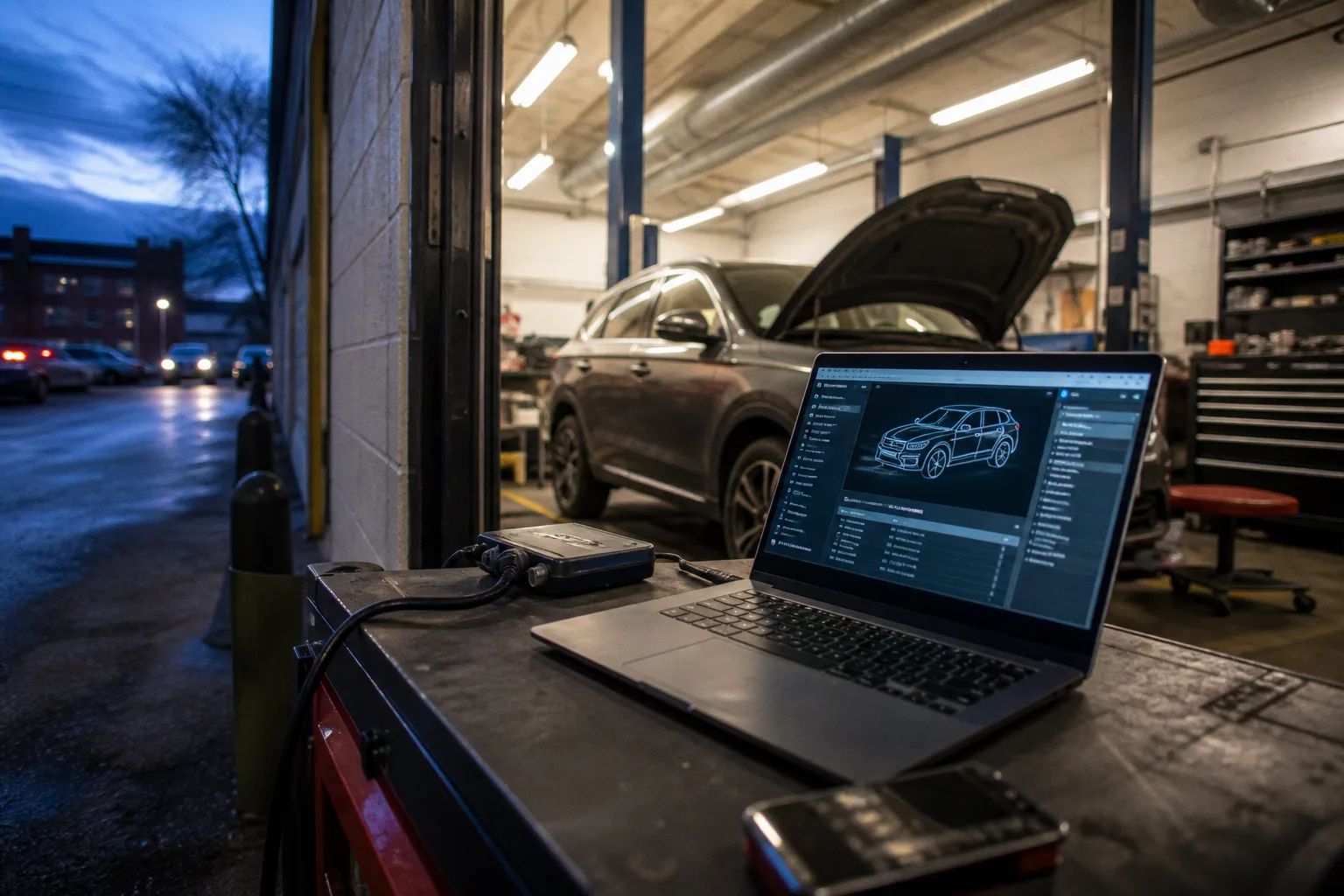
Software Is Now Part of the Repair Order
A logged fault in an outdated control module may no longer require a component swap. According to News9live's coverage of the Software-Defined Vehicle shift, vehicle capability is now delivered and updated through code rather than mechanical revision. For service technicians working on European and Asian imports, the diagnostic path has changed.
The Scan Tool Reads a Different Layer
Under the hardware-defined model, an OBD-II session returned a fault code, and the repair resolved at the component level: a sensor, a harness, a control unit. Under SDV logic, the same code may resolve through a parameter update, a calibration refresh, or a module flash delivered over the air. Predictive diagnostics, fueled by aggregated connected-vehicle telemetry, separates routine wear from genuine anomaly before a warning lamp illuminates. The diagnostic event has moved upstream, from the bay to the cloud.
A parallel development reinforces the trend. IDrive has announced a licenseable L2+ driver-assistance stack currently operating on a production vehicle, with more than 1,100 real-world miles and over 25 hours of engaged driving logged. The platform targets lane keeping, adaptive cruise, stop-and-go behavior, and lane-change assistance under continuous driver supervision. Vehicles equipped with such stacks require post-repair sensor validation and ADAS calibration as standard procedure, not as optional add-ons.
Verification Parameters for Import Service
For technicians working on late-model European and Asian imports, three baseline checks apply when software capability is part of the repair specification:
1. Confirm the current software version against the manufacturer's latest release before clearing any module-level code. A logged fault in an outdated control unit may be addressed upstream of the component replacement.
2. Document ADAS sensor alignment values before and after any front-end, windshield, or suspension work. Camera and radar offsets present as non-fault conditions and survive standard OBD-II scans undetected.
3. Verify whether the vehicle supports secure over-the-air flashing. If the manufacturer has acquired or released an updated software bundle for the specific model year, confirm the module is at the correct revision before returning the vehicle.
A separate report indicates Epoch Automotive has acquired updated software for Nissan. Import owners should confirm whether the update applies to their specific model and ECU variant before scheduling service.
The repair is no longer complete when the wrench is set down. Completion is confirmed when software revision, sensor calibration, and diagnostic baseline match the manufacturer's current specification.