Ceramic coating vs wax: choosing the right paint protection
A freshly waxed car can feel almost unnaturally smooth under your fingertips, then lose that slickness after a few weeks of rain, road film, and repeated washing. A ceramic-coated car behaves differently.
Judson Grier·Updated: September 01, 2026·19 min read
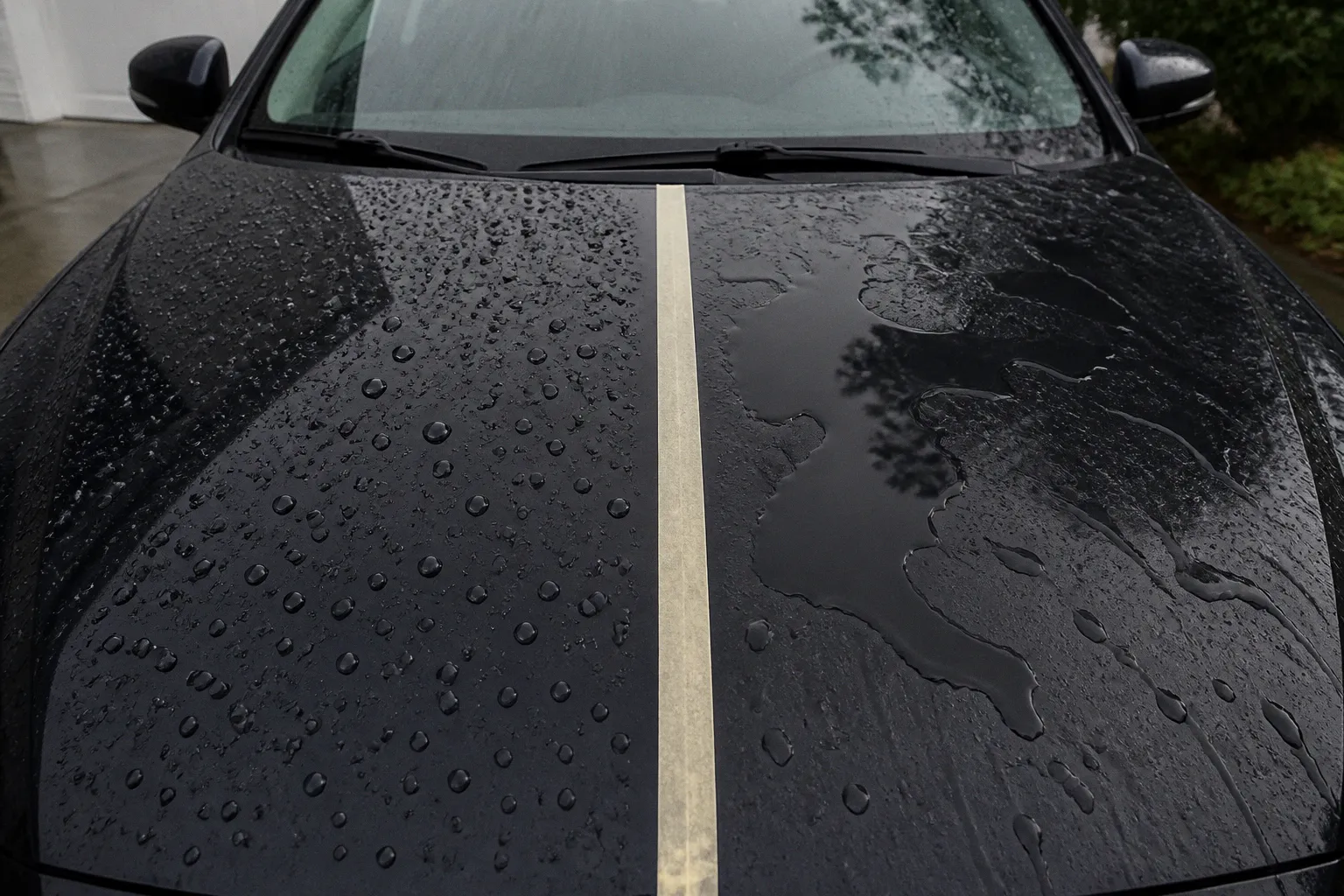
Water gathers into tight beads, dirt releases more readily, and the protective layer remains bonded to the clear coat long after a conventional wax has sheared away.
Compare car rental deals in United Kingdom
See available offersPartner link — DiscoverCars comparisonThat difference is the center of the ceramic coating vs wax decision for daily drivers. Wax is a temporary surface layer that we renew regularly. A ceramic coating is a longer-term SiO₂-based film that chemically bonds with the clear coat after careful preparation. Neither one makes paint invulnerable, and neither one excuses poor washing technique. They simply ask different things of your time, budget, and maintenance routine.
The protective layer is doing different work
Traditional carnauba wax sits on top of the clear coat as a soft hydrocarbon layer. It fills and smooths the microscopic texture of the surface, giving the paint warmth, gloss, and a slick feel. The layer is useful, but it is not permanent. Sunlight, detergents, heat, rain, and ordinary friction gradually thin it until water no longer behaves the same way.
That is why a waxed vehicle can look excellent on Saturday and feel noticeably less protected a month later. We are not watching the paint fail in one dramatic event. The wax is being worn down in small increments every time the vehicle is washed, driven through standing water, or exposed to contamination.
Carnauba wax generally lasts around four to eight weeks. Synthetic polymer waxes last longer, often around three to six months, because their formulation forms a more durable film than traditional carnauba. They are still surface protectants rather than a permanent glass-like shell.
Ceramic coatings use liquid silicon dioxide polymers. Once applied correctly, the coating bonds at a molecular level with the clear coat and forms a hardened, glass-like protective layer. The chemistry is different, and so is the service interval. Depending on the product, preparation, environment, and maintenance, ceramic coating durability can range from roughly two years to nine years or more.
That range is wide because the word ceramic covers several kinds of products. A professionally installed liquid coating is not automatically equivalent to a spray-on ceramic maintenance product. The label may use similar language, but the film thickness, bonding behavior, application method, and expected service life can be very different.
Wax gives us a replaceable skin. Ceramic coating gives us a bonded layer that must be prepared, installed, and maintained with more discipline.
The tactile difference is easy to understand. Wax behaves like a thin, soft layer sitting above the paint. A true ceramic coating seats itself onto a properly prepared clear coat and cures into a more resistant surface. It does not become armor. It does not stop a stone chip. It does not make the vehicle scratch-proof. It changes how contamination and water interact with the paint, and it gives us more time before the surface loses its protective behavior.
Ceramic coating vs wax for daily drivers
Daily driving is hard on paint because the damage is repetitive rather than spectacular. We collect dust, salt, insects, bird droppings, oily road film, and mineral deposits. The vehicle may sit outside for hours, then be washed with equipment that adds its own friction. An imported vehicle may also have a thinner or more delicate clear coat than the owner expects, which makes careless washing show up as fine marring sooner.
Both wax and ceramic coatings help, but they help in different ways.
| Paint protection option | Typical service life | Main strengths | Main limitations |
|---|---|---|---|
| Carnauba wax | 4–8 weeks | Warm appearance, low entry cost, easy to apply and remove | Needs frequent renewal and offers limited chemical resistance |
| Synthetic polymer wax | 3–6 months | Longer life than carnauba, straightforward maintenance | Still wears away and depends heavily on surface preparation |
| Professional ceramic coating | 2–9+ years | Strong hydrophobic behavior, UV protection, chemical resistance, lower renewal frequency | High preparation demand, higher upfront cost, sensitive to poor installation |
| Spray ceramic maintenance product | Product-dependent | Fast application and useful as a maintenance layer | Not automatically comparable with a professionally bonded coating |
For a vehicle that is washed by hand and kept in a garage, wax may be entirely sensible. We can apply it in a driveway, correct small sections of paint when needed, and renew the layer several times a year without committing to a more involved installation.
For a daily driver parked outside, the appeal of ceramic is different. The coating can resist the repeated chemical attack from bird droppings and road salts better than wax, while its hydrophobic behavior helps water and loose dirt move across the surface. That does not mean the car stays clean. It means contamination is less likely to sit tightly against the paint and may release more easily during a careful wash.
This distinction matters. A ceramic coating is not a self-cleaning system. Dust still lands on the hood. Mud still binds to rocker panels. Insects still dry onto the front bumper. We still need a proper car paint maintenance routine, especially when the vehicle sees winter salt or long highway commutes.
The coating may reduce the effort required to wash the car. The research commonly describes wash time reductions of roughly 30% to 50% for coated vehicles, but that benefit comes from the surface behavior and the owner’s process, not from the coating washing the vehicle on its own. A neglected coated car can still develop mineral spots, embedded contamination, and staining.
What each option resists
A coating generally provides stronger resistance against ultraviolet exposure, chemical contamination, and the repeated wet-dry cycles that wear down softer protectants. It also offers some resistance to micro-marring, but that phrase needs to be handled carefully. The surface may be less easily marked by light contact than an unprotected clear coat, yet it is still vulnerable to dirty towels, abrasive brushes, automatic wash rollers, and improper drying.
Wax has a shorter working life, but it has one practical advantage: renewal is simple. If the film is worn out, we clean the paint and apply more. There is no expectation that the entire protective system will remain bonded for several years.
Ceramic coating asks more from us at the beginning and often less during routine maintenance. Wax asks less at the beginning and more each season.
The money is in the preparation, not the bottle
The price difference between wax and ceramic coating is not mainly a contest between two containers of product. It is a contest between two preparation processes.
A quality DIY wax commonly costs around $15 to $50 per container. The application may require a wash, drying, light decontamination, and a controlled wipe-on, wipe-off process. If the paint is already in reasonable condition, we can complete the work in a day without dismantling the vehicle or committing to a multi-stage correction.
Professional ceramic coating installation commonly costs from about $800 to more than $3,000, depending on the package, the vehicle’s condition, and the amount of preparation required. That price includes labor that the coating itself cannot replace: washing, chemical decontamination, paint inspection, correction, panel wiping, installation, and curing control.
A neglected hood can carry years of bonded contamination. Rail dust, industrial fallout, tar, old wax residue, and mineral deposits can all interfere with bonding. Swirl marks and haze do not disappear because a coating is applied over them. In many cases, the coating preserves the condition it was installed over. If the clear coat is dull and heavily marked, the coating may lock in a cleaner version of the same problem only after correction; if correction is skipped, it can lock in the defects themselves.
This is why a cheap coating application can become an expensive mistake. The installer may spend little time correcting the paint, or the owner may assume that a strong chemical product will dissolve every defect. It will not. A coating can bond to prepared paint. It cannot reverse clear-coat failure, remove deep scratches, or repair chips.
We should compare the cost over the period we actually intend to keep the car. Wax may look inexpensive on a single Saturday, but repeated products, towels, decontamination, and labor add up across several years. Ceramic may cost more at the start but reduce the need for repeated full protection applications.
That does not make ceramic automatically cheaper. A garage-kept weekend vehicle that receives careful seasonal detailing may get excellent value from wax. A commuter that sits outside, covers long distances, and needs a lower-frequency protection schedule may justify the larger initial investment.
The calculation is not only financial. It is also about whether we will maintain the surface properly. A coating that is ignored can lose its practical advantages. A waxed car that is renewed consistently may remain attractive and well protected despite the shorter interval.
Why the professional application cannot be rushed
The installation window is where most of the real work happens. The coating bottle is only the final stage.
We begin with a thorough wash to remove loose soil without grinding it across the clear coat. Then the paint is chemically decontaminated. Stubborn bonded material may require additional treatment, and the surface needs to be inspected under suitable lighting. If the paint carries swirls, haze, oxidation, or previous polishing residue, paint correction may be required before the coating is applied.
The correction stage is not cosmetic decoration. We are removing or refining a controlled amount of clear coat so the surface becomes flatter and cleaner. A coating follows that surface. It will not level deep defects by itself, and it will not turn a poorly finished panel into a corrected one.
After correction, the paint must be cleared of polishing oils and residue with an alcohol-based panel wipe. This stage allows the coating to contact the clear coat rather than sitting on a film of product residue. If contamination remains, bonding can be uneven. If the installer leaves high spots or misses a wipe, the finished panel may show streaks, patches, or a cloudy appearance that is difficult to correct later.
Application also has a timing problem. The coating must be spread evenly, allowed to flash according to the product’s working behavior, and leveled before it sets too far. Ambient temperature, humidity, panel temperature, lighting, and towel condition all affect the result. The installer is working against the clock, but not in the cheerful way product advertising sometimes suggests. Rushing increases the chance of uneven coverage; waiting too long can leave cured high spots.
Once applied, the coating needs initial bonding time, generally around 24 to 48 hours. During that period, the vehicle must be protected from water, dust, and unnecessary contact. The exact instructions depend on the product, but the basic mechanical reality remains the same: the film needs time to settle and cure before it is exposed to the full abuse of daily driving.
When DIY makes sense
A capable owner can apply some ceramic products at home, but the product must be matched to the job. A consumer coating with a manageable working time is a different proposition from a professional coating that requires controlled conditions and correction equipment.
DIY ceramic application is more realistic when:
- The paint is already clean, glossy, and free from serious defects.
- We have a dry, dust-controlled place to work and enough time to complete the preparation properly.
- We can inspect the paint under strong lighting rather than judging it only in weak garage light.
- We understand that panel wiping and leveling are part of the installation, not optional finishing steps.
- We are prepared to avoid rain, washing, and unnecessary contact during the initial curing period.
The danger is not that the product is mysterious. The danger is that preparation is physically demanding and easy to abbreviate. Clay bar detailing, chemical decontamination, polishing, and panel wiping all take time. If we skip them, the coating may still spread across the car, but the result will not represent what the product was designed to do.
Paint sealant vs ceramic coating: where the middle ground sits
Between wax and a professional ceramic coating, there are synthetic polymer waxes and paint sealants. They are useful when we want more durability than carnauba wax but do not need, or do not want to pay for, a multi-year bonded coating.
A synthetic polymer protectant can last around three to six months. It generally applies more easily than a ceramic coating and is less demanding about curing conditions. The paint still benefits from washing and decontamination before application, but the preparation threshold is usually lower because we are not trying to establish a long-term chemical bond with the clear coat.
That makes a sealant a practical choice for owners who:
- Wash the vehicle regularly and do not mind renewing protection two or three times a year.
- Want a cleaner, more durable surface layer without professional correction.
- Keep the car outside but can maintain it through winter and summer.
- Are still deciding whether a full ceramic installation fits their ownership plans.
The trade-off is that a sealant does not deliver the same long-term service interval as a properly installed ceramic coating. Its surface film still wears. It may provide good gloss and water behavior, but we should not treat it as a substitute for a professional coating simply because both products are marketed with terms such as ceramic, glass, or SiO₂-enhanced.
The label tells us less than the application system. We need to know whether the product is designed as a short-term spray protectant, a polymer sealant, or a coating that requires correction and a defined curing period.
Hydrophobic behavior is useful, but it is not the whole decision
Water beading is the feature most owners notice first. It is also the feature most likely to distort the comparison.
A coated panel can make water contract into beads or sheets and leave the surface more quickly. That can reduce the amount of standing moisture carrying dirt against the paint. It can also make rinsing and drying more predictable. But intense beading is not a complete measure of protection. A surface may still resist chemicals even when its beading behavior changes, and a surface may bead dramatically for a short period without offering meaningful long-term durability.
We should look at the full behavior of the layer:
- Does road film release during a safe hand wash, or does it need aggressive contact?
- Does the surface tolerate bird droppings and road salt better than an unprotected panel?
- Does the film remain stable through repeated washing and seasonal exposure?
- Can the owner maintain it without abrasive tools or harsh shortcuts?
- Is the finish still smooth after contamination is removed?
Ceramic coatings are particularly useful when chemical exposure is part of the daily environment. Bird droppings can etch clear coat if left in place. Road salt and grime can remain wet against lower panels for long periods. UV exposure steadily works on unprotected paint. The coating gives us a more resistant interface, but the correct response to contamination is still prompt removal.
We should not allow droppings, insects, salt, or mineral deposits to sit for weeks simply because the vehicle is coated. Chemical resistance creates more margin. It does not erase the clock.
Hydrophobicity changes the wash. It does not cancel the wash.
The coating does not protect against every kind of damage
Ceramic coating is often sold with language that drifts toward armor. That is where expectations go wrong.
A coating can reduce light surface marking and make some contamination easier to remove, but it does not stop rock chips. It does not prevent deep scratches from keys, branches, dirty wash mitts, or road debris. It does not repair peeling clear coat. It does not make a bumper impervious to parking-lot contact.
For impact protection, we are discussing a different category of material, such as paint protection film. Wax and ceramic coating are primarily surface protection systems. They work against exposure, contamination, and wear at the paint’s outer surface. They are not a substitute for a sacrificial film designed to absorb stone impact.
This distinction is especially relevant on imported vehicles with expensive or difficult-to-match paintwork. A coating can help preserve gloss and reduce chemical wear, but a chipped leading edge still needs touch-up or refinishing. If the vehicle sees frequent highway driving, the owner should separate paint preservation from impact protection rather than expecting one product to do both jobs.
Maintenance after installation: where the long service life is won
A ceramic coating lowers maintenance friction, but it does not remove maintenance. The safest routine is straightforward and controlled.
We wash by hand with a clean, lubricated process. Loose grit must be removed before contact washing, and drying towels must be clean and absorbent. The goal is to prevent dirt from being dragged across the coating and clear coat. The coating may resist micro-marring better than bare paint, but dirty equipment can still bind, shear, and mark the surface.
Automatic car washes with spinning brushes and heavy rollers are a poor match for a coated vehicle. The brushes can degrade the coating over time and create micro-marring. Touchless systems are less abrasive, but their stronger detergents may be hard on surface protection if used repeatedly. Neither type replaces a careful hand wash when the finish matters.
A practical maintenance routine looks something like this:
1. Rinse loose soil before touching the paint. Lower panels, wheel arches, and the rear of the vehicle usually carry the heaviest grit. Give them time under the rinse rather than immediately working them with a mitt.
2. Use separate tools for dirty areas. Rocker panels and wheels should not share the same wash media as the roof or hood. A coating does not make transferred brake dust harmless.
3. Work from cleaner panels toward dirtier panels. We reduce the amount of contamination carried back onto the upper surfaces, where fine marring is easiest to see.
4. Remove chemical contamination promptly. Bird droppings, insects, salt, and mineral deposits should not be allowed to bake onto the paint. Soak and soften them rather than scraping.
5. Dry without grinding water film into the surface. A clean towel and controlled pressure are better than repeated wiping over a dusty panel.
6. Inspect the coating rather than judging it only by beads. If water behavior changes, the surface may need decontamination or a manufacturer-approved maintenance product. It does not automatically mean the coating has failed.
The final point saves a great deal of unnecessary re-coating. A surface that feels rough or stops beading may simply be contaminated. Iron particles, road film, mineral residue, or maintenance-product buildup can mask the coating’s behavior. We diagnose the surface first, then choose the least aggressive correction.
Which protection suits the way you keep the car?
The right choice comes down to ownership pattern, not product prestige.
Ceramic coating is a strong fit for a daily driver when the owner wants long-term paint protection, can afford the preparation, and is willing to continue washing correctly. It is especially attractive for vehicles parked outside, exposed to strong sun, road salt, or frequent highway contamination. The coating’s durability can reduce the number of full protection applications across several years.
Wax remains sensible when we enjoy seasonal detailing, want a lower initial cost, or prefer a protection layer that can be refreshed without a major installation. Carnauba offers a short, repeatable cycle. Synthetic polymer wax extends that cycle to several months and sits between traditional wax and ceramic in both durability and effort.
A paint sealant can be the most balanced option for owners who want a longer maintenance interval but are not ready for professional correction and coating work. It gives us more time than carnauba without creating the same installation stakes.
| Your situation | More sensible choice |
|---|---|
| You enjoy detailing several times a year | Carnauba or synthetic wax |
| You want low-cost, repeatable protection | Traditional wax |
| You want several months of protection with simple application | Synthetic polymer wax or sealant |
| The vehicle stays outside and sees daily commuting | Ceramic coating, if properly installed and maintained |
| The paint needs correction before protection | Correct the paint first, then choose wax, sealant, or coating |
| The main concern is stone chips | Neither wax nor ceramic coating; consider impact-focused protection |
| You use automatic spinning-brush washes regularly | Reconsider ceramic installation unless the wash routine changes |
We also need to think about how long the vehicle will remain in our care. A professional ceramic installation makes more sense when we expect to keep the car for years and will preserve the coating through proper washing. If the vehicle is likely to be sold soon, a full correction and coating package may not return its value unless the goal is presentation rather than long-term ownership.
The long-term view is less glamorous and more useful
Ceramic coating vs wax for daily drivers is not a contest between old technology and new technology. It is a decision between a short maintenance cycle and a long one.
Wax gives us a forgiving, inexpensive way to renew the surface. We can apply it after cleaning, enjoy the gloss, and replace the layer when it wears away. Ceramic coating gives us stronger chemical and environmental resistance over a longer period, but only if the clear coat is properly prepared and the owner avoids abrasive washing afterward.
The coating is not the magic bullet. There is no chemical shortcut that will correct neglected paint, stop rock chips, or eliminate hand washing. Its value is more practical than dramatic: it bonds to a prepared surface, resists the kinds of contamination a daily driver collects, and reduces how often we need to rebuild the protective layer.
Choose wax if you want control, low entry cost, and a hands-on seasonal routine. Choose ceramic when you want long-term protection, accept the preparation bill, and are ready to maintain the finish with the same care used during installation.
The product matters. The surface beneath it matters more. In the end, paint survives not because one layer is indestructible, but because we keep contamination from binding, friction from escalating, and neglected wear from becoming a repair.