Exploratorium tickets: A guide to planning your visit
Exploratorium tickets are simple to buy, but the visit itself is not a simple museum walk. You are not moving from one quiet gallery to the next, reading labels and keeping your hands in your pockets.
Judson Grier·Updated: September 10, 2026·14 min read
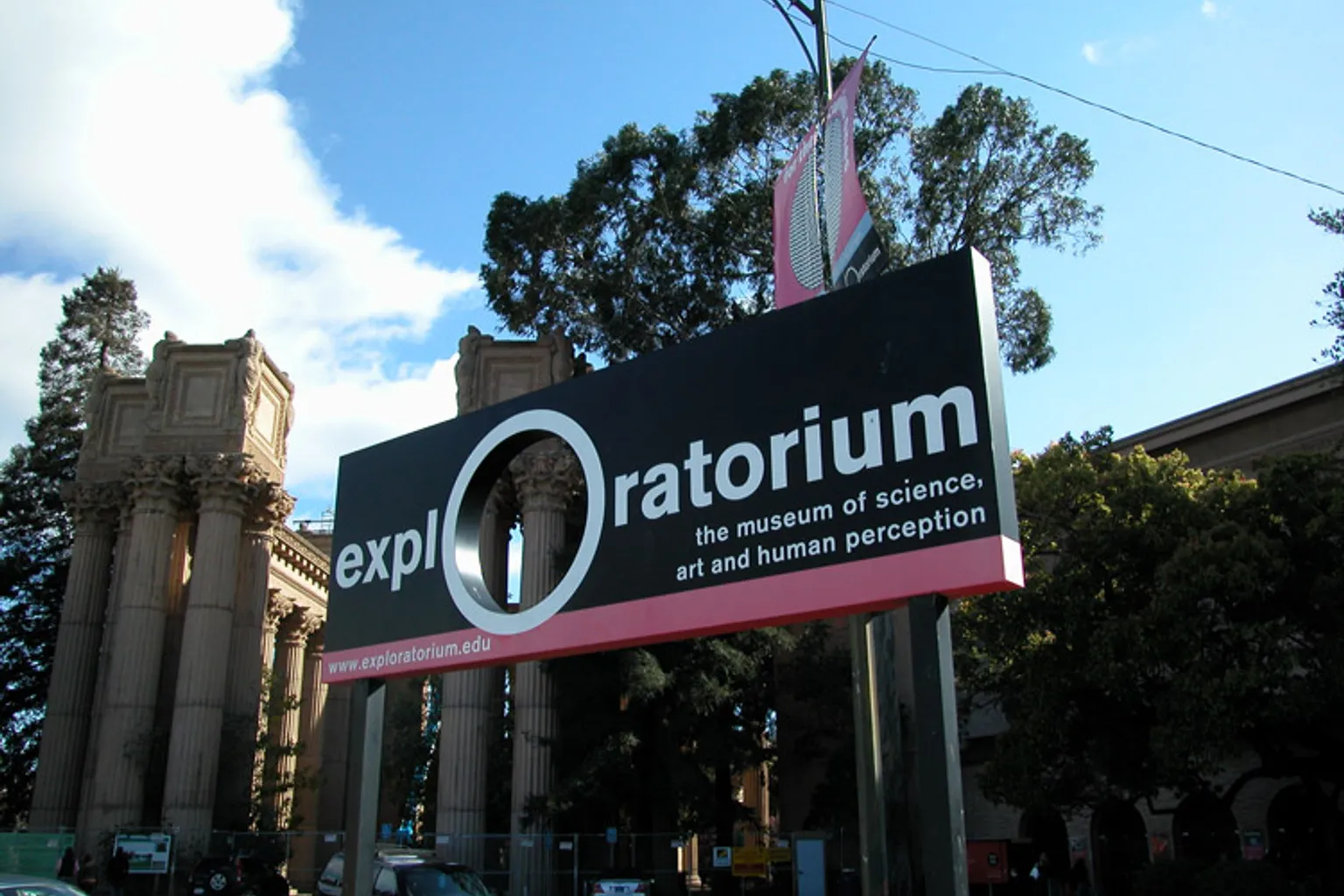
At Pier 15, the exhibits ask you to turn cranks, line up shadows, listen to machinery, disturb fluids, bend light, and stand still long enough to notice what your eyes are getting wrong.
 San Francisco
Tickets and prices
Exploratorium
Entry ticket · Adult-only evening admission
fromUSD23.27
Check availabilityFull-day admission ticket · 700+ exhibits
fromUSD39.55
Check availabilityOfficial ticket · Daytime admission (ages 18–64)
fromUSD39.95
Check availabilityThat changes how we should plan the day. The main question is not only how to buy tickets for the Exploratorium. It is which admission type fits the way you want to use the building: a daytime visit with children, a slower afternoon near the Embarcadero, a Thursday night After Dark session for adults, or a separate reservation for the Tactile Dome.
Exploratorium admission: what the standard ticket covers
The standard daytime ticket gives you access to the main museum and its interactive science and art exhibits. This is the broadest admission option, and for most first-time visitors it is the correct starting point.
The museum is built around physical interaction. A display may look modest until you put your hands on it. A surface vibrates. A beam of light shears into color. Air moves across a membrane. Your own balance becomes part of the experiment. The exhibits are not just objects to observe; they are mechanisms waiting for input.
General admission is organized into several visitor categories:
- Adults use the standard adult admission tier.
- Youth tickets apply to visitors from ages 4 through 17.
- Children under 4 enter free.
- California public school K–12 teachers may be eligible for free admission vouchers when they present valid educator identification.
The exact ticket price can change, so the practical way to buy tickets for the Exploratorium is to check the current booking page before committing to a date. We should treat the listed price as a live operating detail, not a permanent fact to memorize. The useful distinction is between the admission types and what each one actually permits.
Daytime admission does not automatically include every special experience inside the museum. The Tactile Dome, in particular, requires its own reservation and an additional fee. That is not a small technical footnote. If you arrive expecting to add it casually at the door, the available times may already be gone, or the experience may not fit the rest of your day.
The standard ticket opens the museum; it does not necessarily open every experience inside it.
For a first visit, book the main admission first, then decide whether the Tactile Dome is worth building the day around. The two experiences use your attention differently. The general galleries are expansive and variable. The Tactile Dome is more controlled, more sensory, and dependent on a scheduled entry.
How to buy tickets for the Exploratorium without choosing the wrong session
The most reliable approach is to decide the shape of the visit before you reach the checkout screen.
If you are visiting during the day, choose a standard general admission date and confirm the operating hours for that day. If you are interested in After Dark, do not treat it as a late version of the daytime museum. It is a separate Thursday evening event with its own admission.
When booking online, check four things before payment:
1. The date and admission window. A ticket for a daytime visit is not the same product as a Thursday evening After Dark ticket.
2. The age requirement. After Dark is restricted to adults aged 18 and older. An adult accompanying a minor does not change that rule.
3. Any add-on reservation. The Tactile Dome requires separate planning and is not included automatically with general admission.
4. The pass or package conditions. City attraction passes can cover daytime entry, but they do not cover After Dark.
This is the part of online ticket booking where a few seconds of reading save a longer argument at the entrance. The product names can look similar when you are comparing dates on a phone. Look for the event type, not only the venue name.
If your schedule is fixed, buying tickets in advance is the safer move. If your day in San Francisco is flexible, you still need to account for the museum’s operating pattern: it is closed on Mondays, daytime hours differ between weekdays and Sunday, and Thursday evening operates under the After Dark schedule.
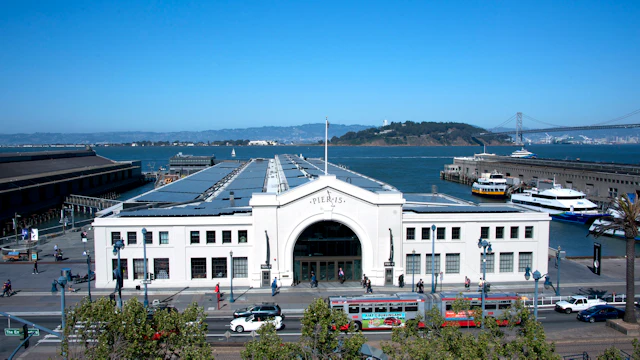
The museum’s main address is Pier 15 on the Embarcadero, at Green Street, San Francisco, California. That location is useful because it places the Exploratorium directly into a waterfront itinerary. It is also the reason a visit can become longer than expected. You may arrive thinking you have allowed two hours, then find that two hours have been consumed by a single room where the exhibits keep changing as you operate them.
Daytime hours and the best time to visit the Exploratorium
The Exploratorium’s standard daytime schedule is:
- Tuesday through Saturday: 10:00 a.m. to 5:00 p.m.
- Sunday: 12:00 p.m. to 5:00 p.m.
- Monday: closed
On Sunday, the museum reserves the earlier part of the morning for members and donors, so general visitors should plan around the noon opening.
The best time to visit the Exploratorium depends less on a universal crowd formula than on the kind of work you want to do inside. The building is large, the exhibits are distributed through several areas, and popular hands-on pieces can slow the pace. We are not dealing with a gallery where everyone stands at a fixed distance from the same painting. When an exhibit requires a person to manipulate a control, observe a result, reset the mechanism, and let the next person try, traffic becomes mechanical: one occupied station can bind the whole line behind it.
Morning visits
A Tuesday-through-Saturday morning entry is usually the cleanest choice if you want to cover a lot of the museum before fatigue sets in. You have more time to move through the galleries, and children tend to have more patience for experiments before the day begins to shear that patience away.
Arriving near opening also gives you a better chance of using the exhibits in sequence rather than circling back whenever a station becomes available. That matters if you are traveling with a group. One person can work a control while the others watch, but the experience is stronger when everyone gets a turn.
Afternoon visits
An afternoon visit can work well if the Exploratorium is one stop within a larger Embarcadero day. The trade-off is simple: you have less operating time, and the museum can feel compressed if you attempt to see everything.
Do not try to force the entire collection into a short slot. Hundreds of interactive exhibits can absorb attention unevenly. Some are quick demonstrations. Others require repeated attempts before the result becomes clear. A reasonable afternoon plan is to choose several areas that interest your group, then leave room for the exhibits that catch you by surprise.
Thursday evenings
After Dark runs every Thursday from 6:00 p.m. to 10:00 p.m. and is strictly for adults aged 18 and older. It is not a family admission period and not simply an extension of a daytime ticket.
The evening format changes the character of the visit. Without younger children in the building, adults can spend more time with exhibits that are easy to rush through during the day. The museum becomes a place for deliberate experimentation rather than a quick sequence of family stops. You still need to allow for lines and shared equipment, but the rhythm is different.
After Dark tickets are separate from daytime admission. San Francisco CityPASS and Go City San Francisco Explorer Pass can include standard daytime entry, but those passes do not include Thursday evening After Dark access.
After Dark tickets: what changes on Thursday night
The After Dark event is the right choice when you want the Exploratorium as an adults-only science museum rather than as a daytime family destination. The age restriction is firm: admission is for visitors 18 and older.
That makes the booking decision straightforward but important. If one member of your group is under 18, that person cannot attend After Dark even when accompanied by an adult. You will need a daytime visit instead, or the adults in the group will have to attend separately.
The evening runs from 6:00 p.m. to 10:00 p.m. That gives you a substantial window, but we should not confuse four hours of opening time with four hours of uninterrupted exhibit time. The building is dense with things to operate, and the crowd will distribute unevenly. Some parts will move quickly; others will hold you in place.
A good After Dark plan has three layers:
- Start with the exhibits you most want to use, while your attention is still fresh.
- Leave time for areas that work better when you slow down and repeat the experiment.
- Keep the final portion of the evening open instead of filling every minute with scheduled targets.
The last point sounds obvious until you are standing in front of an exhibit that exposes a mistake in your own perception. Those are often the moments that make the visit worthwhile, and they do not fit neatly into a timetable.
CityPASS and Go City: when an attraction pass makes sense
The Exploratorium is included in some multi-attraction passes, including San Francisco CityPASS and the Go City San Francisco Explorer Pass. These passes can cover standard daytime museum admission.
They do not cover After Dark Thursday night entry.
That distinction should sit near the top of your planning notes, not at the bottom. Attraction passes are useful when the museum is one part of a larger San Francisco itinerary and the other included attractions are places you already intend to visit. They are less useful when you are buying one mainly to reduce the cost of a single museum admission.
The mechanical rule is simple: match the pass to the admission product.
| Your plan | What to look for |
|---|---|
| Daytime museum visit | Standard Exploratorium admission or a qualifying CityPASS or Go City pass |
| Thursday evening visit | Separate After Dark admission for visitors 18 and older |
| Tactile Dome visit | A separate reservation and additional fee beyond standard admission |
| Visit with a child under 18 | Daytime admission, not After Dark |
| Visit with a child under 4 | Confirm the free-entry policy and any booking requirements before arrival |
| California K–12 public school teacher | Educator identification and the applicable free-admission voucher process |
A pass can simplify entry, but it does not remove the need to check the museum’s schedule. You still have to arrive during the covered daytime hours, and you still need separate planning for special experiences.
The Tactile Dome: reserve it as its own experience
The Tactile Dome is not an ordinary gallery stop. It is a separate sensory experience that requires a reservation and an additional fee beyond general admission.
That requirement changes the way we should build the day. Do not assume you can walk through the museum first and decide later. If the Tactile Dome is central to your visit, secure its reservation before you finalize the rest of the schedule.
The name tells you something about the experience, but it does not tell you how long the surrounding museum will hold your attention. A visit to the Tactile Dome can function as the fixed point in the day, with general admission arranged before or after it. Leave enough margin around the reservation to deal with the ordinary friction of a large interactive museum: slow-moving groups, crowded stations, food breaks, and the time it takes to find the next area.
You should also make sure every person in your group understands that this is not simply another exhibit that can be entered whenever convenient. A reserved sensory experience has a different operating constraint. Miss the slot and the rest of the ticket plan can begin to bind.
The exact additional charge and package details may vary, so check the current booking information when reserving. The durable fact is the structure: general admission and Tactile Dome access are separate.
Getting to Pier 15 and finding the museum
The Exploratorium is at Pier 15 on the Embarcadero, at Green Street. This waterfront location makes the museum easy to combine with other downtown and Embarcadero plans, but it also means we should account for walking time rather than treating the address as a door-to-door travel estimate.
The Embarcadero BART station is one of the nearby transit reference points for reaching the waterfront. From there, the final approach is a walk along the Embarcadero. If you are carrying bags, traveling with a stroller, or moving with someone who tires quickly, build that distance into the plan. The last section of a journey can be the part that decides whether everyone enters ready to interact or already worn down.
Arrive with the ticket information accessible on your phone and keep the booking details available until you are inside. If you have separate reservations, such as a Tactile Dome slot, make sure you can identify each one without searching through a dozen unrelated messages.
The practical arrival sequence is uncomplicated:
1. Confirm the museum is operating on your chosen day.
2. Check whether your ticket is for daytime admission or After Dark.
3. Make sure every visitor fits the age category for that event.
4. Keep separate reservations visible if you booked the Tactile Dome.
5. Leave enough time to walk from transit or another Embarcadero stop.
6. Plan breaks before the group reaches the point where every exhibit becomes irritating instead of interesting.
That last step is not just family logistics. Adults lose concentration too. The Exploratorium asks for active attention, and active attention has a working limit.
How much time should you allow?
There is no correct universal duration because the museum is not experienced at one fixed speed. A visitor who reads every label and repeats each experiment will move differently from someone who wants a broad survey of the galleries.
For a compact visit, choose a small number of areas and resist the urge to treat every untouched exhibit as a failure. For a longer visit, use the first pass to learn how the building is arranged, then return to the exhibits that produced a useful result rather than simply the ones that looked impressive.
The museum rewards repetition. You may operate something once and see the effect without understanding the mechanism. A second attempt, with a different input or a slower movement, can reveal the force involved. That is where the Exploratorium differs from a conventional display: the visitor supplies part of the experiment.
Families should plan for breaks and food without assuming that every café detail can be settled in advance. Food options are available inside the venue, but menu prices and specific offerings can change. The safer approach is to treat food as a flexible part of the itinerary rather than the fixed anchor around which the entire visit turns.
The practical answer: which ticket should you buy?
Choose standard daytime Exploratorium admission if you want the broad museum experience, are visiting with children, or are using a qualifying multi-attraction pass.
Choose After Dark if everyone in the group is 18 or older and you specifically want the Thursday evening adults-only format.
Add the Tactile Dome only if you are willing to reserve a separate time and pay the additional fee. It should be treated as a scheduled experience, not as an automatic part of general admission.
The Exploratorium works best when we plan around its physical demands. The exhibits need hands, patience, and enough time for a result to develop. Buy the ticket that matches your group, confirm the schedule before you leave, and do not pack the day so tightly that every interesting mechanism has to be abandoned just as it begins to make sense.
The long-term mistake is not paying for the wrong ticket. It is arranging the visit so tightly that the museum becomes a sequence of missed turns and half-finished experiments. At Pier 15, the useful part is often the extra attempt—the moment when you slow the motion, change the force, and let the mechanism seat itself in your understanding.
FAQ
Can I use my daytime ticket for the After Dark event?
Are children allowed to attend the After Dark sessions?
Is the Tactile Dome included with general admission?
Do attraction passes like CityPASS cover all museum experiences?
Is the museum open on Mondays?
Do children under 4 need a ticket?
Photo: Ann Bartkowski / Dacreep at en.wikipedia / CC BY-SA 3.0 — Wikimedia Commons