Selecting a Reliable Compact PHEV: A Mechanic’s Perspective on Long-Term Ownership
A new buyer's guide from Driving ECO works through the compact PHEV field for 2026 with a workshop-first lens — battery warranty terms, four-year maintenance cost, and the kinds of drivetrains that…
Judson Grier·updated August 19, 2026
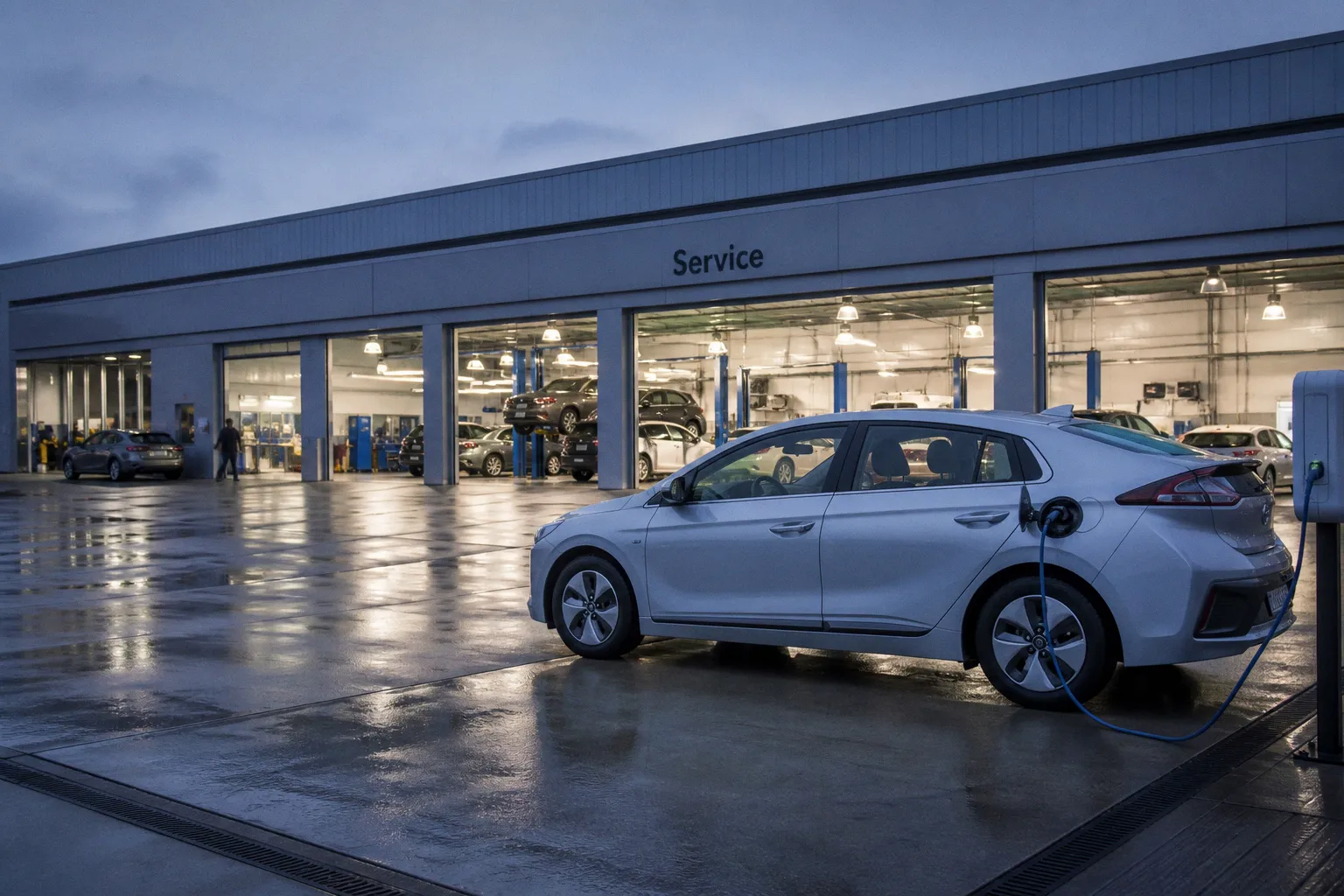
A new buyer's guide from Driving ECO works through the compact PHEV field for 2026 with a workshop-first lens — battery warranty terms, four-year maintenance cost, and the kinds of drivetrains that have had time to prove themselves. For those of us who'll eventually see these cars on a lift, the useful signal isn't the brochure range claim but which powertrains have quietly aged well and which are still shaking out their early faults.
Where the expensive failures live
When we talk about a PHEV at the workbench, we look at three things first. The powertrain itself — engine, motor, transmission — and how long that combination has been in production; the newer the pairing, the thinner the data we have on it. The power electronics and inverter, which is where the large out-of-warranty bills tend to land. And the history of the previous generation — if a prior model year had a problematic run, you can almost feel the residue in the forums and the parts catalogs.
The guide points to Toyota as the segment benchmark, noting roughly two decades of hybrid production behind the current Prius powertrain. That kind of vertical history is rare in this segment, and it shows up at the parts counter in the form of cheaper, more abundant components. On the Stellantis side, the guide flags that the shared STLA platform — used in the Opel Astra PHEV and elsewhere — has now run through two generations, which generally means the early electronics faults have been shaken out of the casting.
Two services a combustion car doesn't ask for
Here is the part most shoppers never see until the first invoice lands. A plug-in hybrid carries maintenance a pure gasoline car doesn't: periodic high-voltage system checks, and on some models, battery coolant replacement at fixed intervals. None of this is exotic, but it is non-negotiable, and a shop that isn't set up for it will either farm the work out or quietly skip it.
The standard battery warranty in this segment runs eight years or 160,000 km with a minimum 70 percent retained capacity — that is the floor, not the ceiling. The guide notes Toyota extends that envelope to up to ten years when you stay inside the official service network. That is a real number with real consequences when an inverter or a battery pack needs work at year seven.
What we look for when one rolls in
If you're shopping used, or even new, the questions are physical. Has the high-voltage system been scanned for fault codes stored as historic? Has the battery coolant ever been changed, or is it still the factory fill, slowly losing its heat-transfer margin? Are the 12-volt accessory battery and the cell-balancing logs clean? Those are the checkpoints that separate a four-year-old PHEV that will run to eight from one that becomes a parts donor.
The guide also flags the workshop network — not glamorous, but a plug-in hybrid with two dealers per province is going to mean longer repair times, and longer repair times mean higher labor bills even on warranty work. In the Spanish market the guide surveys, Toyota, Peugeot, Opel, and Volkswagen have the densest coverage; Cupra is catching up fast; Mercedes is strong in the cities and thin in the rural stretches. The U.S. import side mirrors the same shape — your brand's service footprint will decide how long you wait when a fault code lights up.
PHEVs make sense for mixed-use drivers — short daily runs that can lean on electric mode, with the occasional longer trip on the engine. If you're burning 30,000 km a year on the highway, the math inverts and a diesel or a pure EV probably suits you better. But for the realistic daily pattern, the right compact PHEV, properly serviced, is a quieter, longer-lived machine than the segment's reputation suggests.