Streamlining Collision Repair: Autel MA800 and CCC ONE Integration Updates
According to VXDAS, Autel has introduced the MA800 Mobile ADAS Calibration System and expanded its CCC ONE integration to include the MS906 MAX tablet.
Judson Grier·updated August 15, 2026
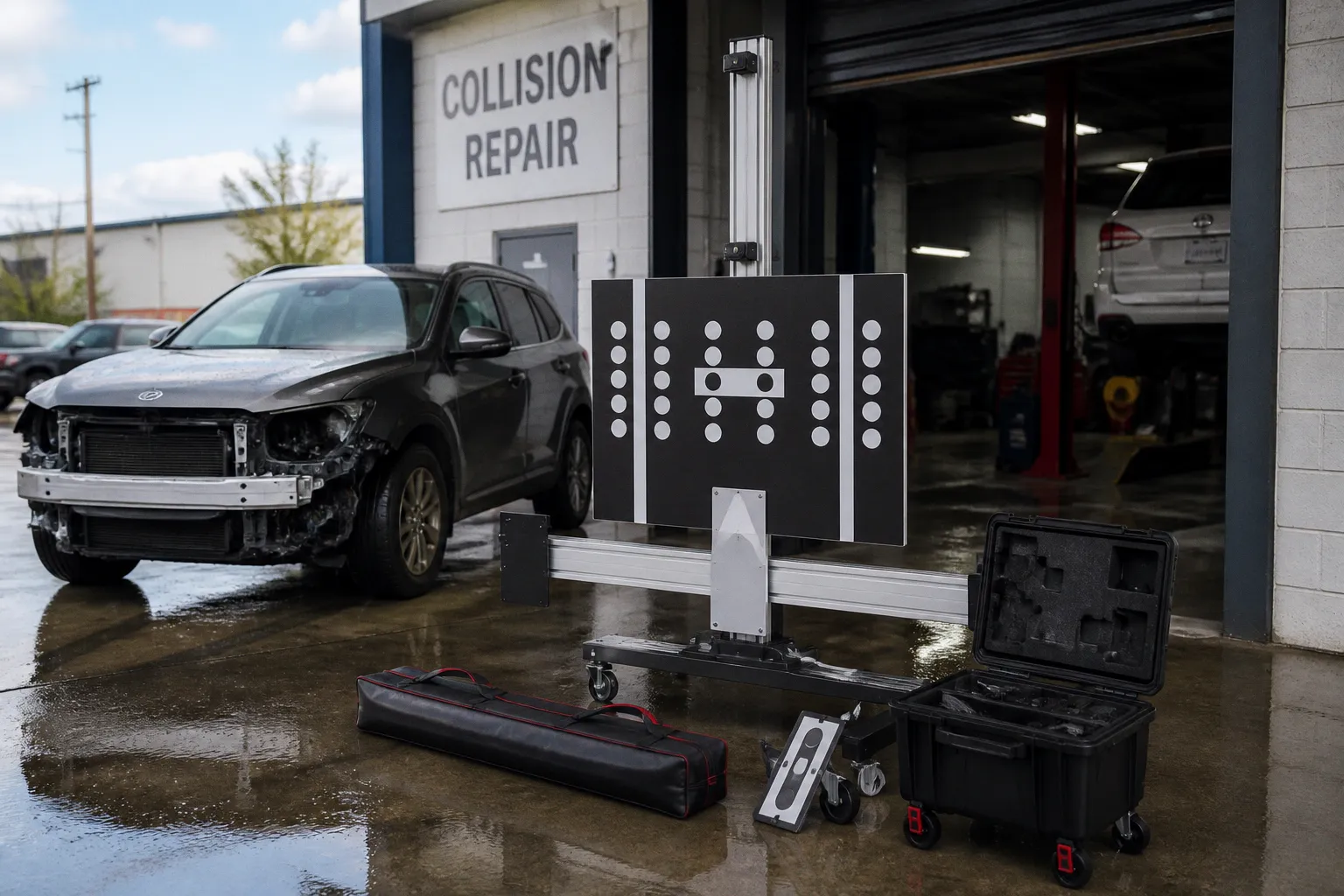
For collision shops, the important part is not simply another scan tool or calibration frame; it is the attempt to connect calibration work and diagnostic documentation more tightly to the repair workflow. Autel U.S. has also announced a $40,000 ADAS equipment package for the winners of the 2026 BodyShop Business Executive of the Year contest.
The hardware matters because bay time matters
ADAS work is one of those jobs where the physical setup can decide how quickly the repair moves forward. The vehicle has to be positioned correctly, the equipment has to sit where it belongs, and the technician has to complete the calibration procedure without losing track of what was done. A mobile system such as the MA800 is aimed at that part of the problem.
VXDAS describes the MA800 as a system designed for collision and auto-glass professionals, with an emphasis on portability, setup speed, validated positioning, and broader vehicle coverage. Autel is scheduled to demonstrate the system at Auto Glass Week in San Antonio from August 27 through August 29, including workflows involving forward-facing cameras, surround-view systems, and radar sensors.
We should be careful with the language here. A portable calibration system does not remove the need to follow the vehicle maker’s repair and calibration requirements. It changes where the work may be performed and how the shop organizes the job. The technician still has to make the vehicle sit square, keep the calibration equipment properly positioned, and document the result.
The quieter change is inside the repair file
The CCC ONE integration is the more operationally significant announcement. Autel says compatible tablets can upload diagnostic scan reports directly into an existing CCC ONE workflow. The expansion adds the MS906 MAX tablet to the supported lineup, alongside Autel’s Ultra Series tablets.
That matters because collision diagnostics are not finished when the scan tool displays a result. Pre-scan information, in-process checks, and post-scan verification all have to remain attached to the repair record. When those reports move through separate steps, files can be exported, renamed, uploaded, and matched by hand. Each handoff is another place for a report to be misplaced or attached to the wrong repair.
For a shop, the practical question is therefore straightforward: does the diagnostic system reduce handling, or does it merely create another file that someone must move later? The reported CCC ONE integration is intended to send the scan report into the existing workflow directly. That may make documentation easier to track, particularly when the repair file needs to show what was scanned and when.
Before treating the integration as a solution, a shop should verify the exact tablet compatibility and the requirements for its own CCC ONE workflow. The announced expansion is specific: the MS906 MAX is being added, while the previously listed compatible devices include the MS909, MS919, MS Ultra, MS909 S2, MS919 S2, and Ultra S2.
What to watch as the system reaches shops
The MA800 and the CCC ONE integration address different points in the same collision-repair chain. One concerns the physical calibration setup; the other concerns the electronic record that proves diagnostic work was performed. Together, they point toward a repair process in which calibration, scanning, and documentation are less separated than they have been.
Autel U.S. is also tying its announcement to a $40,000 equipment package that includes the IA900 Wheel Alignment and ADAS Calibration System, a MaxiSYS Ultra S2 tablet, and CCC ONE integration tokens. That package does not tell us how every shop will use the technology, but it does show the equipment and reporting connection being presented as part of one broader ADAS workflow.
For technicians and shop managers, the long-term issue will be less dramatic than the launch language. We will need to see whether the equipment seats cleanly into daily work: whether setup is repeatable, whether reports stay attached to the correct repair, and whether the system reduces rework instead of adding another layer of administration. In collision repair, those small losses accumulate like heat in a dragging brake. A tool earns its place only when the workflow still holds together after the novelty has worn off.