The Future of In-Car Gaming: Why Immersion Changes Vehicle Diagnostics
According to Automotive News, a guest commentary published this month maps the next phase of in-car gaming, framing immersion — not screen count or catalog size — as the primary axis of differentiation.
Aldous Moorland·updated August 18, 2026
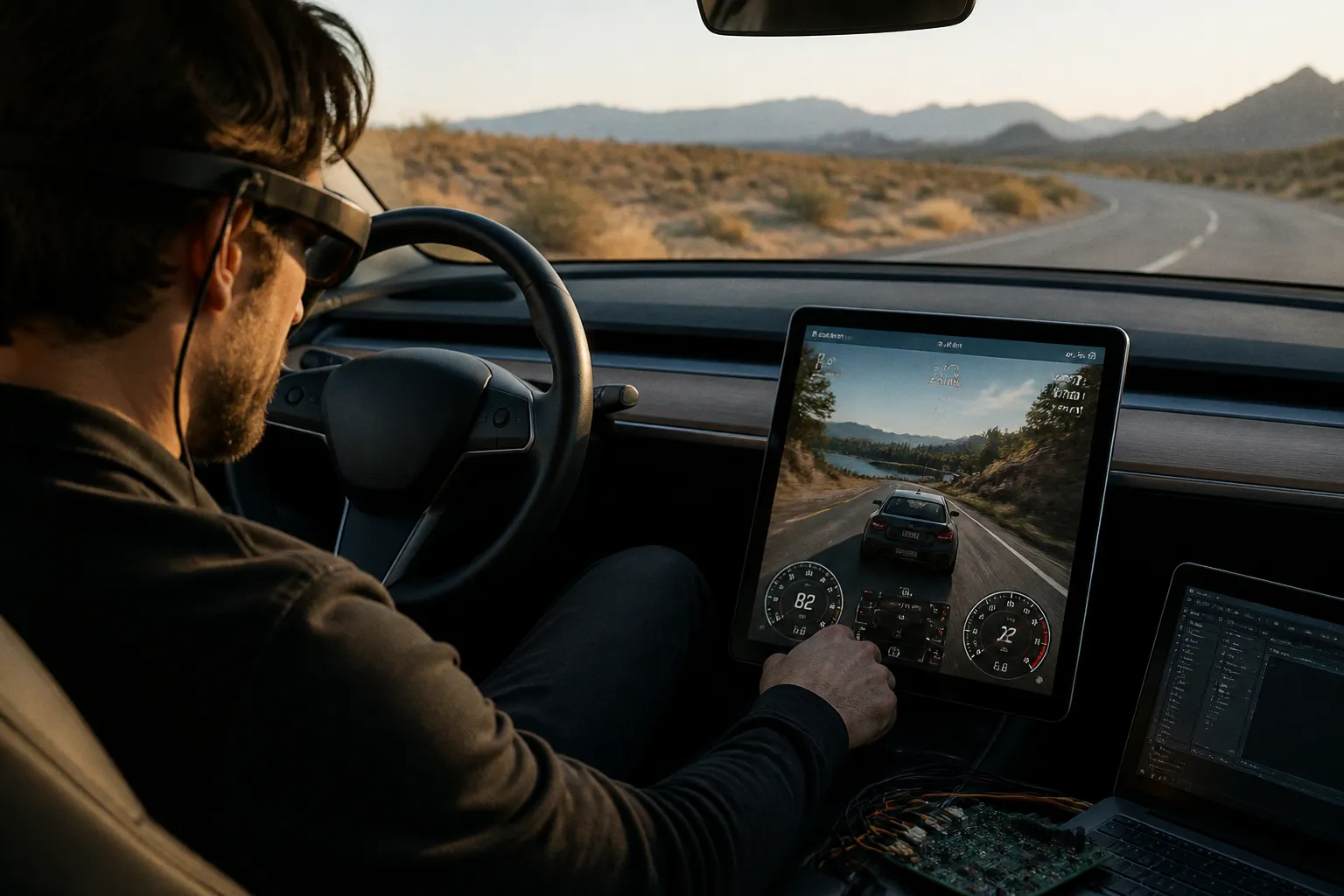
The piece positions the vehicle cabin as a destination platform, where audio, haptic, and ambient systems converge with the infotainment stack. For technicians working on European and Asian imports, the shift signals a reweighting of electrical and network priorities before a single tool is lifted.
Where the bus traffic is heading
Immersion requires coordination across multiple subsystems. Audio processing, seat or cabin haptic actuators, ambient lighting controllers, and head-up displays must operate in sync with the central infotainment unit. Each endpoint represents a node on the CAN, CAN-FD, or Automotive Ethernet backbone. As gaming sessions extend in duration, message frequency on these buses rises. The diagnostic consequence: elevated baseline bus load during entertainment mode, which can mask or mimic faults in unrelated modules sharing the same network segment.
A scan tool logging bus traffic during active gaming mode, versus verified sleep mode, produces a clean differential. Values exceeding manufacturer-specified idle message rates by a measurable margin warrant inspection of gateway filtering tables and software version consistency across modules. The fault appears elsewhere. The cause is located upstream.
Power budget and quiescent draw
Extended gaming draws sustained current from the high-voltage network on hybrid and electric platforms, and from the 12V bus on conventional vehicles through DC-DC isolation stages. The risk is not in operation but in parking. A session terminated without full infotainment shutdown leaves auxiliary processors active. Quiescent draw, normally held below manufacturer-specified deep-sleep thresholds, can climb above spec.
Ignition off. All doors closed. Hood switch depressed if equipped. Wait the manufacturer's specified network sleep delay. Measure 12V parasitic draw at the battery terminal with a clamp meter. Compare against baseline. Deviations indicate an infotainment module failing to enter low-power state.
Baseline parameters to verify
Three measurements define a clean system after factory infotainment updates or aftermarket gaming hardware integration:
- Bus message rate during active entertainment session, captured at the OBD-II port with a logging-capable scan tool.
- Quiescent current at the 12V battery, recorded after the full sleep timer elapses.
- Gateway module software version, confirmed identical across all networked ECUs following any infotainment firmware push.
If any parameter deviates from the manufacturer baseline, the entertainment module — not the battery, not the alternator — is the primary suspect. The diagnostic path resolves to a single node.