Transmission fluid change vs flush for high mileage cars
A 30% fluid replacement and a 99% fluid replacement produce two different machines.
Aldous Moorland·Updated: August 11, 2026·9 min read
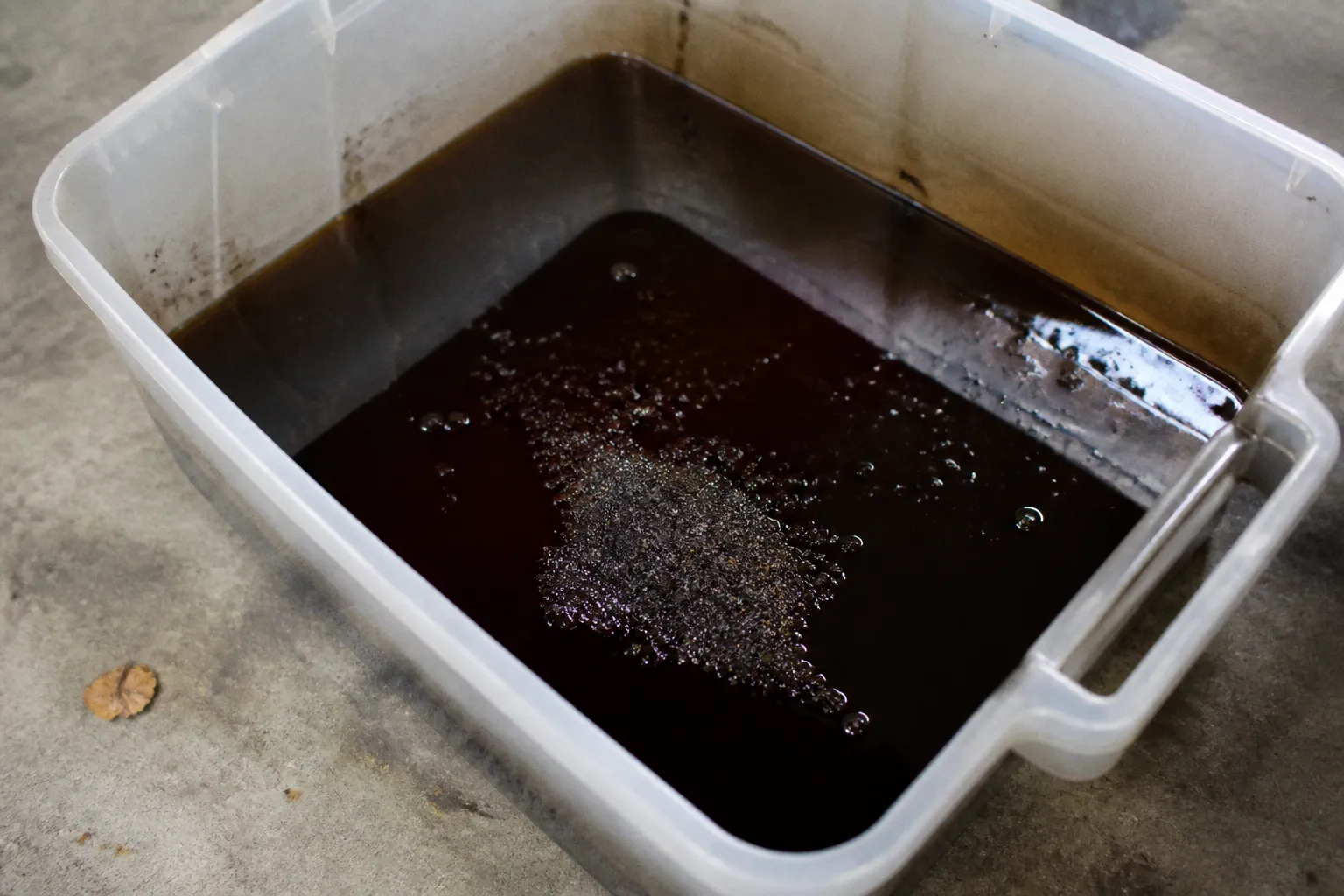
The first is a controlled topping-off of degraded lubricant; the second is a high-velocity extraction of every drop, including the suspended contaminants that have accumulated over six or seven years of operation. For a transmission with documented service history, both procedures remain viable. For a transmission past 70,000 miles with no record of prior fluid maintenance, the second procedure introduces a measurable risk of valve body occlusion and subsequent failure. The distinction between these two service types is not semantic. It is mechanical.
The Mechanics of Fluid Replacement: Drain and Fill vs. Full Flush
The two procedures replace fundamentally different volumes of fluid, and the gap between those volumes determines the risk profile for any given transmission.
A standard drain and fill is executed by unbolting the transmission pan, allowing the fluid inside the sump to drain via gravity, then reinstalling the pan with a fresh gasket and refilling through the designated fill port. This procedure evacuates fluid held in the pan and a portion of fluid held in the main case. Fluid retained within the torque converter, the cooler lines, and the internal clutch pack cavities does not exit the system during a gravity drain. The result is a fluid replacement rate of 30% to 50% of total capacity, depending on vehicle architecture.
A transmission flush is executed by connecting a flushing apparatus to the transmission cooler lines. The machine pumps fresh fluid into the system under controlled pressure while the degraded fluid is simultaneously extracted from the opposite line. The process continues until the effluent runs clear, indicating that the replacement fluid has circulated through the torque converter, the cooler, the valve body, and every clutch cavity. The replacement rate exceeds 99%.
| Parameter | Drain and Fill | Transmission Flush |
|---|---|---|
| Fluid replaced | 30% to 50% | Over 99% |
| Method | Gravity drain via pan removal | Pressurized exchange through cooler lines |
| Torque converter fluid exchanged | No | Yes |
| Cooler line fluid exchanged | No | Yes |
| Debris displacement risk | Minimal | Elevated |
| Suitable for high-mileage unmaintained units | Yes | Conditional |
The mechanic selects a drain and fill when the service goal is partial refreshment of degraded fluid without disturbing the internal ecology of the transmission. A flush is selected when the goal is total replacement of aged fluid, contaminated fluid, or fluid of incorrect specification. The procedures are not interchangeable in their downstream effects.
Why High-Mileage Transmissions React Poorly to Pressure Flushes
A transmission accumulates internal sediment across its service life. Friction material shed from clutch plates, oxidized metal particulates from gear contact, and thermal breakdown residue from the fluid itself collect in the sump and adhere to internal surfaces. In a transmission that has received scheduled fluid changes at 30,000 to 60,000 mile intervals, this accumulation is periodically removed. In a transmission that has not received scheduled service, the sediment loads the fluid and coats the valve body, the cooler passages, and the filter screen.
A flush introduces pressurized fresh fluid into every cavity of that loaded system. The pressure differential dislodges sediment that has adhered to internal surfaces for tens of thousands of miles. That sediment travels downstream. It migrates to the valve body, where it lodges in the spool valves and the small-bore passages responsible for directing line pressure to the appropriate clutch packs. The result is a transmission that shifts erratically, refuses to engage a gear, or loses line pressure entirely.
The 70,000 mile threshold is not arbitrary. It marks the point at which a neglected transmission has typically accumulated sufficient sediment to render a flush mechanically hazardous. Below that threshold, a flush remains a defensible service option. Above it, the procedure is performed only after a documented service history confirms that internal sediment loads have been managed through prior drain and fill operations.
A flush does not damage a transmission. The sediment inside an unmaintained transmission damages the transmission when the flush mobilizes it.
The failure mode is mechanical, not chemical. Fresh fluid does not cause clutch slippage through excessive cleanliness. Clutch slippage results from either the loss of suspended friction material from worn clutch plates or the occlusion of valve body passages by mobilized debris. New fluid cannot restore clutch material that has worn below its functional thickness. New fluid can carry debris into a valve body where it lodges and restricts line pressure. These two failure modes are mechanically distinct and require different diagnostic responses.
The Role of Pan Drops and Filter Maintenance in Longevity
A pan drop service is the most controlled method of partial fluid replacement. The procedure involves the removal of the transmission pan, the drainage of the sump contents, the extraction of the internal filter, the cleaning or replacement of that filter, the cleaning of the pan magnet, the installation of a fresh pan gasket, and the refilling of the system to the manufacturer-specified level.
The procedure accomplishes three objectives that a flush cannot replicate with the same precision. First, it allows direct inspection of the pan magnet for metallic debris, which indicates active wear in bearings or gear teeth. Second, it permits replacement of the internal filter, which accumulates sediment that the fluid itself cannot suspend indefinitely. Third, it evacuates the densest layer of sediment, which settles at the bottom of the pan under gravitational force and concentrates where it can be removed cleanly.
The filter element is constructed of a fine mesh calibrated to capture particulate above a specific micron threshold. That mesh loads gradually across the service interval. A loaded filter restricts fluid flow at the pickup tube, which reduces line pressure at the pump output, which produces soft shifts and elevated operating temperatures. A filter replacement restores nominal flow characteristics.
For high-mileage units, a pan drop at 15,000 to 20,000 mile intervals maintains the transmission in a state of progressive cleanliness. Each service evacuates a portion of the sediment load before it consolidates into a sludge capable of causing mechanical damage. The procedure is performed without pressurized exchange through the torque converter, which means the sediment that has adhered to internal surfaces is not dislodged by the service itself. The transmission is cleaned gradually, not suddenly.
Redefining Service Intervals for Vehicles Past 100,000 Miles
Manufacturer service intervals are calibrated for normal driving conditions, defined as moderate ambient temperatures, stable highway speeds, and light load factors. These conditions produce predictable thermal cycling and predictable fluid degradation rates. The 100,000 mile interval that appears in many owner manuals reflects those baseline conditions.
Severe service conditions alter the calculation. Stop-and-go traffic, sustained towing loads, ambient temperatures above 90 degrees Fahrenheit or below freezing, and operation on mountainous terrain impose additional thermal stress on the transmission fluid. Under those conditions, the fluid reaches its service ceiling in half the mileage. A 100,000 mile interval becomes a 50,000 mile interval. A 60,000 mile interval becomes a 30,000 mile interval.
For a vehicle that has operated under severe service conditions for its entire service life, the manufacturer interval is reduced before the 100,000 mile threshold is reached. For a vehicle that has reached 100,000 miles with no record of prior transmission service, the drain and fill interval is compressed to 15,000 to 20,000 miles to prevent sediment consolidation. The fluid is replaced more frequently, and the pan is dropped at each service to evacuate accumulated sediment.
The maintenance schedule is rebuilt based on observed service history, not original manufacturer projections. A transmission that has been serviced at 50,000 miles can tolerate a longer interval at 100,000 miles. A transmission that has never been serviced cannot tolerate the same interval at the same mileage.
Service intervals are projections. Service history is data. The transmission is maintained according to the data.
Diagnostic Realities: When Fluid Service Cannot Save a Failing Transmission
Fluid service addresses fluid degradation. It does not address mechanical wear in bearings, gear teeth, clutch packs, or torque converter lockup mechanisms. A transmission that exhibits specific symptoms before service is performed requires mechanical diagnostics after service is completed.
The symptoms are diagnostic. Delayed engagement indicates worn forward clutch seals or degraded line pressure at the pump. Slipping under load indicates clutch pack wear beyond the functional thickness of the friction material. Hesitation between shifts indicates valve body wear or accumulator spring fatigue. Hard engagement of reverse indicates worn band servos or sun gear shell damage. Fluid service does not reverse any of these conditions.
A drain and fill performed on a transmission with worn forward clutch seals produces a transmission with fresh fluid and worn seals. The seals leak at the same rate after the fluid service as before. The engagement delay persists. A flush performed on the same transmission produces the same outcome, with the additional risk of debris mobilization if the transmission has not been previously serviced.
The diagnostic sequence is fixed. The fluid level is checked first, then the fluid condition is evaluated for color, smell, and particulate content. The scan tool is connected to read transmission-related DTCs, including line pressure faults, torque converter clutch faults, and shift solenoid faults. The pan is dropped to inspect the magnet for metallic debris, which indicates active internal wear. The filter is inspected for clutch material, which indicates active clutch wear. Only after the diagnostic sequence is completed can the appropriate service be prescribed.
If the diagnostic sequence identifies active mechanical wear, the prescribed service is not a fluid change or flush. The prescribed service is teardown, inspection, and repair of the affected components. Fluid service is suspended until the mechanical repair is completed, then performed as part of the reassembly process to fill the rebuilt unit with fresh fluid before the vehicle is returned to service.
For a high-mileage transmission with documented service history and no current symptoms, a drain and fill with a pan drop remains the appropriate maintenance procedure. For a high-mileage transmission with no documented service history and no current symptoms, the same procedure is performed with additional caution, and a flush is avoided until the second or third service confirms that internal sediment loads have been brought under control. For a transmission with current symptoms, regardless of service history, fluid service is deferred until mechanical diagnostics have identified the underlying cause of those symptoms.
The transmission is a mechanical system. The maintenance procedure is matched to the condition of the system. A drain and fill maintains a functional system. A flush resets the fluid in a functional system. Neither procedure repairs a mechanical fault. The distinction between fluid maintenance and mechanical repair is the distinction that determines whether the transmission operates for another 100,000 miles or fails within the next service interval.