Why V2X Technology Won't Fix Your Car's Internal Network Faults
IEEE Spectrum reports that vehicle communication is no longer an unsolved engineering problem.
Aldous Moorland·updated August 14, 2026
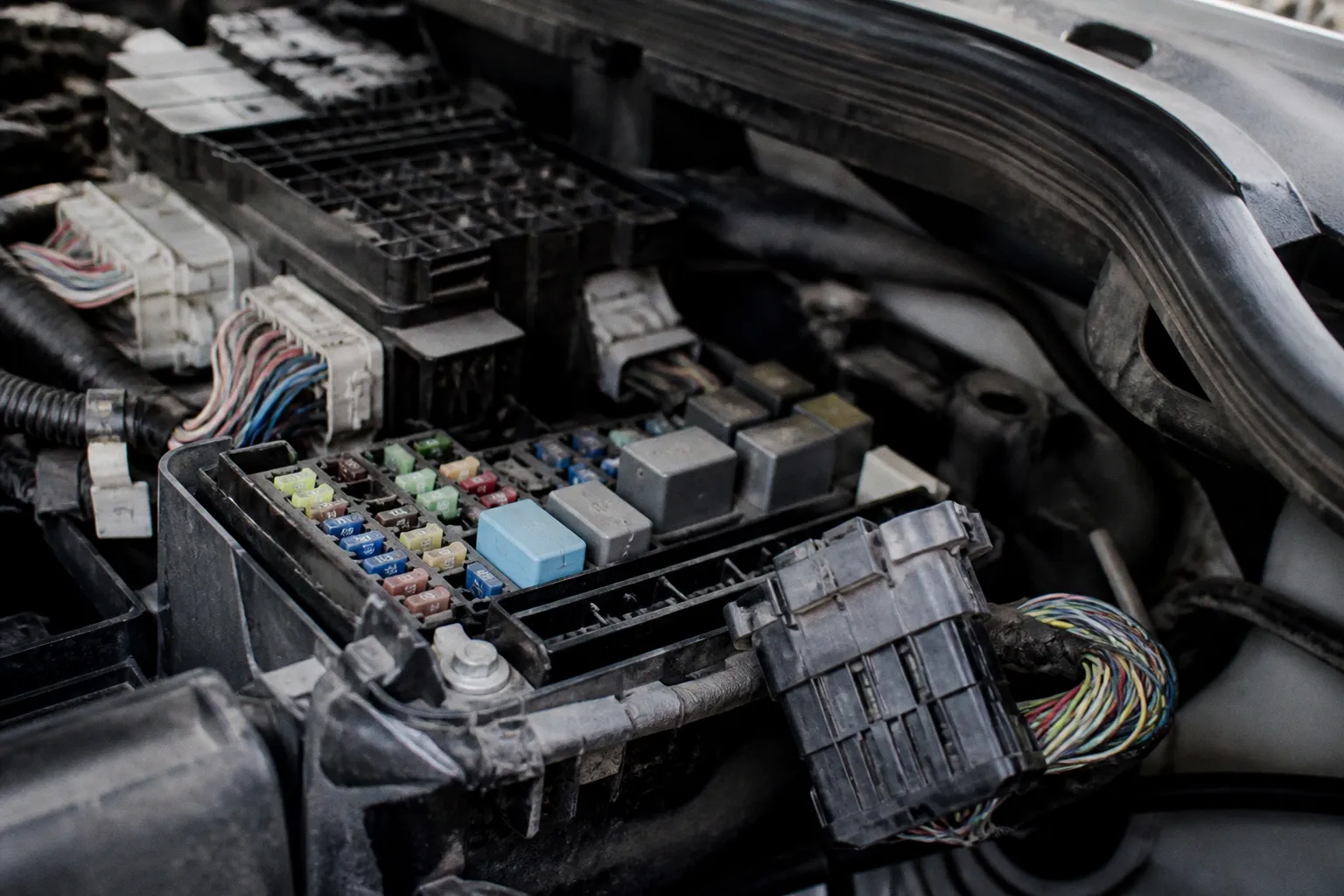
The article points to 5G-inspired V2X technology that allows vehicles to share sensor data on the open road. For import-car diagnostics, the important distinction is clear: a communications concept is not the same as a confirmed repair for a vehicle already showing network faults.
The confirmed point is narrow
The source identifies V2X as the relevant technology. Its stated function is vehicle-to-vehicle or vehicle-to-road communication based on shared sensor information. The work is associated with Francesco Linsalata, a postdoctoral researcher at the Polytechnic University of Milan whose research covers V2X, digital twins, and AI-enabled wireless networks.
No production vehicle, control module, fault code, wiring topology, voltage threshold, baud rate, or retrofit procedure is identified in the available material. Those values therefore cannot be used to diagnose a specific European or Asian import.
The phrase “already-solved problem” should be read as a statement about the communications technology, not as proof that every vehicle network fault has a simple field fix. A car that fails to communicate with a scan tool still requires vehicle-specific testing. The source does not establish that V2X equipment can replace a damaged CAN network, restore a failed gateway, or correct a module that has lost power.
What this means in the workshop
If the complaint concerns vehicles sharing information on the road, the reported technology is directly relevant. If the complaint is a diagnostic communication failure inside one vehicle, the connection is indirect.
That distinction prevents a common diagnostic error: treating a broad technology announcement as evidence for a component-level repair. The available facts support only this sequence:
- If the issue concerns future or external vehicle communication, V2X is the relevant subject.
- If the issue concerns an OBD-II scan failure, missing module response, or an internal network fault, the article provides no confirmed test value.
- If a repair decision requires resistance, voltage, termination, wiring, or data-rate measurements, those parameters must come from the vehicle’s service documentation rather than from this report.
The same rule applies to claims about 5G. The source describes the technology as 5G-inspired. It does not provide a 5G installation instruction, a compatibility list, or a specification for existing import models. No conclusion can be drawn about whether a particular vehicle supports the system.
What should be tracked next
The practical question is not whether cars can communicate. According to the source, that problem has a technical solution. The unresolved workshop question is how that solution is implemented in a specific vehicle, with defined hardware, software, network architecture, and verification values.
Until those details are published, the baseline for a repair remains the vehicle’s own documentation. A valid diagnosis must identify the affected network, the relevant module, the measured electrical condition, and the communication result before and after repair. None of those baseline parameters is supplied by the available IEEE Spectrum material.
The confirmed conclusion is therefore limited: 5G-inspired V2X systems are being developed to let vehicles share sensor information on the open road. It is not a confirmed procedure for repairing an existing vehicle communication fault.