Bridging the EV Skill Gap: How Industry 4.0 is Transforming Automotive Maintenance
The Automotive Skills Development Council convened over 500 representatives at its 15th Annual Conclave 2026 in New Delhi, identifying a measurable competency gap in high-voltage diagnostics, battery…
Aldous Moorland·updated September 01, 2026
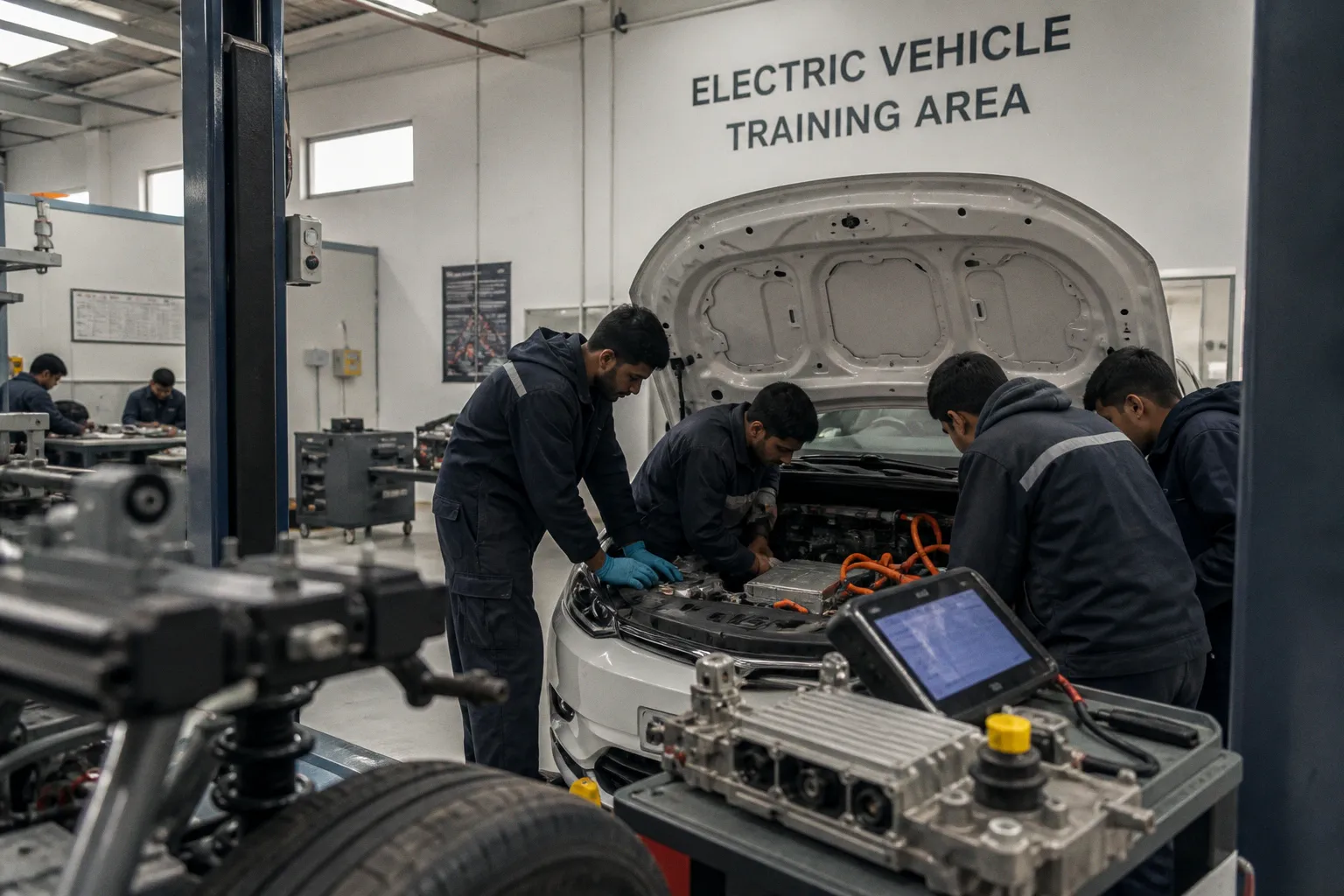
The Automotive Skills Development Council convened over 500 representatives at its 15th Annual Conclave 2026 in New Delhi, identifying a measurable competency gap in high-voltage diagnostics, battery management, and power electronics across the automotive workforce, according to TimesTech. Held at Taj Palace, Chanakyapuri under the theme "Skilled Hands, Strong Nation: Building India's Automotive Future," the session formalized what service logs already confirm: legacy ICE repair protocols cannot resolve the fault patterns presented by modern EV platforms. For import technicians, the conclave's skill-lab disclosures translate directly into updated certification requirements for any workshop handling electrified drivetrains.
Skill domains flagged for expansion
Union Minister of Heavy Industries H. D. Kumaraswamy opened the proceedings by designating battery technology, high-voltage systems, power electronics, and advanced diagnostics as priority training areas. His framing aligned with ASDC Chairperson Vinkesh Gulati's assessment that electric mobility, advanced manufacturing, AI, and Industry 4.0 are reshaping both vehicle architecture and the competencies required to service them. Seven EV skill labs were disclosed as operational or under development, including facilities in Chennai, Vadodara, and South Africa. These labs are positioned to deliver hands-on exposure to high-voltage isolation protocols, pack-level diagnostics, and inverter fault tracing—three domains where most independent import workshops remain under-equipped.
What the diagnostic bench faces now
If a European or Asian EV enters the service queue, standard 12V system checks prove insufficient. Battery management system communication faults, isolation monitoring errors, and CAN bus conflicts between HV and LV networks require oscilloscope verification at the module level rather than generic code-reader sweeps. Conclave proceedings confirmed that curriculum development targets these exact intersections. The participation of Prof. (Dr.) Ashok Kumar Gaba of NCVET and Mr. Pavan Kumar of Mahindra & Mahindra as Guests of Honour, alongside keynote delivery from Mr. Mohan Reddy of NSDC, signals OEM alignment with the new training standards. Future repair authorization may hinge on documented proficiency in these subsystems.
Baseline parameters to log before clearing the vehicle
Insulation resistance must register above 100 Ω/V between HV bus and chassis. Isolation monitoring system response is verified under 30 seconds. BMS state-of-health delta should remain within 3% across all modules. CAN bus termination resistance is measured at 60 Ω per segment. Drifts outside these values pinpoint the subsystem requiring certification-level intervention, not generalist troubleshooting.