Denza Joins Growing Trend of Allowing Drivers to Disable Intrusive Safety Systems
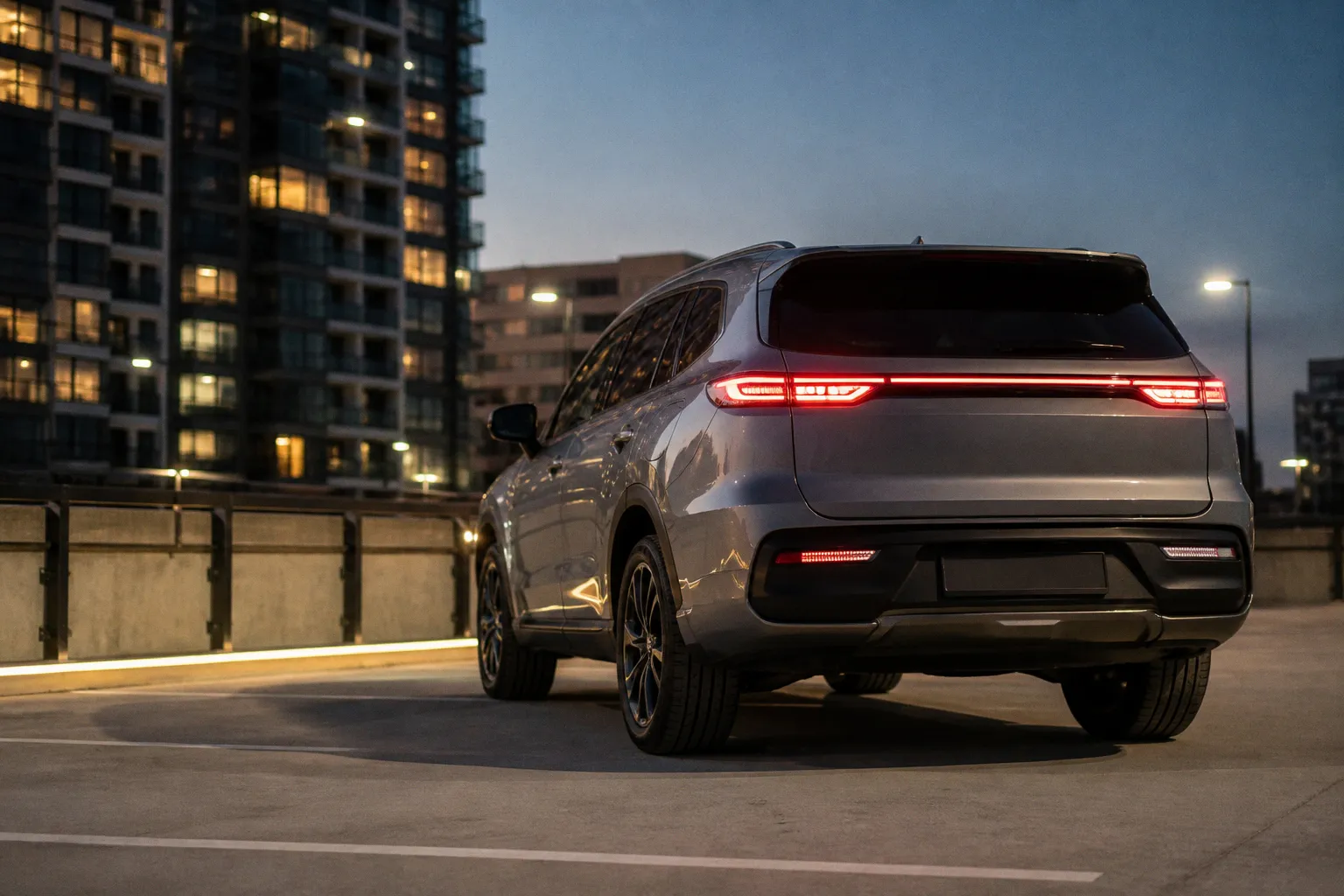
According to drive.com.au, frustration with modern driver-assistance systems has reached the point where automakers are openly offering ways to dial them back — and Chinese marque Denza is reportedly the latest to give drivers that option.
Judson Grier·updated August 26, 2026
The parallel story comes from Volvo, which just announced an over-the-air update that stacks four new safety warning systems on top of the ones it already had. For anyone working on newer imports, both directions are worth attention, because what a customer's car is quietly doing behind the wheel has changed more in the last five years than in the previous twenty.
The Denza angle: turning things off
Drive.com.au's piece, by all accounts, frames Denza's move as a direct response to owners complaining that modern safety features beep, brake, and steer more than the driver ever wanted. Specifics on which features Denza is letting drivers disable — and under what conditions — aren't in our source material, so we won't pretend otherwise. The headline alone tells us where the conversation is headed, though: when a brand is publicly branding its settings menu as a fix for annoying safety tech, that tells you how loud the pushback has gotten.
If you've got a newer import loaded with lane-keep, attention monitoring, or auto-braking interventions, this is the moment to walk the customer through their own vehicle. Most of these systems have a deep-disable buried under multiple menus, often requiring a fresh confirmation each ignition cycle. A few minutes with the owner's manual and the infotainment screen beats a service ticket any day.
Volvo goes the other way
Volvo is doubling down. According to Motoring Research, the Swedish marque is rolling out a free OTA update that builds on its connected-car platform, first launched in 2016 and now active on more than a million vehicles. The update introduces four new warning types: a Large Animal Alert for hazards like deer, a Vulnerable Road User Alert flagging pedestrians and cyclists ahead, plus Roadwork and Accident Ahead alerts. These sit alongside the existing Slippery Road Alert and Hazard Light Alert already in Volvo's operating system.
The data-sharing side is what matters most to us on the tools. Volvo is feeding these warnings through the European Data for Road Safety ecosystem, which means the alerts can flow between brands and into national traffic management systems — not just Volvo-to-Volvo. Asa Haglund, who heads the Volvo Cars Safety Centre, described the rollout as another step toward the company's long-stated goal of zero collisions.
The update targets the EX60, EX90, and ES90 in Europe, the United States, and Canada. On the EX90 and ES90 equipped with the 25-speaker Bowers & Wilkins system, the same OTA also enables Spatial Audio support through Apple CarPlay, built on Dolby Atmos. An Abbey Road studio-emulation mode was added to that same audio system last year.
What to watch on the lift
The Volvo rollout is a useful reminder that OTA isn't just about infotainment anymore. Safety logic now lives on the same delivery channel as navigation maps and the sound system. When a customer comes in after an OTA and complains that the car feels different — beeps earlier, brakes harder, warns more — the software is the first place to look, not the sensors. A scan tool that reads recent module updates will tell you more than a visual inspection.
For owners who'd rather have fewer nags, the Denza story is the signal that the conversation has officially tipped from safety-at-all-costs toward let-me-drive-my-car. Neither approach is wrong, but knowing which camp a customer's vehicle sits in — and how to find the kill switch — is now part of the import trade.