Dry ice detailing: is the high cost worth it?
The first thing you notice during serious undercarriage cleaning is not the machine.
Judson Grier·Updated: August 17, 2026·16 min read
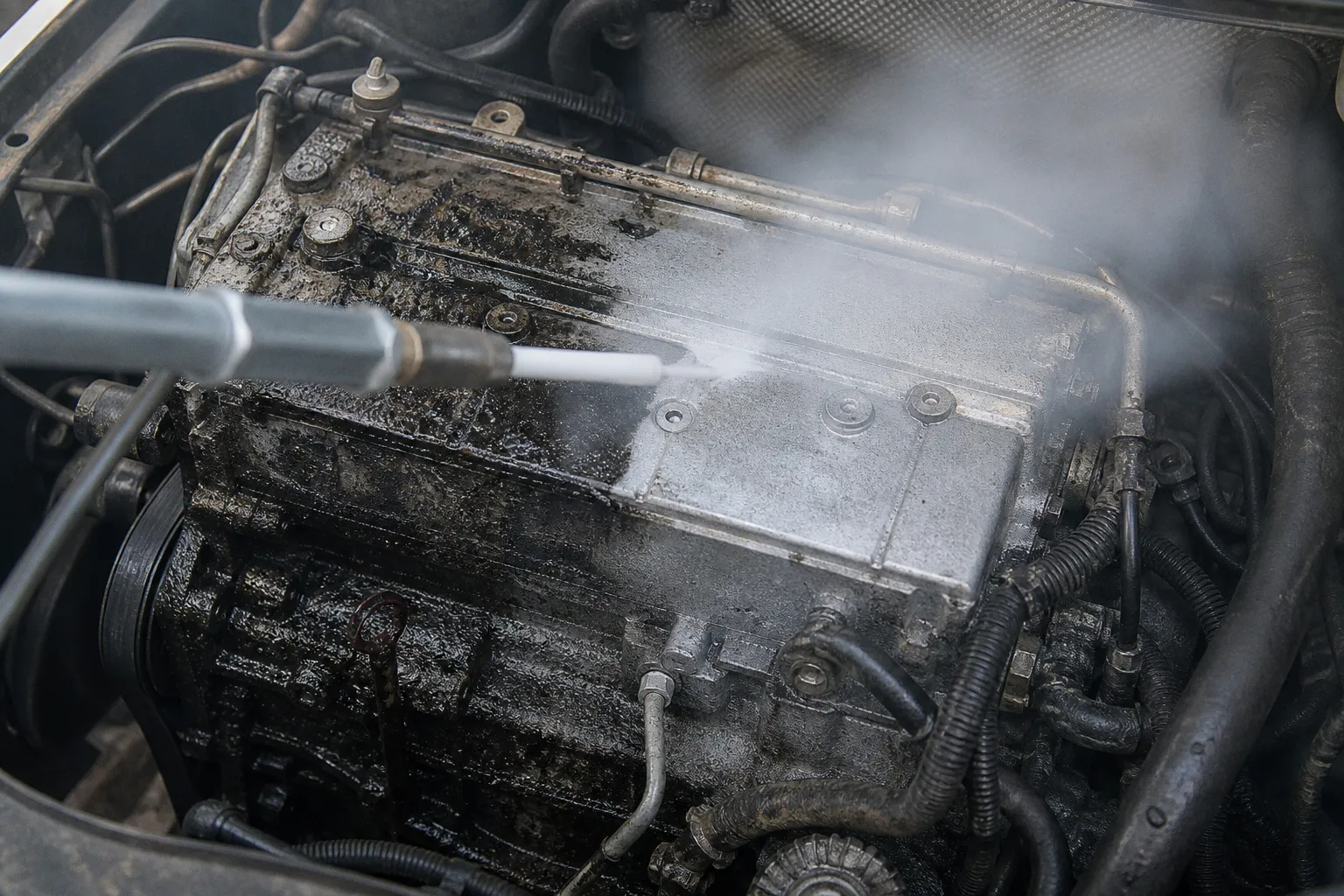
It is the material coming off the car: old grease that has turned into a hard black skin, road salt packed into seams, oily dust welded around brackets, and years of mud sitting where air and daylight rarely reach. On a neglected vehicle, the contamination does not simply lie on the surface. It cakes, binds, and hides the metal beneath it.
Compare car rental deals in United Kingdom
See available offersPartner link — DiscoverCars comparisonDry ice blasting removes that layer without flooding the vehicle with water or cutting into the surface with an abrasive stream. The process is remarkably clean in one sense: the frozen carbon dioxide pellets strike the contamination, create a rapid thermal shock, and then sublimate into gas. There is no puddle of melted ice, no spent chemical slurry, and no wet residue left to creep into electrical connectors or seams.
The problem is the invoice. The typical dry ice blasting car undercarriage cost lands around $1,500 to $2,000 for a full service, while larger restoration jobs can reach $3,000. Packages covering both the undercarriage and engine bay may run roughly $900 to $1,200 in some markets, depending on scope and condition. That is not routine detailing money. We need to understand what we are paying for before deciding whether the result justifies it.
The mechanics of sublimation: why the dirt lets go
Dry ice blasting is often described as a cleaning method, but that description is incomplete. It is a controlled impact process. Compressed air accelerates pellets of solid carbon dioxide toward the contaminated surface. When the pellets hit, three things happen in quick succession.
First, the impact fractures and dislodges the dirt. Second, the extreme temperature difference creates thermal shock. The contamination contracts and reacts differently from the metal, paint, rubber, or coating beneath it. That difference helps the grime pop away instead of remaining bonded to the surface. Third, the dry ice sublimates, changing directly from a solid into a gas.
That last step is what separates dry ice blasting from water-based cleaning. The carbon dioxide does not melt into another liquid that must be captured or dried. The dirt still has to go somewhere—it falls, breaks apart, or becomes airborne material that must be controlled—but the cleaning medium itself leaves no liquid residue.
This matters underneath a vehicle because the undercarriage is full of places where water is unwelcome:
- electrical plugs and harnesses can retain moisture;
- bearings and joints can be contaminated by aggressive washing;
- rubber boots and seals can be forced or damaged by a close, high-pressure stream;
- seams, cavities, and brackets can stay damp long after the visible surface appears dry;
- old grease can be spread rather than removed when the wrong pressure and angle are used.
Dry ice does not make the car immune to those risks. A careless operator can still damage a component with excessive pressure, poor nozzle control, or the wrong blasting setup. But the process does not depend on soaking the assembly and then hoping it dries completely.
The other distinction is abrasion. A conventional abrasive blast removes contamination by cutting at the surface. That can be appropriate when we are stripping corrosion or old coatings for a restoration, but it is not the same objective as cleaning a complete, assembled vehicle. Dry ice is generally used to remove dirt, grease, and deposits while leaving the underlying surface comparatively intact.
Dry ice blasting is not a protective coating and it is not a rust cure. It is a way to expose the surface without adding another layer of contamination.
Why the dry ice cleaning undercarriage price is so high
A $1,500 or $2,000 cleaning bill can look disproportionate if we compare it with a wash bay or a conventional engine-bay service. The comparison becomes more reasonable when we look at the equipment and labor behind the work.
A professional dry ice setup is not a pressure washer with a different nozzle. A full commercial system can cost around $100,000, before we account for a high-capacity compressed-air system, ventilation, extraction, workshop space, maintenance, and operator training. The machine must deliver a consistent stream while the technician controls distance, angle, pressure, pellet size, and exposure time around delicate components.
Then there is the dry ice itself. The pellets are a consumable, and a large undercarriage job can use a significant quantity. The shop is not simply charging for the minutes when the nozzle is pointed at the vehicle. It is also paying for material that must be supplied, stored, handled, and fed into the machine during the job.
Labor is the part that is easiest to underestimate. A dirty underbody is not one broad, flat panel. It is a collection of crossmembers, heat shields, suspension arms, brake lines, undertrays, fasteners, seams, cavities, and painted or coated surfaces with different tolerances. The technician has to work around those shapes, adjust technique, inspect what is being uncovered, and avoid turning a cleaning job into a component-replacement job.
Specialized shops in the United Kingdom can charge up to about £220 per hour for professional automotive dry ice cleaning. A detailed underbody restoration on a vintage or high-end vehicle may occupy several days and reach $3,000. The time is not necessarily evidence that the shop is inefficient. In many cases, it reflects the amount of hand positioning, inspection, disassembly, and re-cleaning needed to produce a presentable result.
The main cost drivers are straightforward:
1. Machine investment. The shop needs specialized blasting equipment rather than general wash equipment.
2. Compressed air capacity. Dry ice blasting requires a substantial and stable air supply.
3. Pellet consumption. The medium is used during the service and must be replaced for the next vehicle.
4. Vehicle condition. Thick grease and hardened deposits take more passes than loose dust.
5. Access. A clean, open chassis is faster to work on than a crowded underbody covered by shields and panels.
6. Required finish. A functional clean is different from a concours-level restoration preparation.
7. Inspection and labor around fragile parts. The operator is being paid to remove contamination without blindly attacking everything in sight.
This is why the dry ice detailing pros and cons discussion cannot be reduced to whether the process is expensive. The price reflects a specialized process, but the value depends on what the vehicle is and what we are trying to accomplish.
Dry ice blasting versus pressure washing and steam cleaning
No single cleaning method wins in every situation. The right comparison is not “modern technology versus old technology.” It is whether the method matches the contamination, the vehicle’s condition, and the level of access we have.
Dry ice blasting
Dry ice is strongest when the vehicle needs deep cleaning without a wet process. It is particularly useful for collector vehicles, restoration projects, engine bays with difficult contamination, and undercarriages where the owner wants to inspect the original surfaces.
Its advantages include:
- no liquid cleaning residue from the blasting medium;
- no chemical wash solution left behind;
- effective removal of grease, mud, road film, and hardened deposits;
- relatively low abrasion compared with aggressive media blasting;
- better visibility of the underlying surface once the dirt is removed.
Its limitations are just as important:
- the service is expensive;
- the process does not remove every form of corrosion;
- it does not repair damaged paint, cracked underseal, or rust perforation;
- the debris must still be managed in the workshop;
- the operator needs specialized equipment and experience;
- it provides no rust protection after cleaning.
High-pressure water
Water is cheap, widely available, and capable of shifting loose mud quickly. For a normal daily driver, a controlled wash can be entirely adequate when the aim is to remove road salt and obvious dirt rather than document every bracket and seam.
The risk begins when pressure becomes the substitute for technique. Pressure washers operating around 5,000 PSI can damage paint, hoses, seals, and bearings if the operator works too close, holds the nozzle at a bad angle, or directs the stream into vulnerable areas. Water also creates the drying problem that dry ice avoids.
That does not make pressure washing inherently wrong. It means we need to separate a sensible underbody rinse from an aggressive blast aimed at every joint and connector. A low-risk wash can preserve a vehicle. An indiscriminate high-pressure attack can shorten the life of components we were trying to clean.
Steam cleaning
Steam cleaning uses heat and moisture to soften grease and loosen deposits. It can be useful in engine bays and on surfaces where controlled heat helps break down oily contamination. Compared with a fully wet pressure wash, it may use less water and can offer better control in some areas.
But steam is still a wet process. The operator must manage condensation, drying, and the possibility of forcing moisture into places where it should not sit. It also does not provide the same dry, residue-free action as sublimating dry ice.
The practical differences look like this:
| Method | Best use | Main strength | Main risk or limitation | Typical cost position |
|---|---|---|---|---|
| Dry ice blasting | Collector cars, restoration work, heavily contaminated undercarriages | Removes contamination without liquid residue and with limited abrasion | High equipment and labor cost; does not repair rust or protect the surface | Highest |
| Pressure washing | Routine removal of mud, salt, and loose road grime | Fast, accessible, and inexpensive | Water intrusion and component damage if pressure is excessive | Lowest |
| Steam cleaning | Greasy engine bays and localized deposits | Heat softens oily contamination with controlled water use | Condensation and moisture remain concerns | Middle |
| Abrasive blasting | Stripping corrosion or coatings during disassembly | Removes heavy surface material aggressively | Can damage or alter the substrate; usually unsuitable as a casual assembled-car wash | Project-dependent |
The key phrase is controlled use. A skilled technician can make several methods work. A poor technique can make even an expensive method harmful.
What we are actually buying from a dry ice service
The visible result is a cleaner undercarriage. The more valuable result is access.
Before cleaning, a leak may be hidden under a thick film of old oil and dust. A cracked coating may be invisible beneath mud. Surface corrosion can continue underneath packed debris while the vehicle still looks acceptable from above. Once the contamination is removed, we can see whether the metal is sound, whether a fastener is beginning to seize, and whether a fluid leak is active or historical.
That diagnostic access can matter more than appearance. A cleaned underbody gives a technician a better starting point for:
- locating oil, coolant, or fuel leaks;
- identifying corrosion before it reaches perforation;
- checking brake and fuel line condition;
- inspecting suspension arms, subframes, and mounting points;
- documenting an imported or collector vehicle before further work;
- preparing surfaces for repair, coating, or preservation.
This is where dry ice cleaning can make sense on an older European or Japanese import. A vehicle with complicated underbody packaging may have several layers of shields, clips, ducts, and brackets that trap contamination. If we are already removing panels for a mechanical inspection, the cleaning can become part of a larger maintenance event instead of a cosmetic purchase.
The same logic applies to a restoration. If the goal is to preserve originality, aggressive stripping may remove factory markings, coatings, or surface texture along with the dirt. Dry ice blasting can help reveal what is original and what has been added later. It still needs to be followed by careful assessment. The clean surface is information, not a finished restoration.
There is also a difference between a clean that photographs well and a clean that supports future work. A quick visual service can make the underside appear tidy while leaving deposits in seams and around fasteners. A thorough service may involve removing undertrays, cleaning in stages, inspecting the exposed structure, and returning to areas that were hidden during the first pass. If the shop cannot explain what its quoted price includes, we do not yet know whether we are comparing like with like.
Before approving the work, ask the shop to define the scope in practical terms:
- Does the price cover only the visible undercarriage, or are shields and trays removed?
- Is the engine bay included, and if so, how far does that service extend?
- Will loose debris be collected and disposed of?
- Is the vehicle being cleaned for inspection, mechanical repair, sale, or show presentation?
- Will the shop photograph areas before and after cleaning?
- Are corroded fasteners, damaged coatings, and leaking components documented?
- Is any post-cleaning rust protection included, or is that a separate operation?
Those questions are not bureaucracy. They keep a deep-cleaning service from being sold as a vague transformation with no agreed finish.
When the investment makes sense
The answer to is dry ice blasting worth it for a car depends heavily on the vehicle’s role and condition. There is no universal return on investment, and there is no reliable percentage we can attach to resale value across ordinary vehicles. The benefit is usually strongest when cleaning supports another objective.
Collector and enthusiast vehicles
A collector car can justify the cost because originality, documentation, and preservation carry more weight than they do on a daily commuter. A clean undercarriage may reveal factory finishes, prior repairs, structural corrosion, and the difference between an untouched chassis and one that has been cosmetically disguised.
For a high-end or vintage vehicle, the service can also reduce the need for invasive cleaning methods. That matters when the owner is trying to preserve delicate finishes or establish a clean baseline before restoration.
Even here, we should avoid treating dry ice as a magic restoration step. It will not rebuild a rusted subframe, reseal a differential, or restore a cracked undercoating. It exposes the work that still needs to be done.
Vehicles undergoing mechanical repair
This is often the most rational use. If the car already needs suspension work, subframe repair, leak diagnosis, exhaust replacement, or corrosion assessment, the cleaning can make the mechanical job more accurate and less unpleasant.
A mechanic working through a greasy, salt-packed underbody loses time wiping surfaces and guessing where contamination began. Once the area is clean, leaks can be traced and fasteners can be assessed honestly. We may discover more work, but discovering it before reassembly is preferable to finding it after the vehicle returns to the road.
Imported vehicles with unknown history
An imported car often arrives with incomplete service records and a long history of road conditions we cannot fully reconstruct. A deep underbody clean can be useful during the initial inspection, particularly if there is visible oil contamination, underseal of uncertain age, or suspicious repair work.
The value is not that the car becomes newer. The value is that the hidden condition becomes easier to read.
Ordinary daily drivers
For a standard daily driver with no major contamination, no restoration plan, and no active inspection need, the cost is harder to defend. A well-executed rinse, appropriate shampoo or degreaser, drying, and periodic inspection may provide the protection the vehicle actually needs.
We should be especially cautious if the service is presented as annual maintenance. Dry ice blasting is not automatically a cost-effective yearly treatment for a normal commuter. If the underside is already reasonably clean, spending thousands of dollars to make it cleaner may not change the vehicle’s mechanical outlook.
A daily driver can still justify the service when it has severe oil buildup, has lived through harsh salt exposure, is being prepared for major repair, or has a serious buyer who needs condition documented. But those are specific reasons, not a general rule.
The strongest case for dry ice is not that the car looks cleaner. It is that we can finally see what the dirt was hiding.
The limit that matters: cleaning is not preservation
Once the blasting is complete, the metal is exposed. That is the moment when the owner has to make a second decision.
Dry ice blasting removes surface dirt, grease, and contamination. It does not act as an undercoating, rust inhibitor, or permanent barrier against moisture and salt. If the cleaned surface is left untreated when it needs protection, the service has only completed the inspection and preparation stage.
Post-cleaning work may include:
- drying and inspecting the bare or partially exposed surfaces;
- treating active corrosion according to the condition of the metal;
- repairing damaged coatings or seam sealers;
- replacing cracked shields, boots, clips, or fasteners;
- applying an appropriate rust-prevention product where the surface and use case call for it;
- correcting leaks before fresh protective material is applied.
The sequence matters. Spraying a new protective layer over oil, mud, and active corrosion hides the problem. Cleaning first gives the coating a better chance to bond and gives us a record of what was underneath. But the correct product depends on the surface. A wax-based cavity product, a paint system, a rubberized coating, and a corrosion converter do different jobs. None should be chosen simply because the label promises permanent protection.
This is also why a low quote deserves careful questioning. A shop may advertise dry ice cleaning at an attractive starting price and then charge separately for access, dismantling, debris removal, engine-bay work, and preservation. Another shop may quote more because it includes those steps. The number alone tells us very little.
A practical decision for the workbench
If we reduce the comparison to the real choices, the decision becomes clearer.
Choose dry ice blasting when the vehicle is valuable, difficult to inspect, heavily contaminated, or already undergoing substantial mechanical work. It is especially compelling when avoiding water and aggressive abrasion matters, and when the cleaned surface will be inspected, repaired, documented, or preserved afterward.
Choose pressure washing or steam cleaning when the objective is routine maintenance and the vehicle does not have sensitive contamination or a restoration requirement. Use the method with restraint: control the pressure, protect vulnerable areas, and allow time for drying and inspection rather than treating the underside as a target for maximum force.
Do not choose dry ice because it sounds advanced. Choose it because the mechanical and preservation problem calls for a dry, controlled, low-residue cleaning process.
At $1,500 to $2,000, a full undercarriage service is a serious expense. At up to $3,000 for a multi-day restoration-level job, it becomes part of a larger preservation budget rather than a detailing appointment. That price can be justified on a collector car, an imported vehicle with an uncertain history, or a car where hidden contamination is delaying accurate repair. It is much harder to justify on a clean, ordinary daily driver that only needs its underside rinsed a few times a year.
The long-term wear is the final measure. Dirt itself is not always the enemy, but trapped salt, oil, and moisture can hide the beginning of corrosion and keep leaks from being found. Dry ice blasting earns its cost when it helps us interrupt that cycle—clean the surface, read the condition, repair what is failing, and protect the metal before the next season starts. Without those follow-up steps, we have paid for a very impressive way to remove dirt, and little more.