Inside the EV Industry: Why the Electric Vehicle Industry Is Moving Beyond the Car
According to MarketsandMarkets, the global EV market is no longer just about stuffing batteries into passenger cars — it's stretching into a wider ecosystem of powertrains, charging hardware…
Judson Grier·updated September 09, 2026
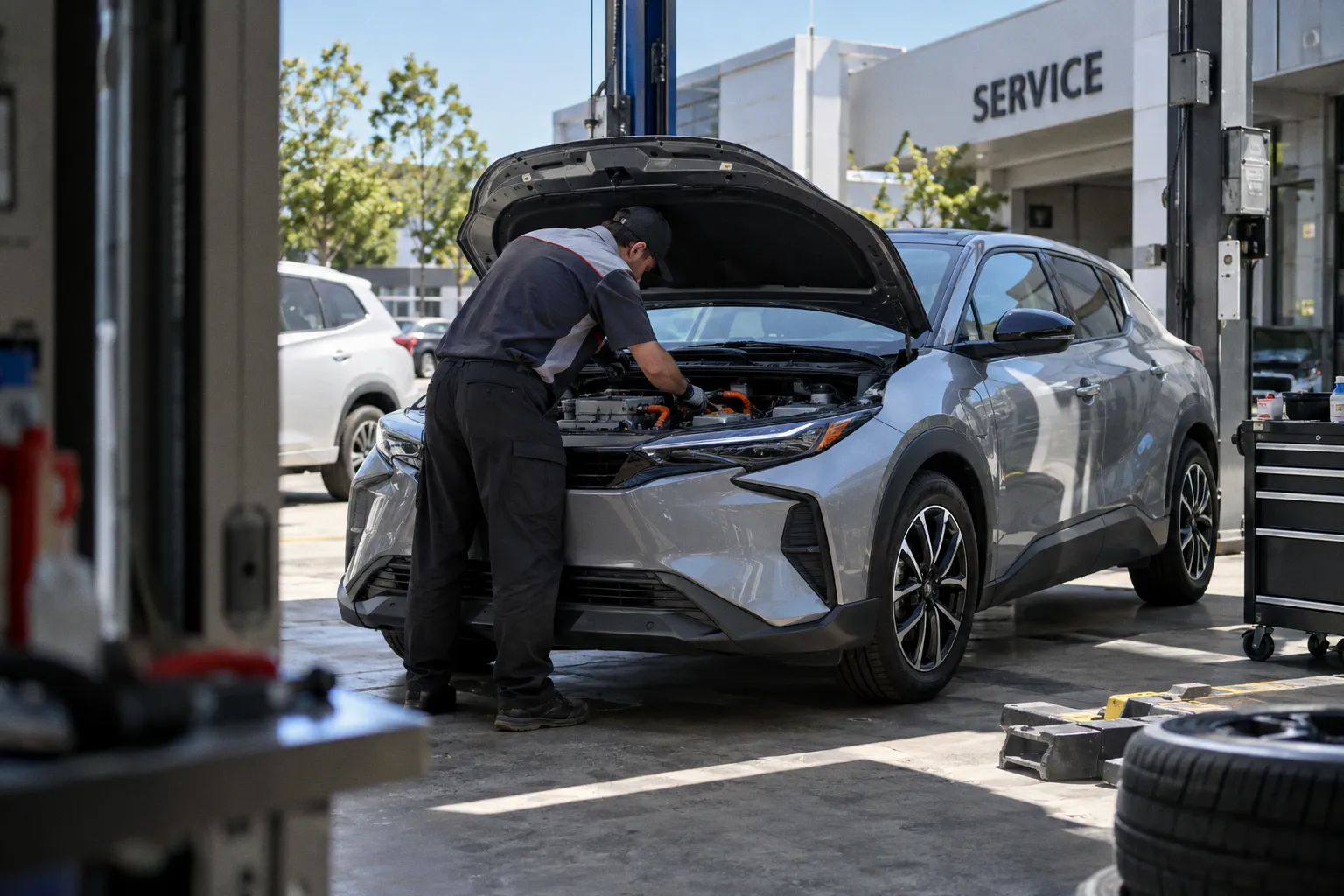
According to MarketsandMarkets, the global EV market is no longer just about stuffing batteries into passenger cars — it's stretching into a wider ecosystem of powertrains, charging hardware, software, and service work that's going to reshape what we see rolling into independent import bays. The analysis puts the broader EV market climbing from roughly $1.15 trillion in 2025 to about $1.86 trillion by 2035, with dedicated EV assembly capacity growing in lockstep. And as that scale expands, the mechanical reality is already showing up in the shop: Toyota has just issued a recall on 2026 C-HR EVs over a regenerative braking software glitch that can shut down motive power while you're driving.
Where the value is shifting
For us in the garage, the interesting part of this isn't the trillion-dollar projection — it's where the new work is concentrating. Battery cells, inverters, power electronics, high-voltage cabling, software layers, and eventually battery recycling are all pulling in labor that didn't exist in our bays five years ago. As automakers commit to dedicated EV platforms instead of adapting existing architectures, the packaging changes too: battery placement, motor placement, and how the electrical systems route through the chassis. The report breaks the ecosystem into upstream suppliers building the cells and motors, the automakers and Tier 1s integrating them, and a downstream layer of charging operators, fleet managers, software vendors, and recyclers. A growing share of diagnostic and repair work is going to demand comfort with high-voltage systems, not just engine management — and the supply chain behind all of it is what the report frames as the new competitive ground.
The C-HR regen glitch
The practical headline this week is the recall Toyota has opened on 2026 C-HR electric vehicles. SpeedMe reports a software flaw in the battery electronic control unit can let the regenerative braking system overcharge a high-state battery, and when it does, the vehicle simply cuts motive power. InsideEVs puts the campaign at about 10,000 vehicles. The remedy, per SpeedMe, is a dealer ECU flash — there's no bench-level workaround we can offer, but there's plenty we can do on either side of that appointment.
What to look for on the lift
If a C-HR owner pulls into your bay, ask whether the car went into a coast-down or decel and then refused to move, especially with a high state of charge showing on the dash. Pull DTCs and scan for battery ECU and regen-related codes before pointing them to the dealer, so they don't waste a trip. And as the broader EV market keeps widening into buses, trucks, two-wheelers, and fleet platforms, expect more of these software-driven drivability complaints to follow — the industry is growing fast, but the mechanical and electrical consequences are still landing right here on our lifts.