The Software-Defined Vehicle: Why Modern Car Maintenance Now Requires Digital Diagnostics
As Autocar Professional frames it, the industry's center of gravity has shifted from hardware to software, and for those of us who maintain European imports, this is what the software-defined vehicle…
Judson Grier·updated September 06, 2026
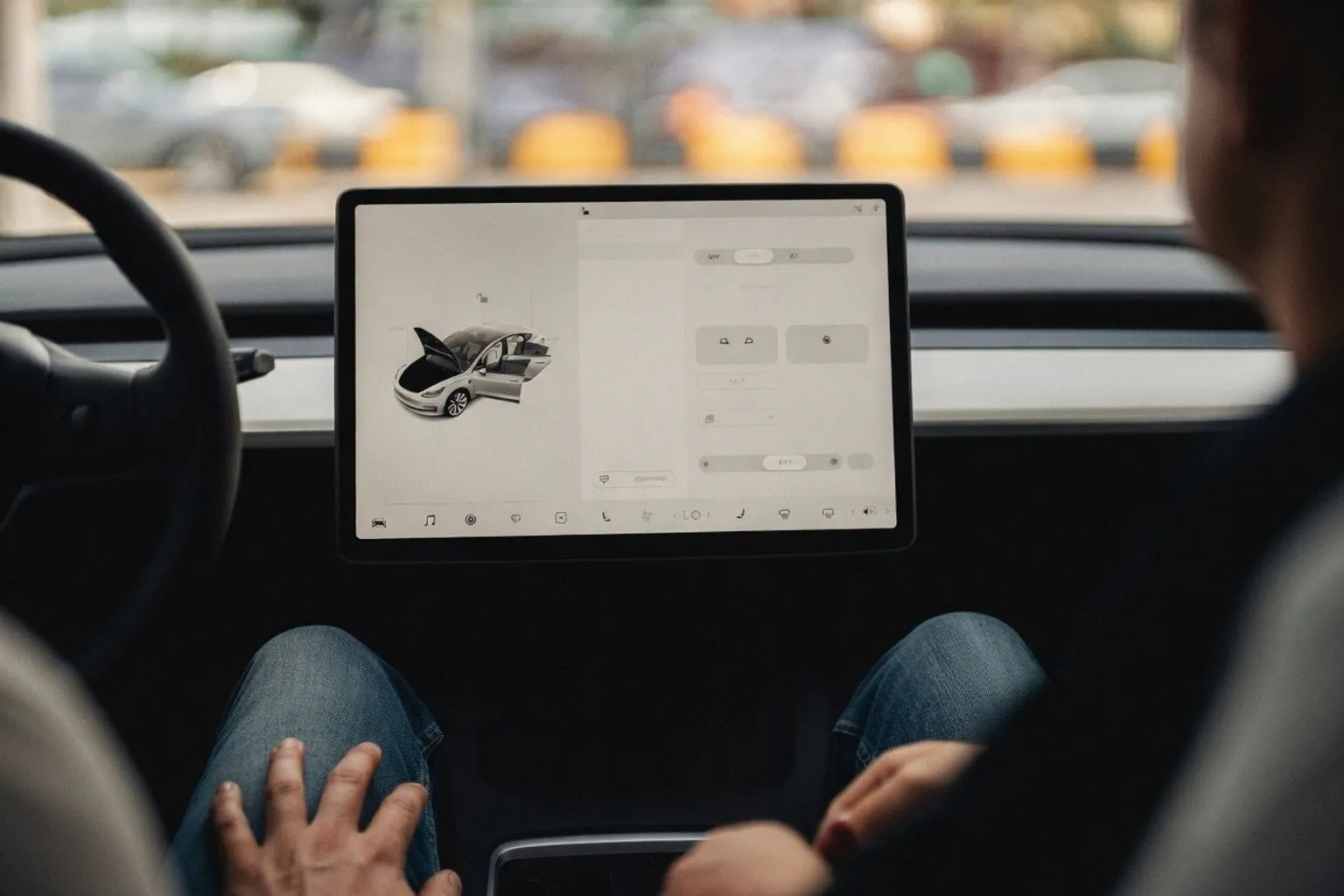
Cars have stopped being finished products the day they leave the showroom, and a batch of BMW recall filings, reported by Gasgoo through China's State Administration for Market Regulation, makes that abstraction uncomfortably real at the workbench. Five campaigns covering more than 150,000 vehicles went live this month; two trace directly to software download errors that can silently disable the risk-warning function on the integrated brake booster. As Autocar Professional frames it, the industry's center of gravity has shifted from hardware to software, and for those of us who maintain European imports, this is what the software-defined vehicle actually looks like when it shows up at the lift.
When the brake booster forgets how to warn you
The two software-related recalls—S2026M0094V and S2026M0095V—cover a small but telling slice: 157 domestically produced X1, X5, and 5 Series units, plus 61 imported X2, X6, X7, 5 Series, 7 Series, and MINI JCW Countryman models produced between mid-2022 and mid-2024. The failure mode is what worries us about flash-heavy platforms. A download anomaly or operational error during the update can leave the DSCi unable to fire its risk warning. You won't see a warning light about a warning system.
If you're working on one of these vehicles, the check is straightforward. Connect with ISTA or another BMW-capable scan tool and confirm the brake module shows the latest calibration. The recall calls for software reinstallation at the dealer, free to the owner, but the deeper point is that a failed flash is silent until the moment the system actually needs to flag something.
The starter side of the bulletin
The other three recalls are pure hardware, but they ride alongside the software ones and matter just as much on the bench. Recall S2026M0091V covers 93,071 imported 2 Series, 4 Series, 5 Series, 6 Series, X4, X5, X6, and Z4 vehicles built between February 2021 and April 2025. The defect: a starter motor manufacturing issue that can cause hard starting and, in the worst case, a thermal event. S2026M0092V and S2026M0093V add 57,423 domestic 5 Series and 364 imported 7 Series units with insufficient waterproofing on the engine starter relay—water gets in, the relay shorts, and the loom becomes a fire risk.
We see the relay-water pattern often enough. The connector sits low and forward, in the splash zone from the wheel arch, and once the seal hardens with age you start chasing intermittent no-crank complaints that look electrical but trace back to corrosion creeping across the contacts. BMW's remedy is a replacement starter motor with improved internals; that's a half-day job once the unit is on the bench, and worth scheduling before cold weather stacks another hard-start cycle on top of a marginal part. The long-term wear we worry about here isn't the starter itself—it's the harness insulation that gets cooked when a relay runs hot, and the ground path corrosion that follows.
What "software-led" actually looks like in the bay
The Autocar Professional piece makes a fair point: the vehicle at delivery isn't the finished product, it's the starting point. OTA updates, feature unlocks, and remote diagnostics mean the car you scanned last month can show different parameters next month. That's convenient when it works, and expensive when it doesn't, because the fix isn't a wrench—it's a stable power supply, the correct ISTA/One image, and the patience to let a module relearn after a reflash. With connected services growing at the rate Autocar Professional projects—the Indian connected car market alone is forecast at 16.7% CAGR through 2030—and 4G/5G eSIMs becoming standard on higher trims, more software surfaces mean more chances for a bad flash to ruin your week.
Two habits keep us out of trouble. First, never interrupt a software session once it starts; voltage drop from a marginal battery is the most common cause of a bricked module, and the resulting wear on the module's flash memory can shorten its service life. Second, document the as-built coding before any flash. When a download error takes a module offline, that coding snapshot is the difference between a 30-minute restore and a day spent sourcing a replacement from a donor car. Either way, the mechanical failures still need wrenches; the software failures need clean power and careful procedure. Both end up at our benches, and both leave their own kind of long-term wear behind.