Motive Integrates AI-Driven Diagnostics into Fleet Repair Workflows
According to Motive, the company has launched Motive Maintenance, an AI-powered system that connects vehicle fault codes, inspections, maintenance workflows and repair spending.
Aldous Moorland·updated August 22, 2026
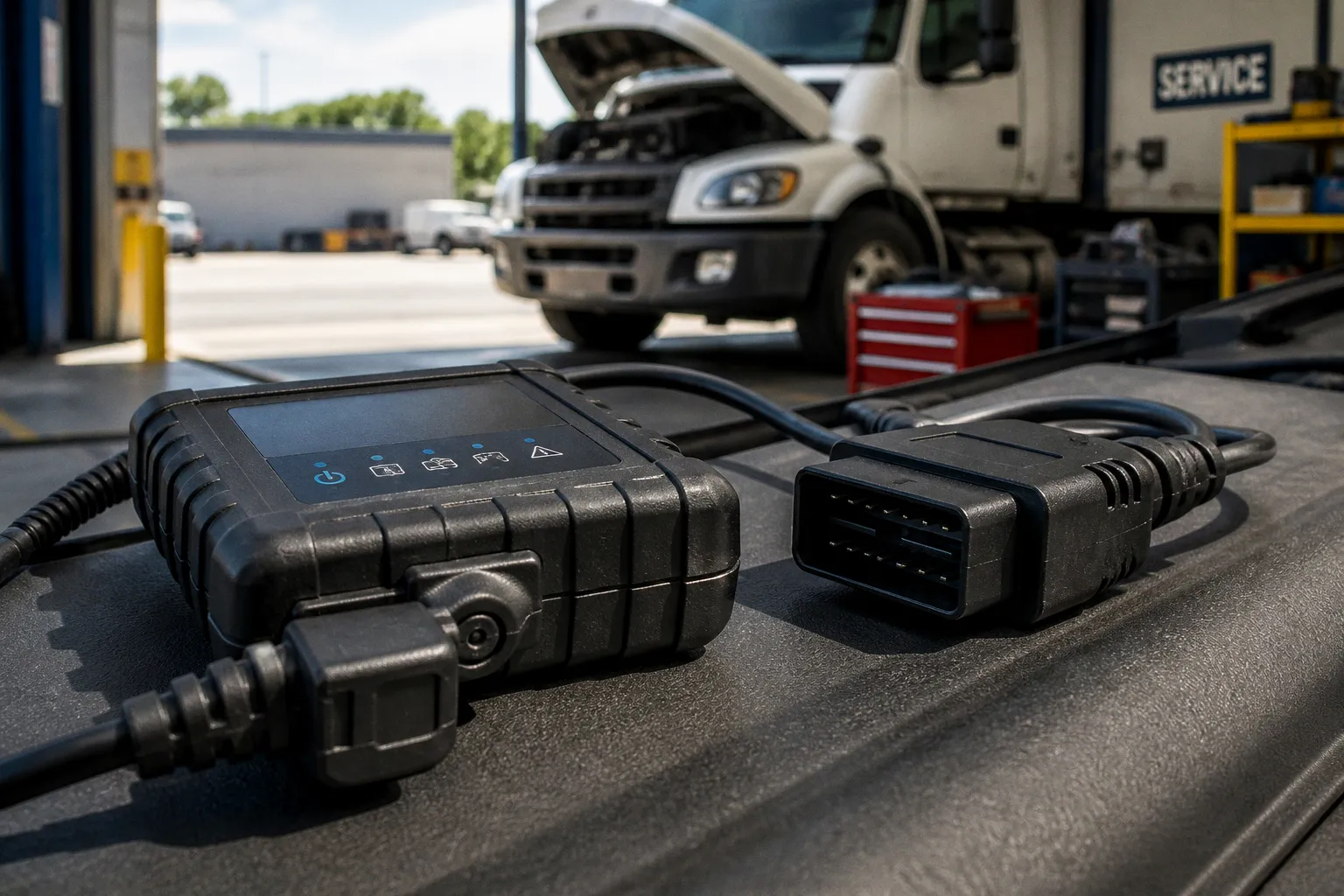
Its central function is direct: a detected fault code can be converted into a prioritized shop work order. For import fleets, the relevant change is not the label “AI,” but the proposed link between electronic diagnosis and the repair record.
From fault code to controlled workflow
Motive Maintenance is built inside the broader Motive platform. The company says it combines vehicle and asset health data with inspection results, maintenance actions and repair costs. A fault detected on the road is intended to enter the shop process as a prioritized work order rather than remain an isolated diagnostic event.
That distinction matters because a fault code is not, by itself, a completed diagnosis. It identifies a system condition or monitored deviation. The repair decision still depends on the vehicle, the code definition, supporting data, wiring condition, sensor readings and confirmation testing. A workflow platform can route the event. It does not remove the need to verify the fault at the vehicle.
The same logic applies to inspection defects. If an inspection finding is recorded separately from the work order, the defect can remain administratively visible but mechanically unresolved. Motive’s stated approach is to place the inspection result, the detected code and the repair action in one chain.
For a shop handling European or Asian imports, the useful operational sequence is therefore:
- a fault code is recorded;
- the related vehicle and inspection data are attached;
- the issue is assigned a repair priority;
- a shop work order is created;
- parts, labor and completion data are recorded against the vehicle.
The platform is positioned for organizations managing vehicles and assets, not as a replacement for a scan tool in an individual garage.
What technicians should verify
If a fleet begins using a system that automatically converts codes into work orders, the first control point should be the code itself. The original code, vehicle identity and detection context should remain visible. If those fields are missing, the workflow may be complete while the diagnostic evidence is not.
The second control point is confirmation. A generated work order should describe the condition requiring investigation, not imply that a component has already failed. This is especially important on imports, where similar symptoms can originate from different circuits, network faults or power-supply problems.
The third control point is closure. A repair should not be treated as verified merely because the work order has been marked complete. The baseline must be established from the vehicle: the fault code should be rechecked, the relevant inspection result should be updated, and the repair record should contain the completed action and associated spending data.
Motive says the system also connects repair spending to vehicle and asset records. That creates a cost-tracking view for fleet operators. It does not, based on the available announcement, establish that the platform can determine the correct part, guarantee a repair, or replace technician testing.
A wider shift toward connected shop data
Motive’s announcement arrives alongside Fullbay’s launch of Fullbay Next, a cloud-based repair-management platform with AI-supported workflows for heavy-duty shops and fleets. Fullbay says its initial rollout targets independent and mobile repair businesses. The two announcements point to the same operational problem: fault information, inspections, work orders and cost records are often handled as separate processes.
The practical test is data continuity. If the fault code reaches the work order but the completed repair does not return to the vehicle record, the system has only moved paperwork. If the inspection, diagnostic event, repair action and spending record remain connected, the result is more useful for repeat faults, maintenance planning and cost control.
For import repair operations, the baseline parameters are exact: original fault code preserved, vehicle identity confirmed, inspection defect linked, repair action recorded, spending attached, and post-repair code status verified. Any platform that cannot expose those fields should be treated as an administrative layer, not as diagnostic proof.