Six-point vs 12-point sockets for DIY mechanics
The most expensive tool in a home garage is not the torque wrench, the impact gun, or the scan tool. It is the fastener that no longer accepts a socket.
Merritt Vane·Updated: August 15, 2026·16 min read
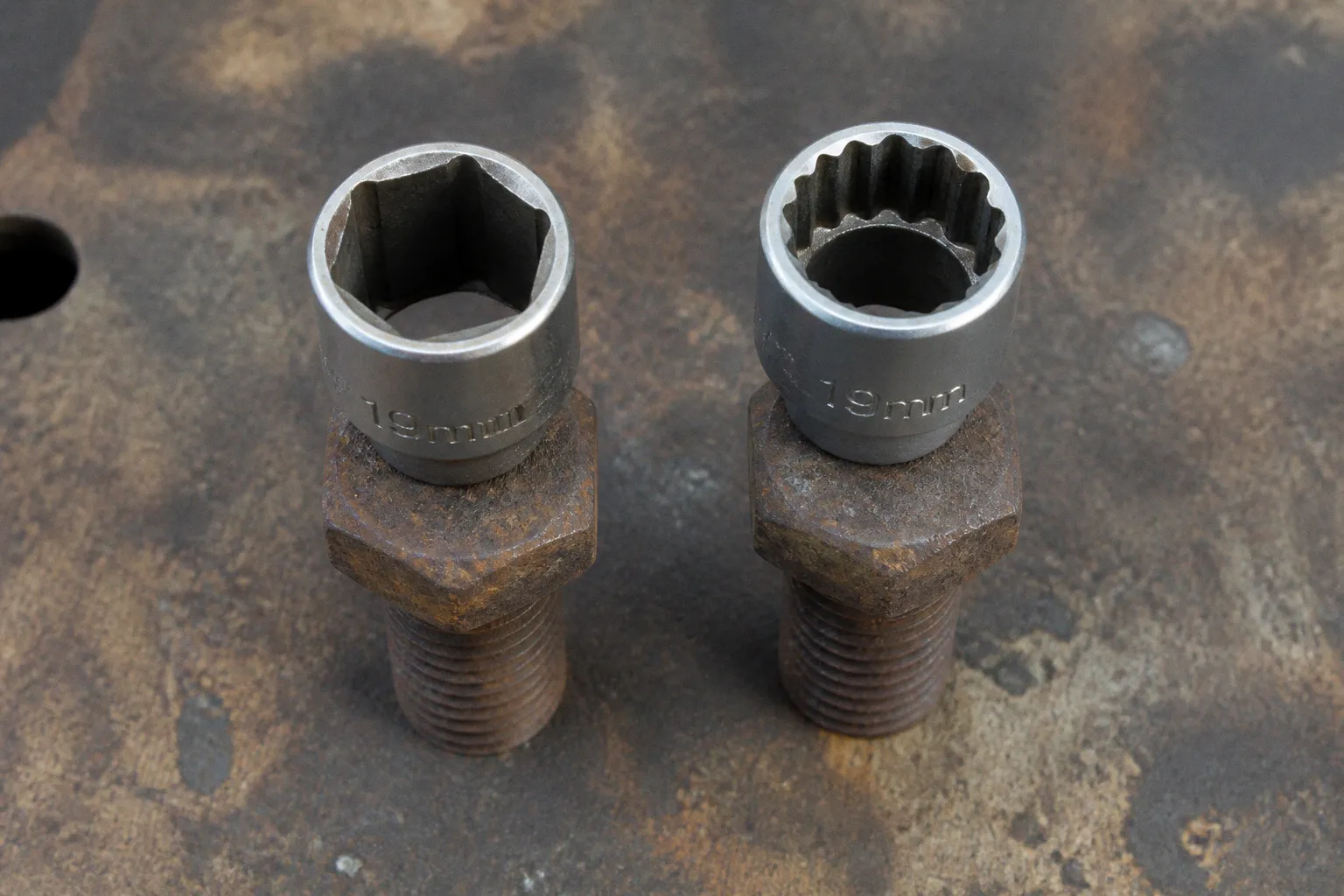
A rounded hex head can turn a scheduled oil service into a multi-hour extraction project involving drills, extractors, heat, or even welding on a component that originally cost a few cents.
Compare car rental deals in United Kingdom
See available offersPartner link — DiscoverCars comparisonIn a direct 6 point vs 12 point sockets comparison, the question is not which tool is superior in every situation. It is which geometry gives the fastener the best support for the job at hand, and which one lets you work without sacrificing access, strength, or future serviceability.
The mechanic who treats that question seriously does not buy a socket for its point count alone. The mechanic buys a socket for the geometry of the fastener it will meet, the amount of torque required, the available swing room, and the drive tool being used. That distinction governs nearly every recommendation that follows.
A socket does not grip a bolt by force alone; it grips it through the shape and area of its contact, and that contact determines how safely torque reaches the fastener.
The geometry of torque transfer on a hex fastener
A standard hex bolt has six flat sides separated by six corners. The mechanical reality of tool engagement depends on how the socket fits around those surfaces, how accurately the socket is made, how worn the fastener is, and how much torque the joint demands.
A six-point socket is machined with six internal flats intended to match the six external flats of a hex fastener. When the socket is fully seated and correctly sized, those flats provide broad support along the sides of the bolt head. The socket surrounds the corners instead of relying on them as the primary load-bearing features. That arrangement generally spreads the applied load over a larger area and reduces the tendency of the bolt head to round under torque.
This is the central six-point socket advantage. The tool is not simply stronger because it has fewer points. Its internal profile gives a sound hex head more side support, particularly when the fastener is tight, corroded, over-torqued, or being removed with an impact tool.
A twelve-point, or bi-hex, socket has twelve internal flats arranged around the opening. It offers twice as many possible engagement positions, but the extra positions require a more intricate internal shape. On a standard six-sided bolt, a twelve-point socket typically has smaller contact patches and less complete support of the bolt flats than a properly fitted six-point socket. Depending on manufacturing tolerances, wear, and the condition of the fastener, contact may occur near several areas of the flats and corners rather than across broad, even surfaces.
That does not mean that only two internal flats touch while the other ten float clear. Real contact depends on the exact relationship between the socket and the fastener. The important practical point is simpler: on a standard hex head, a twelve-point socket usually gives the corners more responsibility and provides less side support than a six-point socket of the same nominal size.
Under modest torque on a clean, undamaged fastener, that difference may never matter. Under high torque, shock loading, corrosion, or repeated service, it matters considerably. If the load exceeds the local strength of the bolt head, the corners or edges can deform. Once that deformation begins, the socket may no longer seat correctly, and each additional attempt can make the damage worse.
The material itself does not automatically remain within its elastic range merely because a socket is being used correctly. A bolt head can deform plastically if the torque, corrosion, fit, temperature, or fastener condition pushes the local stress beyond the material’s yield strength. If the load stays below that threshold, the metal may spring back after the socket is removed. If it does not, the damage is permanent. The socket can reduce the risk; it cannot guarantee a clean future removal.
Twelve-point sockets: indexing advantage and its mechanical price
The main reason a twelve-point socket exists is access. A six-point socket can be repositioned in 60-degree increments. A twelve-point socket can be repositioned in 30-degree increments. That smaller swing can decide whether a ratchet fits between a bolt and a frame rail, whether a breaker bar clears a control arm, or whether a fastener can be reached without removing another component.
In a confined space behind an engine mount, inside a wheel well, around a brake caliper, or deep in an engine bay, the handle may not have enough room to rotate through a full 60 degrees. A twelve-point socket can make the difference between a workable repair and a frustrating one. This is the answer to when to use 12 point sockets on a standard hex fastener: when access genuinely requires the additional indexing positions and the socket can be seated securely.
The cost of that flexibility is reduced margin on the contact surfaces. A twelve-point socket may work perfectly well on a good fastener with moderate torque, but it is less forgiving of a rounded corner, rust scale, paint, dirt, or a slightly incorrect size. It is also a poor substitute for a six-point socket when the job involves high breakaway torque.
A twelve-point socket should therefore be selected with some discipline:
- Use it when the 30-degree indexing advantage solves a real access problem.
- Use it on clean, undamaged fasteners that accept the socket fully.
- Avoid using it as the first choice on heavily corroded or visibly damaged hex heads.
- Do not use a standard chrome hand-tool socket on an impact wrench.
- If the fastener is difficult to break loose, move to the best-supported geometry available rather than simply applying more force to a marginal fit.
The familiar warning about stripping bolts with a 12 point socket is not a claim that every twelve-point socket will strip every bolt. It is a warning about reduced tolerance for bad conditions. A correctly sized six-point socket can sometimes remove a fastener that a twelve-point socket begins to damage. Once the corners have been rounded, neither point count is a magic repair.
Impact-rated sockets and the six-point standard
Impact sockets are the thicker-walled, specially finished tools designed for pneumatic and high-torque electric impact wrenches. Their construction allows them to handle repeated shock loading more safely than ordinary chrome-plated hand sockets. The drive end, wall thickness, heat treatment, and overall design all matter.
A six-point impact socket is the standard choice for ordinary hex fasteners under impact use. Its internal profile supports the flats of the fastener, while the heavier body is designed to tolerate the impulses produced by the tool. That combination gives the mechanic the best available margin when a corroded suspension bolt, axle fastener, or crankshaft pulley bolt requires substantial force.
The six-point recommendation is a standard, not a universal ban on every other geometry. Properly rated twelve-point impact sockets do exist. They are useful when the vehicle uses a twelve-point fastener and the job requires an impact tool, or when a manufacturer’s service procedure specifies a particular twelve-point impact application. The socket must be genuinely impact-rated and must match the fastener correctly.
A twelve-point impact socket is not automatically wrong; it is simply more specialized. On a standard hex fastener, the six-point impact socket remains the sensible default because it gives the head better support under high torque and shock. On a factory twelve-point fastener, however, a six-point socket is not a substitute at all. The tool and fastener geometries must match.
That distinction matters when buying tools. A product description that says “12-point impact socket” should not be dismissed as mislabeled merely because six-point impact sockets dominate the market. Check the manufacturer’s impact rating, drive size, material, and intended use. The correct question is whether the socket is designed for impact service, not whether it has six or twelve points in isolation.
Six-point impact sockets are the working standard for ordinary hex fasteners; twelve-point impact sockets are legitimate tools when the hardware and the rating call for them.
Fasteners that genuinely require a twelve-point socket
The general preference for six-point sockets has one substantial exception: fasteners that are themselves machined with a twelve-point head rather than a standard hex.
Many automotive applications use twelve-point hardware where the designer needs high clamping force, a compact head, or more installation positions in a restricted area. Depending on the vehicle and repair, a DIY mechanic may encounter twelve-point head bolts on flywheel or flexplate assemblies, certain driveline components, specialized engine hardware, and aftermarket stud or fastener systems. Some European and Japanese applications also use less common head profiles that should be identified before a socket is selected.
A six-point socket will not properly seat on a true external twelve-point fastener. Trying to force it, hammer it on, or substitute a nearby metric or imperial size is not a repair strategy. It is a way to damage the hardware and lose the option of using the correct tool later.
Twelve-point sockets can also engage certain square-headed fasteners because the twelve-point opening provides multiple ways to surround a four-sided profile. That does not make every twelve-point socket the ideal tool for every square fastener. Fit still matters, and a dedicated square socket may provide better engagement where one is available. Older European commercial equipment, trailer hardware, and vintage import applications can include square fasteners, so the mechanic should identify the profile rather than assuming that a familiar six-point socket will work.
For the DIY mechanic, the conclusion is not to replace the six-point collection with twelve-point tools. It is to own a smaller twelve-point set as a supplement. The two geometries coexist because the fasteners, access constraints, and torque demands coexist.
Building a working socket set for an import-focused garage
The practical question for a home mechanic building a kit from scratch is not simply how many sockets the case contains. It is which point counts, drive sizes, and depths will actually cover the vehicle fleet.
For European and Asian import service, three drive sizes cover much of the routine work:
- 1/4-inch drive is useful for small fasteners in interior trim, sensors, brackets, and electrical components where access matters more than maximum torque.
- 3/8-inch drive covers a large share of engine-bay, brake, chassis, and general service work.
- 1/2-inch drive belongs in the heavier part of the kit for suspension, axle, wheel hub, crankshaft, and other high-torque applications.
A sensible first purchase is a complete metric six-point set in the drive sizes used most often, followed by a smaller twelve-point set in both shallow and deep configurations where the vehicle requires it. Common metric sizes in the small and medium range will see the most use, while larger sizes become more relevant in half-inch-drive suspension and driveline work. Exact coverage should follow the service manuals and fasteners found on the vehicles being maintained rather than the promise of a large case.
Deep sockets deserve separate attention. A shallow socket is useful where vertical clearance is restricted. A deep socket is required when a nut sits on a long stud, when a recessed fastener extends far into the socket, or when an accessory bracket leaves the drive end of the fastener unusually exposed. A deep socket is not a stronger version of a shallow socket, and one cannot always replace the other.
| Parameter | Six-point socket | Twelve-point socket |
|---|---|---|
| Best fit for a standard hex bolt | Broad support on the bolt flats | More limited contact area and less corner clearance |
| Repositioning increment | 60 degrees | 30 degrees |
| High-torque use on sound hex hardware | Preferred | Use only when access or application justifies it |
| Sensitivity to rounded corners and contamination | Lower | Higher |
| Compatibility with external twelve-point fasteners | No | Yes |
| Compatibility with some square-headed fasteners | Generally no | Often possible, provided the fit is correct |
| Standard geometry for impact work | Yes, and the usual default | Available in properly rated specialty versions |
| Primary DIY role | Main working set | Access, specialty hardware, and matching fastener profiles |
A garage that owns only six-point sockets can perform the majority of import service work. A garage that owns only twelve-point sockets will eventually encounter a fastener for which the extra indexing positions are not worth the reduced support. The complete home workshop owns both, understands the difference, and chooses between them deliberately.
Fit, drive tools, and the condition of the fastener
Point count is only one part of a socket decision. A perfect six-point socket used at an angle on a dirty bolt can perform worse than a properly seated twelve-point socket on a clean, lightly loaded fastener.
Before applying torque, clean rust, mud, paint, and packed debris from the fastener head. The socket must reach the bottom of the head rather than resting on a layer of corrosion or on the exposed top edge. If the socket rocks, sits high, or appears to engage only part of the profile, stop and correct the problem.
Size selection deserves the same care. Metric and imperial sizes can appear close enough to fit, particularly on damaged or corroded hardware. That apparent fit often disappears as soon as torque is applied. If the correct socket does not seat firmly, find the correct size rather than relying on a longer ratchet or a harder impact setting.
The drive tool should also match the operation:
- Use a ratchet for ordinary removal and installation where the fastener is not seized.
- Use a breaker bar when controlled, gradual torque is preferable to repeated impacts.
- Use an impact wrench only with impact-rated sockets, adapters, and extensions.
- Do not use chrome hand sockets on an impact tool simply because the drive size matches.
- Avoid universal-joint adapters and wobble extensions when the fastener is already damaged or requires maximum socket stability.
An extension can change the way the tool loads the fastener, especially when it is bent or used at an angle. Keep the socket square to the head. If access forces the tool away from the fastener axis, change the setup before increasing torque. A few minutes spent rearranging the extension or removing an obstruction is cheaper than extracting a rounded bolt from an aluminum housing.
A preventative protocol for keeping fasteners serviceable
The socket determines one moment in the life of a fastener; the procedure around that moment determines whether the fastener remains serviceable at the next interval.
Before disassembly, confirm the fastener size, head profile, and required socket depth. Then inspect the head itself. Look for corrosion, damaged corners, evidence of previous tool slip, sealant, threadlocker, or a fastener that appears to have been stretched or altered. If the hardware is visibly compromised, plan the removal rather than treating it as an ordinary turn of the ratchet.
Apply penetrating fluid when corrosion is part of the problem, and allow it time to work according to the product and situation. Penetrant does not replace the correct socket or make unlimited torque safe. Heat, where appropriate and safe for nearby seals, wiring, fuel components, and painted surfaces, may be more effective than adding force. The correct method depends on the fastener’s location and the material surrounding it.
Thread lubricant and anti-seize should be used only where the service procedure allows them. Lubrication changes the friction in the threads and can alter the relationship between torque and clamping force. Anti-seize on an aluminum or steel interface may prevent future corrosion, but it is not automatically appropriate for every critical fastener. Thread sealant, locking compound, and torque-to-yield procedures likewise belong where specified, not where they happen to be available.
Tighten fasteners with a torque wrench when the manufacturer provides a torque specification. A bolt that has been over-torqued at assembly may already have suffered permanent deformation, and no socket geometry can restore its original condition during the next removal. On critical joints, follow the specified tightening sequence, angle procedure, and replacement requirement. A torque wrench is not a guarantee of correct assembly if the threads are dirty, damaged, incorrectly lubricated, or bottoming out.
Inspect the bolt head before reuse. Mild corner deformation is a warning, not a cosmetic defect. A fastener that no longer presents a clean profile should be replaced when the application allows it. The cost of a new bolt is usually trivial compared with the cost of an extractor, a drill, a damaged component, or the lost time required to recover from a preventable mistake.
Choosing between six and twelve points in real repairs
The decision becomes clearer when the job is considered as a sequence rather than as a tool-shopping preference.
For a routine oil drain plug with a sound hex head, use the correctly sized six-point socket if access allows. For a recessed engine-bay fastener where the ratchet cannot be repositioned, a twelve-point socket may be the better practical choice if the head is clean and the torque is moderate. For a rusted suspension bolt, choose a six-point impact socket and prepare for controlled removal. For a factory twelve-point crankshaft, flywheel, or driveline fastener, use the matching twelve-point socket, preferably one rated for the drive tool being used.
The same logic applies when selecting a socket set for DIY work. A set with only twelve-point sockets may look more versatile because the tools offer finer indexing, but that versatility is concentrated in access rather than load handling. A set with only six-point sockets is stronger as a general foundation but will be incomplete if the vehicles use external twelve-point hardware.
The best socket set comparison for DIY work therefore has less to do with the number printed on the case and more to do with coverage:
1. Start with metric six-point sockets in the drive sizes used for the vehicle fleet.
2. Add deep six-point sockets for long studs and recessed fasteners.
3. Add twelve-point sockets in the sizes used by the engine, driveline, and specialty hardware.
4. Include properly rated impact sockets if an impact wrench is part of the garage.
5. Keep separate hand-tool and impact-tool sets so that a convenient but unsafe substitution is less likely.
6. Replace sockets and fasteners that show damage instead of treating wear as something torque will overcome.
Position
In a direct 6 point vs 12 point sockets comparison, six-point sockets are the working default for high-torque operations on standard hex fasteners. They provide broader side support, tolerate imperfect conditions better, and are the standard choice for impact work.
Twelve-point sockets remain valuable tools. Their 30-degree indexing can solve access problems that a six-point socket cannot, and they are mandatory for external twelve-point fasteners. Properly rated twelve-point impact sockets also have a legitimate place when specialized hardware requires them.
The home mechanic does not need to choose one geometry and reject the other. The sensible garage owns a strong six-point foundation, adds twelve-point tools for access and matching hardware, and treats fit, fastener condition, torque, and tool rating as part of the same decision. That is how a socket set protects the repair instead of becoming the cause of the next one.