Camera-Radar Fusion Systems: New Challenges for In-Cabin Vehicle Diagnostics
According to newelectronics.co.uk, Murata and Smart Eye have jointly showcased a camera-radar fusion system targeting in-cabin monitoring of vehicles.
Aldous Moorland·updated September 16, 2026
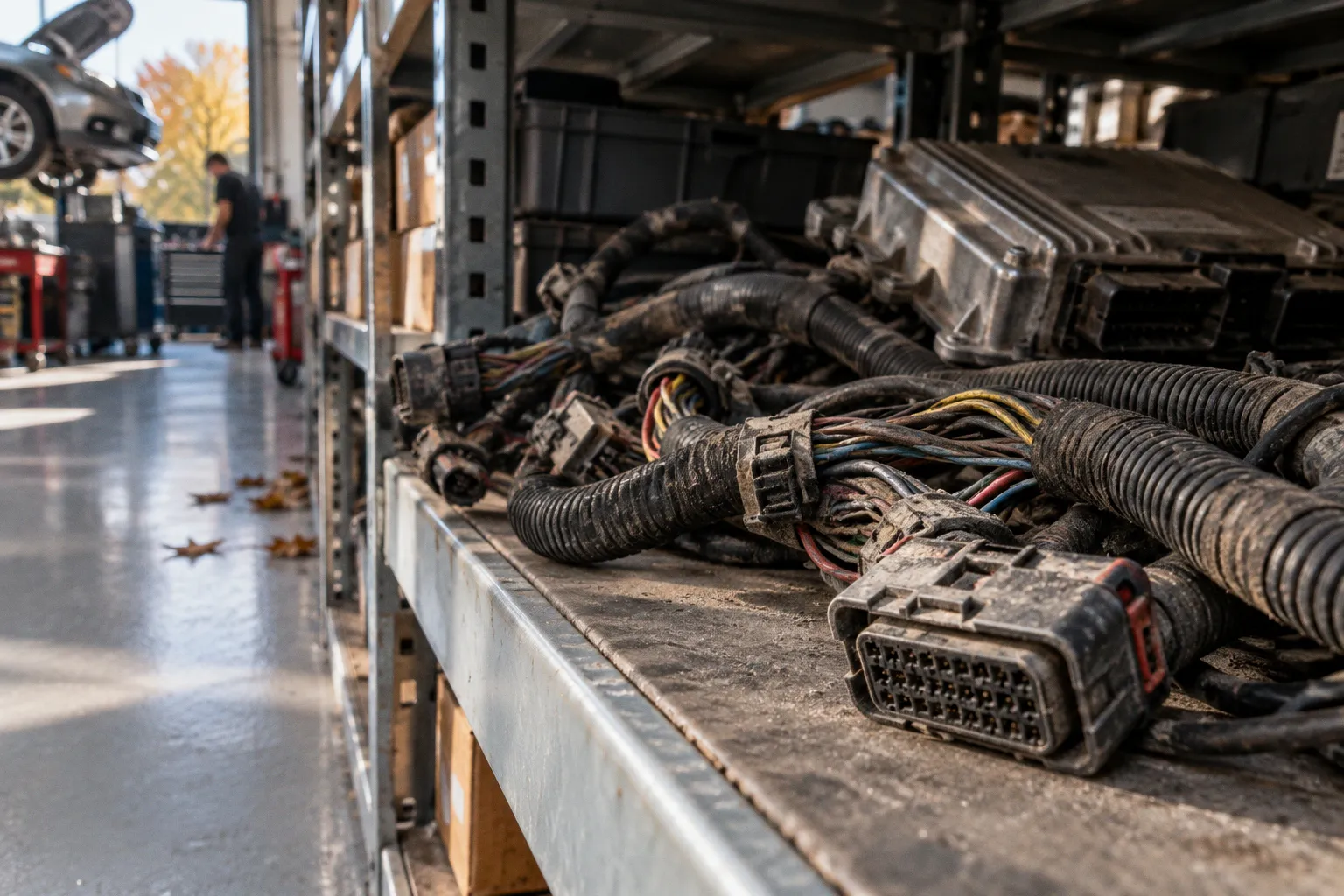
The demonstration positions millimeter-wave radar paired with optical sensing as a combined safety layer for occupant detection. For import vehicle technicians, the development signals an expanding diagnostic perimeter inside the cabin, one that intersects with network architecture, ADAS calibration routines, and module-level fault tracing.
Sensor topology and fault isolation
Camera-radar fusion in cabin monitoring is not a single component. Two independent data streams converge at a processing domain: one visual, one radio-frequency. Each stream carries distinct failure modes that demand separate isolation procedures.
Visual channel degradation manifests as image artifacts, lens contamination, or illumination dropouts. Radar channel degradation appears as reduced range resolution, multipath interference, or complete signal loss at the antenna. When fused, a fault originating in either sensor domain may present as a software anomaly inside the host ECU. Technicians tracing intermittent driver-monitoring alerts must isolate each sensor domain independently before condemning the fusion controller. Skipping this step guarantees misdiagnosis.
Standard OBD-II queries will not reach these subsystems on most current import platforms. Cabin monitoring controllers typically reside on private CAN or automotive Ethernet subnets behind a central gateway node. Access requires manufacturer-level diagnostic tooling, the same category of equipment already in use for ADAS calibration on European marques. Entry-level scan tools will return "no fault found" while the actual degradation persists in the sensor stack.
What to verify during service
The shift toward multi-sensor cabin monitoring increases the documentation load on workshops. Wiring diagrams must distinguish between video signal paths, low-voltage radar supply lines, and high-speed data buses terminating at the domain controller. Connector pinouts expand. Shielding requirements tighten, particularly along the radar channel, which remains vulnerable to EMI from aftermarket ignition components — a recurring fault pattern across older import applications.
Technicians servicing vehicles equipped with occupant-monitoring hardware should verify baseline sensor health at every maintenance interval. Calibration targets, where specified, are mounted on the windshield header, the A-pillar, or the seat frame depending on platform architecture. Post-replacement verification follows the same if/then logic applied to any ADAS component: confirm supply voltage at the connector, confirm bus communication handshake, confirm raw sensor return values against published specifications before releasing the vehicle.
The trajectory places cabin sensing under the same diagnostic rigor currently reserved for forward-facing radar and camera stacks. Workshops handling late-model imports should expect their training and tooling requirements to expand in parallel with each new model year.