Comparing EV, Hybrid, and Gas Powertrains: Lessons from a 700-Mile Road Test
The Car and Driver test places a 2026 Tesla Model 3, a 2026 Honda Accord Touring Hybrid, and a 2026 Volkswagen Jetta GLI in the same road-trip comparison, with interior and exterior photos available for each vehicle.
Aldous Moorland·updated September 08, 2026
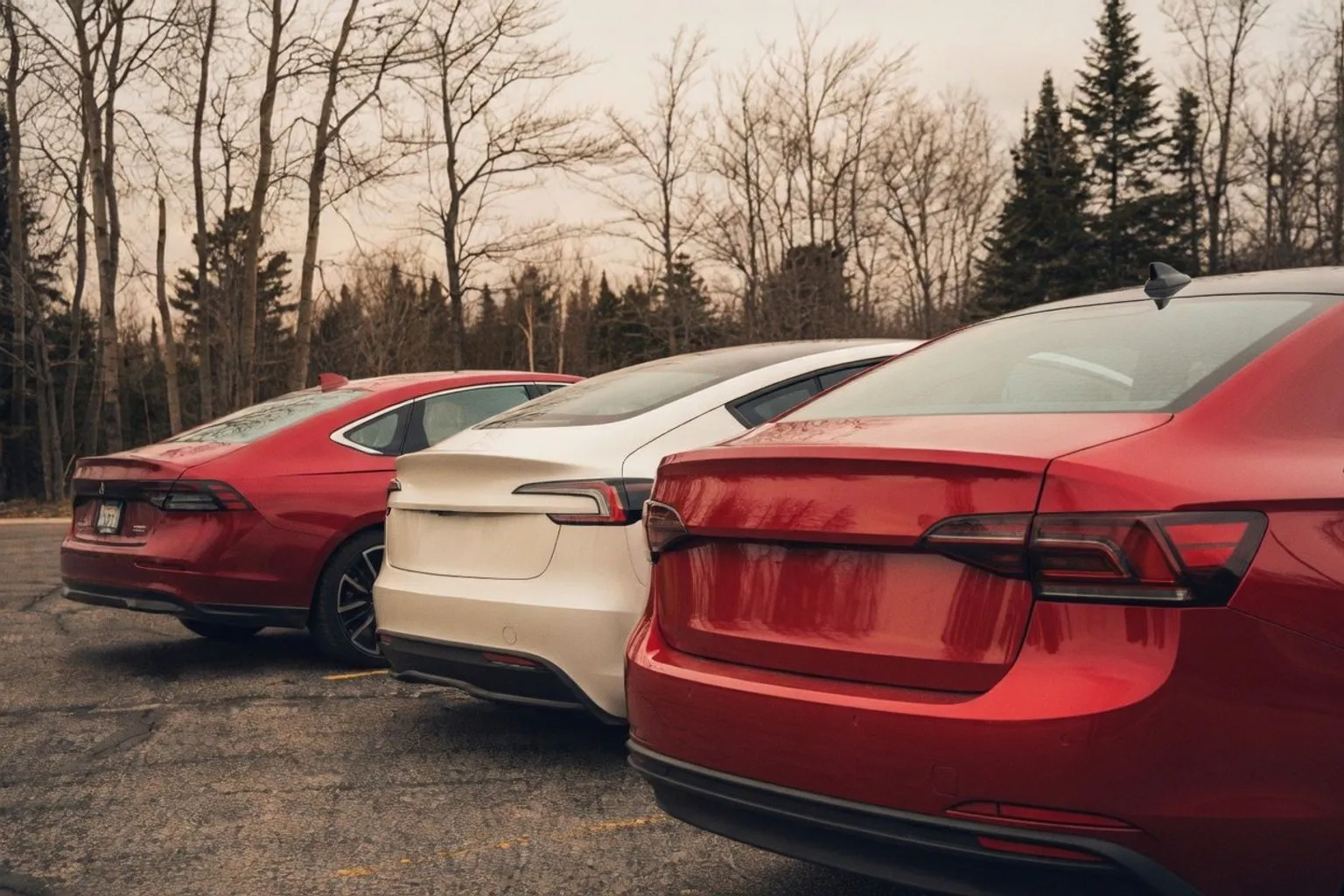
The value for import-car owners is not a declared winner. It is the test structure: three different powertrain layouts, one route, and a defined set of operating assumptions. That makes the material useful as a reference for what must be recorded before comparing efficiency or charging behavior.
The test variables are more important than the photographs
The road trip covered more than 700 miles. It began in Ann Arbor and continued through Michigan’s Upper Peninsula, with an overnight stop. Speed was monitored by GPS to prevent the run from becoming a race, and a stop was required in each direction.
That control matters. If the objective is to compare an EV, a hybrid, and a gasoline vehicle, uncontrolled speed creates unusable data. The same applies in a workshop. A scan result recorded without vehicle speed, operating temperature, battery state, or charging condition is not a complete diagnostic record.
Car and Driver used a 2026 Tesla Model 3, a 2026 Honda Accord Hybrid Touring, and a 2026 Volkswagen Jetta GLI. The source also identifies the energy and fuel-cost assumptions used for the experiment:
- Residential electricity: 19 cents per kilowatt-hour.
- DC fast-charging: 53 cents per kilowatt-hour.
- Regular gasoline: $4.45 per gallon.
- Premium gasoline: $5.40 per gallon.
These values belong to that comparison. They should not be treated as universal service specifications or current operating costs for every market.
What an import owner can verify from the setup
The photos show the vehicles’ interiors and exteriors from multiple angles. That is useful for identifying hardware differences before relying on a specification sheet. The relevant inspection points are visible equipment, control layout, charging or fuel interfaces, and the physical condition of components shown in the material.
The three vehicles also represent different diagnostic environments. The Tesla Model 3 is evaluated through an electric-drive system. The Accord Touring Hybrid combines an internal-combustion engine with a hybrid system. The Jetta GLI uses a gasoline powertrain. The evidence does not establish a failure rate, repair cost, range result, fuel-economy result, or reliability ranking for any of them. Those conclusions should not be extracted from the photo feature.
For a workshop comparison, the correct sequence is straightforward:
1. Identify the exact vehicle and powertrain.
2. Record the test distance and route conditions.
3. Record the energy or fuel source used.
4. Keep speed control consistent.
5. Repeat the route in both directions where possible.
6. Separate measured operating data from visual inspection.
If any one of those inputs changes, the result is no longer a direct comparison.
What remains unconfirmed
The available material confirms the vehicles, the road-trip distance, the GPS speed control, the bidirectional stops, and the energy and fuel prices used by Car and Driver. It does not confirm the final winner, total consumption, charging time, fuel economy, battery state, ambient temperature, or repair implications.
A separate SpeedMe.ru snippet reports that the Tesla Model Y received a “Super Manifold V2” in Berlin and refers to VIN-based checking. No source text is available for that item. Its technical scope, affected vehicles, and verification procedure therefore remain unconfirmed.
The baseline for evaluating this comparison is limited but precise: 2026 Tesla Model 3, 2026 Honda Accord Touring Hybrid, and 2026 Volkswagen Jetta GLI; more than 700 miles; GPS-monitored speed; a stop in each direction; and the stated electricity and fuel prices. Any stronger conclusion requires the underlying test results, not the photographs alone.