Hyundai Shifts India Strategy Toward Exporting Automotive Software and Engineering Expertise
Hyundai's recent messaging, according to Cartoq, points toward a shift in how the company positions India within its global operation: not as a body shop rolling finished cars off the line for…
Judson Grier·updated August 31, 2026
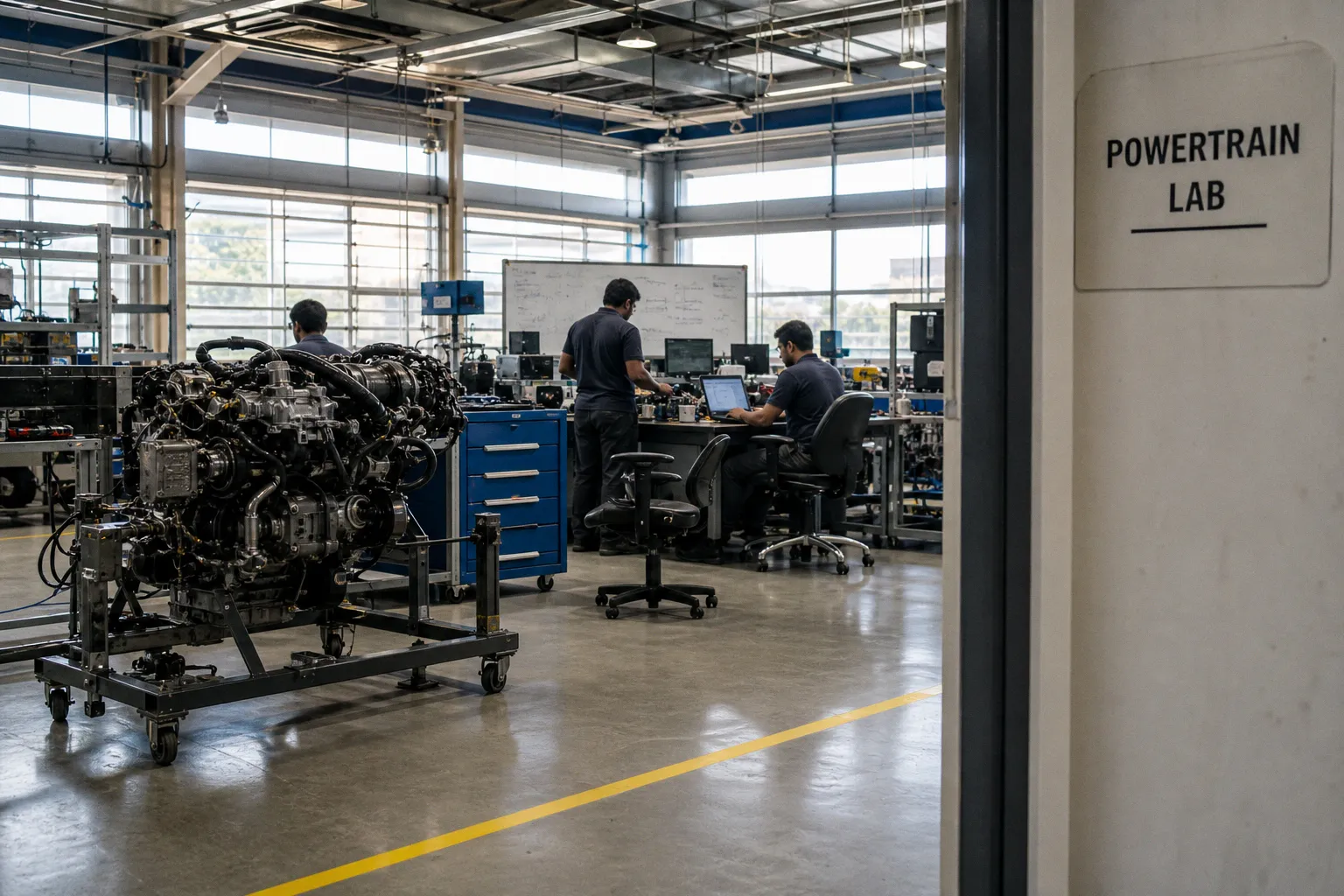
Hyundai's recent messaging, according to Cartoq, points toward a shift in how the company positions India within its global operation: not as a body shop rolling finished cars off the line for export, but as an engineering base whose software, drivetrain calibration, and component know-how should travel outward alongside the sheet metal.
The headline tells you the direction. What it doesn't tell you, at least not in what we've been able to confirm, is the specific roster of technologies Hyundai wants to lift out of its Indian R&D footprint and ship globally. We don't have that granular detail to recite here, and we're not going to invent it. What we can do is talk about what a shift like this tends to mean under the hood when it finally shows up in the cars we end up wrenching on.
Why it matters at the workbench
When a manufacturer moves engineering closer to a specific market, two things usually follow in the vehicles that eventually land in our bays. The calibration work — the fuel maps, the transmission shift logic, the throttle response curves tuned for local fuel quality and altitude — gets done closer to where those conditions actually exist. That's a quiet win for us. Cars arrive with their ECUs already shaped for real-world fuel rather than the optimistic blends of certification labs.
The other thing is software proliferation. The same head unit, the same ADAS stack, the same telematics module gets adapted for more model lines because the engineering hours are spread across a larger base. When that happens, we see it as new behavior in scan tools — communication protocols that didn't appear on the older Hyundai and Kia vehicles, modules that want their own initialization sequences, the occasional gateway module that needs a wake-up command before the rest of the bus will talk.
What to keep an eye on
If Hyundai follows through, the parts we order next year may carry Indian-built subassemblies that didn't before — sensors, harnesses, the small PCBs that sit behind switchgear. The fit and finish on those is usually fine. The diagnostic implications are the real story. Each new supplier origin can mean a new part number suffix, a different firmware baseline, and sometimes a DTC that doesn't quite match what the factory service manual describes for the equivalent component built elsewhere.
We're watching for three things over the coming model years: how often Hyundai and Kia service information documents reference Indian-built subsystems in vehicles sold in our market, whether the wiring diagrams in our subscription databases get revised to reflect new sensor placements, and whether the diagnostic trouble codes that used to be unique to one region start bleeding across into the cars on our lifts.
The headline is a long-term play. For us, the interesting part is when those choices show up as a new connector keyway or a CAN bus message we've never had to translate before.