New Magneti Marelli Chassis Components and Structural Dampers for European Imports
According to Magneti Marelli Parts & Services, the company presented an expanded aftermarket catalogue at Automechanika Frankfurt, covering OE-derived semi-active structural dampers, upgraded brake…
Judson Grier·updated September 10, 2026
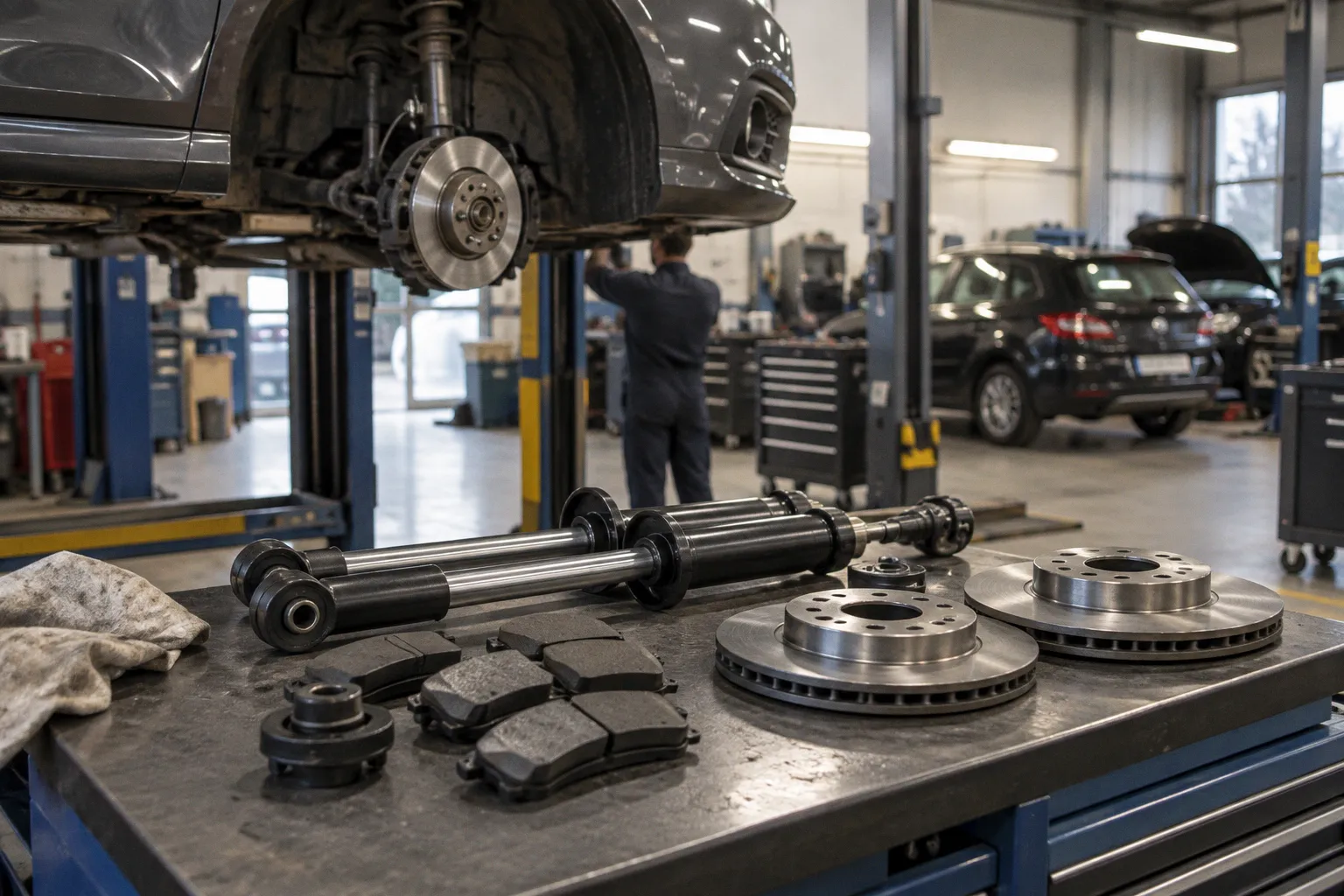
According to Magneti Marelli Parts & Services, the company presented an expanded aftermarket catalogue at Automechanika Frankfurt, covering OE-derived semi-active structural dampers, upgraded brake pad assemblies, and AGM battery lines. For owners and repairers of modern European imports, the important point is not the catalogue size but the shift toward replacement parts that combine mechanical chassis work with electronic and maintenance requirements. The announcement still leaves the practical questions—vehicle applications, specifications, and installation limits—to be checked before any order is placed.
The chassis parts are the main mechanical change
A structural damper is not simply another shock absorber. Its job is tied to how the body and chassis carry vibration and load, so the part must seat correctly and work within the vehicle’s existing suspension design. Magneti Marelli describes the new dampers as semi-active and OE-derived, which places them in the category of components intended for modern European vehicles rather than as universal replacements.
That distinction matters at the workbench. When we are dealing with a chassis part, the correct question is not only whether the component can be physically bolted in. We also need to establish whether the vehicle was designed for that type of damping system and whether the replacement matches the original application. The supplied announcement does not provide a vehicle list, technical ratings, or installation procedure, so none of those details can be assumed from the launch alone.
For a repair shop, the sensible first step is to treat the catalogue entry as a parts-availability development, not as proof of interchangeability. Confirm the exact vehicle application and the OE reference before removing the old component. A part that looks close on the bench can still alter how loads travel through the chassis if its design or control strategy differs.
Brake pad upgrades still come down to fit and condition
The same caution applies to the upgraded brake pad assemblies. The announcement identifies them as part of the expanded aftermarket range, but it does not specify pad materials, friction characteristics, vehicle coverage, or test results. That means we should not translate “upgraded” into a guaranteed braking improvement for every import.
The practical inspection remains familiar. Before fitting any new assembly, we need to check the pad shape, carrier and caliper compatibility, and the condition of the related hardware. The old pads may have worn unevenly because of a binding guide, a caliper issue, or another mechanical problem; replacing the friction material alone would leave that force still acting on the system. The new part must seat squarely, and the hardware must allow the pad to move without binding.
This is where catalogue news meets actual repair work. A new pad assembly can only work as intended if the caliper applies force evenly and the disc and mounting surfaces are in usable condition. Marelli’s announcement supports the existence of a new brake component line, but it does not establish the condition of any particular vehicle or promise a specific result after installation.
AGM batteries add an electrical replacement angle
The catalogue also includes advanced AGM battery lines. That broadens the announcement beyond suspension and brakes into replacement components for modern European imports, where battery choice can be part of the vehicle’s maintenance and electronic service requirements.
Here again, the available information is limited. No capacities, vehicle applications, registration procedures, or charging specifications are provided. We should therefore verify the exact battery requirement for the vehicle rather than treating AGM as a universal upgrade. The catalogue announcement indicates a product direction; it does not provide enough information to select a battery for a specific car.
The useful takeaway is straightforward: Magneti Marelli Parts & Services is presenting structural dampers, brake assemblies, and AGM batteries as part of a wider aftermarket offering for modern European vehicles. For technicians and careful DIY owners, the next step is not to buy on the strength of the event announcement. It is to match each component to the vehicle, confirm the OE reference, and inspect the surrounding mechanical system before the new part is asked to carry the load. Over time, correct fitment still matters more than a catalogue label, because vibration, braking force, and electrical demand will eventually expose anything that only looked right on the bench.